Butterfly Freitas ALC vs Yinhe T-11+: Which Should You Buy?
| Butterfly Freitas ALC | Yinhe T-11+ | |
|---|---|---|
| Our rating | 8.5/10 | 7.8/10 |
| feel | Medium-soft | very light, stiff but soft balsa core with a carbon ping |
| handle | Flared/Straight/Anatomic | FL |
| plies | 5+2 arylate carbon (ALC) outer — Limba-ALC-Limba-Ayous-Limba-ALC-Limba | 5W+2 Carbon with balsa core (two thin wood outers, one carbon layer per side, around a thick balsa middle ply) |
| speed | OFF | OFF- |
| thickness_mm | 5.7 | 6.5 |
| weight_g | 88 | 78 |
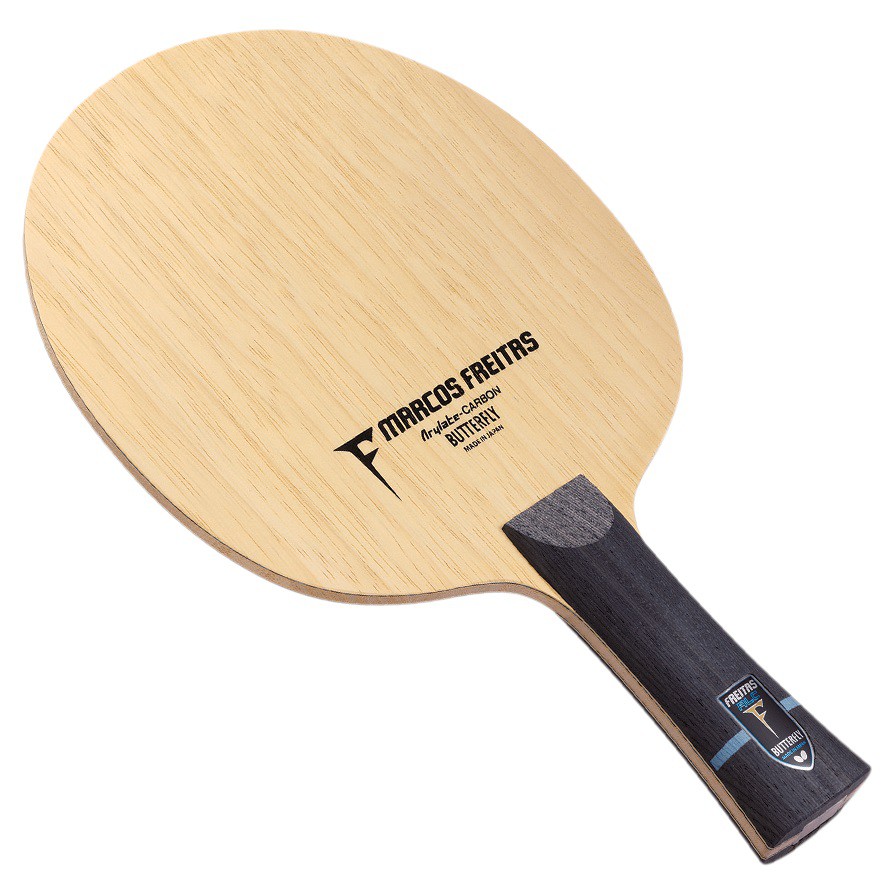
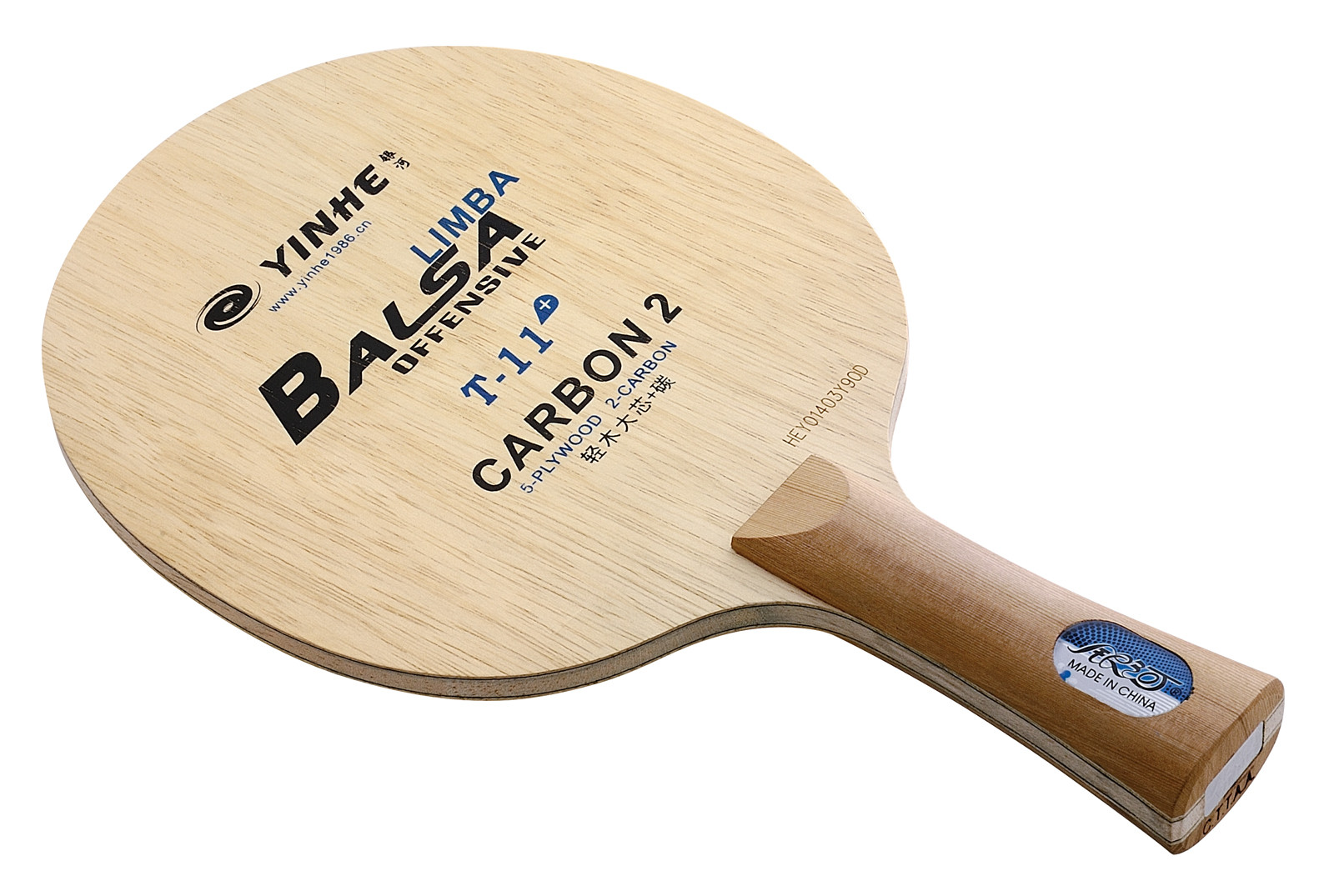
We may earn a commission from links on this page. Learn more.
The Butterfly Freitas ALC is the refined choice: medium-soft feel, outstanding dwell, and consistency reward patient looping technique. Its 88-gram weight provides good feel, making it ideal for players developing topspin-dominant attacking styles.
Yinhe T-11 Plus is radically lightweight at just 78 grams and prioritizes speed and stiffness over dwell. It excels at flat hitting, flicking, chopping, and power looping but struggles with heavy topspin loops. Its fragile surface requires sealing and careful handling. Best paired with soft-to-medium rubbers and technical players who know their strokes.
Choose Freitas ALC for spin-first attacking and flexibility. Pick T-11 Plus if you play flat hitter or blocker style, want featherweight mobility, and can handle fragile construction.
FAQ
Which is better for topspin looping?
Freitas ALC excels at heavy topspin with superior dwell time. T-11 Plus is weak at topspin looping—this is its explicit weakness. Choose Freitas for spin emphasis.
Why is T-11 Plus so light?
T-11 Plus uses balsa core—an ultralight wood—combined with thin carbon layers. This construction enables featherweight speed but sacrifices dwell and durability.
What rubbers pair best with each?
Freitas ALC works with most rubbers including tension types. T-11 Plus demands soft-to-medium rubbers; hard rubbers can cause inconsistent contact on this stiff blade.