Butterfly Dignics 80 vs Stiga DNA Pro M: Which Should You Buy?
| Butterfly Dignics 80 | Stiga DNA Pro M | |
|---|---|---|
| Our rating | 9.0/10 | 8.5/10 |
| best_side | FH and BH (both sides) | Forehand or Backhand |
| control | medium | High |
| speed | very high | OFF+ |
| spin | very high | Very High |
| sponge_hardness | approximately 40 degrees | 47.5 degrees ESN |
| type | Inverted (tensor, Spring Sponge X) | Inverted / Pimples-In |
| weight_uncut_g | approximately 70 | 69 |

We may earn a commission from links on this page. Learn more.
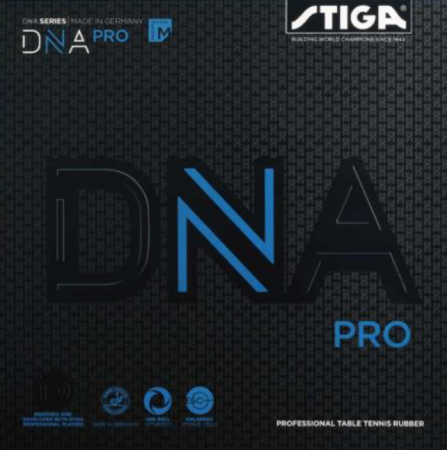
Dignics 80 (9.0) revives Tenergy 05 catapult feel with very high spin on both forehand and backhand, suited to fast arm speed play and lasting considerably longer than Tenergy. Stiga DNA Pro M (8.5), an ESN tensor with 47.5-degree sponge, balances speed and spin beautifully with forgiving medium-high arc, very grippy topsheet, and strong close-to-table control. Both are rated very high, but Dignics 80 edges in spin while DNA Pro M edges in forgiveness.
Dignics 80 demands clean technique and punishes passive blocks; DNA Pro M is more forgiving, though its tackiness fades faster and durability averages only four-to-five months. Dignics 80 pairs naturally with inner-carbon blades; DNA Pro M suits players who want high performance without Spring Sponge X feel. For long-term reliability and both-wing balance, Dignics 80 wins; for easier access to spin with less technique demand, DNA Pro M is now discontinued but offered superior mid-range playability.
FAQ
Which is more forgiving on technique errors?
DNA Pro M’s medium-high arc reduces net errors; Dignics 80 is more sensitive to incoming spin and passive blocks.
Which lasts longer?
Dignics 80 durability exceeds Tenergy series; DNA Pro M durability averages four-to-five months under regular training.
Which has superior short-game control?
DNA Pro M’s very grippy topsheet and close-to-table control excel at short game; Dignics 80 is very capable but less specialized.
Are both still available?
Dignics 80 is current; DNA Pro M is discontinued with limited stock.