Butterfly Dignics 64 vs Nittaku Hammond Z2: Which Should You Buy?
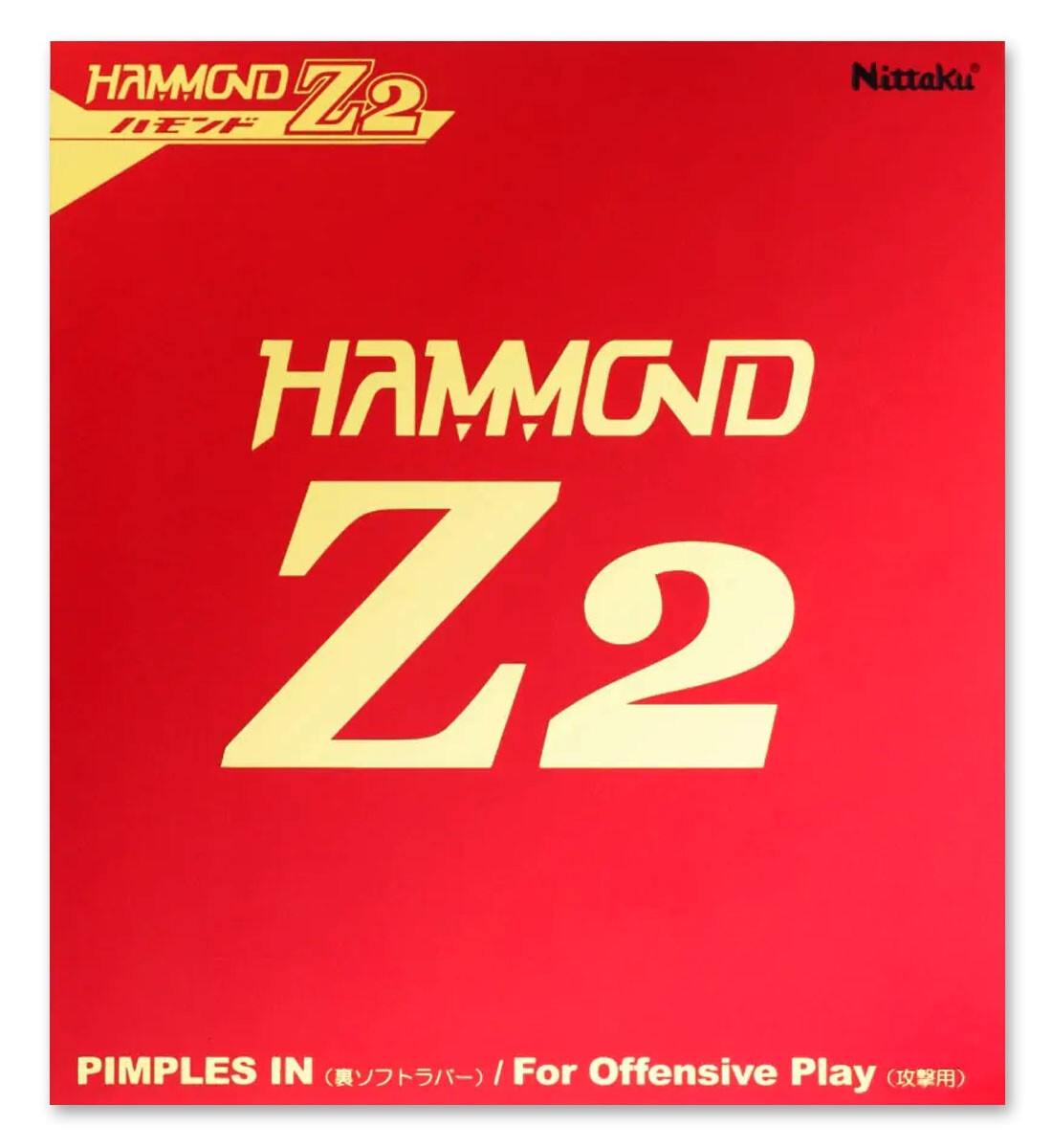
| Butterfly Dignics 64 | Nittaku Hammond Z2 | |
|---|---|---|
| Our rating | 8.8/10 | 8.8/10 |
| best_side | backhand | forehand |
| control | 8.5 | 7.5 |
| speed | 9.5 | 9.0 |
| spin | 8.5 | 9.5 |
| sponge_hardness | 40 degrees (Shore A) / 50 degrees (EUR) | 52 |
| type | inverted | inverted |
| weight_uncut_g | 47 | 70 |

We may earn a commission from links on this page. Learn more.
When two rubbers tie almost everywhere except one axis
Butterfly Dignics 64 and Nittaku Hammond Z2 both carry an 8.8 overall rating, and five of their six axis scores sit within 0.2 points of each other: speed 9.5 versus 9.3, spin 9.1 versus 9.3, control 9.0 versus 9.1, tackiness 1.6 versus 2.1, durability 8.0 versus 8.1. Every one of those gaps is inside the range you would expect from normal review-to-review variance, not a meaningful performance difference. If this comparison ended there, the honest answer would be “these play almost identically, buy whichever is easier to source.”
The one axis where it isn’t close: throw
It doesn’t end there. Throw is 4.0 for Dignics 64 versus 6.5 for Hammond Z2, a 2.5-point gap — by far the largest difference between these two rubbers and the only one worth building a decision around. Dignics 64’s near-complete spin insensitivity and flat, low trajectory are what let it “return heavy serves and pushes with no stroke change” and drive fast backhand blocks, per its own pros. Hammond Z2’s higher throw gives it a “medium arc and manageable throw angle relative to rubber hardness,” supporting the more all-court, forehand-forward loop game its bestFor describes. This single axis is doing almost all the work in differentiating these two rubbers.
best_side tells you what the numbers imply
The specRows data marks Dignics 64 as best on the backhand and Hammond Z2 as best on the forehand. Combined with the throw gap, this reads less like a head-to-head rivalry and more like two rubbers that could sit on the same blade, on opposite wings, for a player who wants a flat, fast, low-throw blocking tool on the backhand and a higher-arc, spin-forward attacking rubber on the forehand. If you are instead choosing one rubber for a single wing, the throw gap should decide it: pick Dignics 64 for a low, direct, block-and-counter game, and Hammond Z2 for a game built more around opening loops and active topspin exchanges.
What the sources say
Dignics 64 draws on Megaspin user reviews, Tabletennis-Reference, a Butterfly non-pro review, and TT-Spin. Hammond Z2’s numbers come from Revspin’s aggregated ratings — described as “one of the highest Revspin ratings in its category” per its own pros — plus a Racket Insight review and Reddit discussion, both of which note it demands active, well-timed strokes and is unforgiving of passive contact.
Migration advice
If you already play one of these and are wondering whether the other is a meaningful upgrade, the axis data says no — five of six numbers are effectively tied. The switch only makes sense if you specifically need a different throw profile for a specific wing, not because one rubber is “better” than the other. Hammond Z2’s cons flag it as “not as naturally explosive as Tenergy 05 nor as maximally grippy as Dignics 05,” positioning it as a broad, gear-flexible option rather than a specialist at either extreme; Dignics 64’s cons flag a “lower spin ceiling than Dignics 05 and Dignics 09C,” which is consistent with its role as a flat, fast blocking rubber rather than a maximal-spin looping sheet.
Weight and blade fit
Dignics 64 is the lighter rubber at around 47 grams uncut, while Hammond Z2 sits close to 70 grams — a meaningful difference for anyone building or rebalancing a racket. Hammond Z2’s own cons note it is “better suited to OFF-minus or flexible blades than stiff carbon setups,” while Dignics 64 explicitly “pairs with everything from all-wood looping blades to outer carbon composites.” If your blade is already a stiff carbon setup, that flexibility gap may matter more than any axis score here.
Bottom line
This is one of the closest matchups in the dataset by raw numbers. Throw is the only axis that meaningfully separates them, and it maps directly onto which wing each rubber is built for.
Frequently asked questions
Are Dignics 64 and Hammond Z2 basically the same rubber?
On five of six axes, yes — speed, spin, control, tackiness, and durability are all within 0.2 points of each other. The exception is throw, where Hammond Z2 leads by 2.5 points, giving it a noticeably higher, more forgiving arc.
What is the biggest difference between Dignics 64 and Hammond Z2?
Throw angle. Dignics 64 sits at 4.0 (low, flat trajectory built for backhand blocking); Hammond Z2 sits at 6.5 (a more forgiving arc suited to forehand looping).
Can I use Dignics 64 and Hammond Z2 together on the same racket?
Yes — the data supports it. Dignics 64 rates best on the backhand and Hammond Z2 best on the forehand, so pairing them by wing is a reasonable setup rather than choosing one over the other.
Which is more durable, Dignics 64 or Hammond Z2?
They are essentially tied: 8.0 for Dignics 64 versus 8.1 for Hammond Z2, a 0.1-point gap that is not meaningful.