Andro Treiber Z vs Butterfly Timo Boll Spirit: Which Should You Buy?
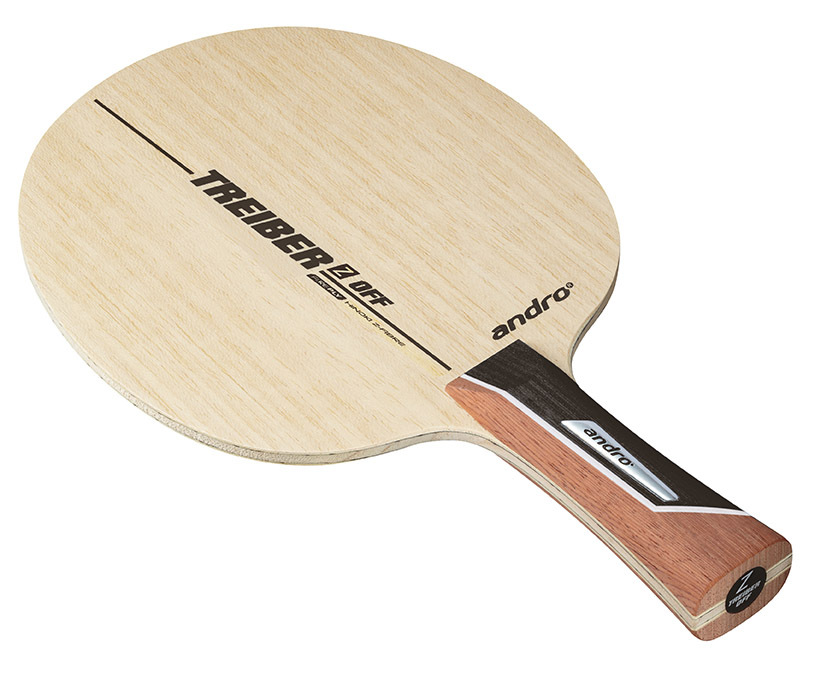
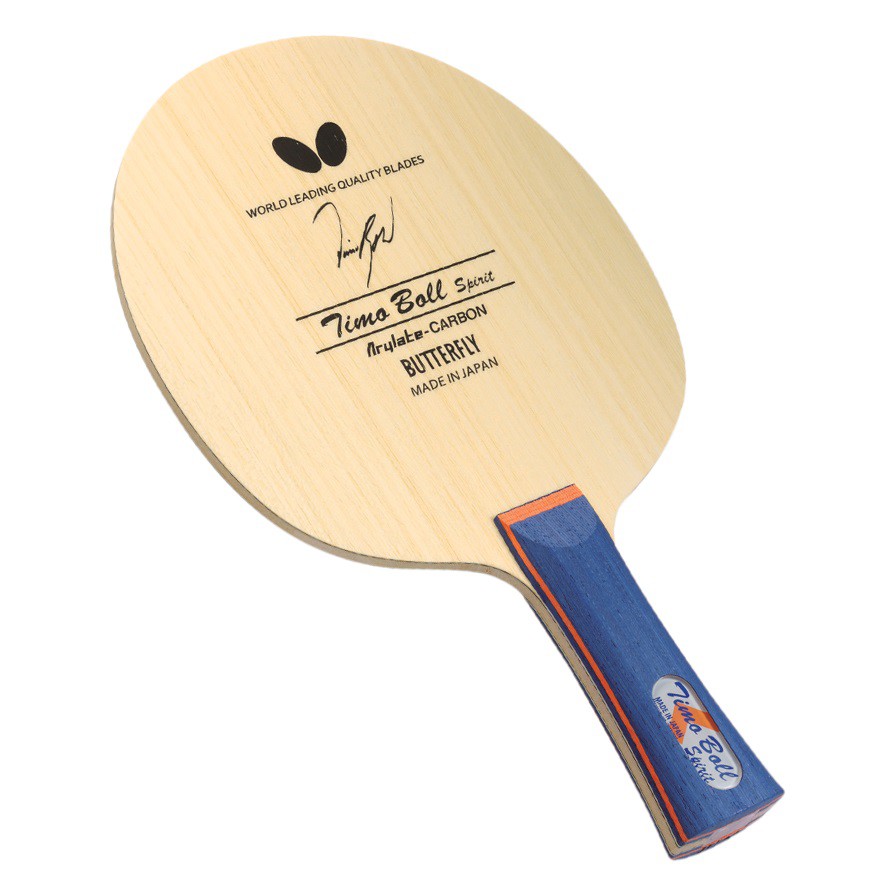
| Andro Treiber Z | Butterfly Timo Boll Spirit | |
|---|---|---|
| Our rating | 8.7/10 | 9.0/10 |
| feel | mild, crispy, low vibration, large sweet spot | Medium and offensive with notable flex and long dwell, crisp but forgiving for a carbon blade |
| handle | FL, ST, AN, Chinese pen | FL / ST / AN |
| plies | 7-ply: kiso hinoki outer + ZLC (Z-fiber composite) inner layers + wood core | 5 wood plies plus 2 arylate-carbon outer layers (5W and 2 ALC) |
| speed | OFF | OFF |
| thickness_mm | 6.6-6.8 | 5.7 |
| weight_g | 87-90 | 87 |
We may earn a commission from links on this page. Learn more.
The Biggest Speed Gap in This Entire Comparison Set
Of every blade pairing analyzed for this category, this one has the largest speed delta: Treiber Z at 9.4 versus Timo Boll Spirit at 8.6, a full 0.8-point gap. Control follows a similar pattern at 9.2 versus 8.6, a 0.6-point edge to Treiber Z. Put together, on the aggregated axis data, Treiber Z rates meaningfully faster and meaningfully more controllable than a blade Butterfly has kept in its lineup for two decades. That’s worth sitting with for a second, because Timo Boll Spirit’s own marketing and reviewer consensus position it as the more forgiving, easier-to-control option of the two.
Stiffness shows a smaller but still real gap (5.9 vs 5.5, delta 0.4), and hardness is close to a tie (6.2 vs 6.1, delta 0.1). Consistency is the one axis where Timo Boll Spirit pulls ahead, 9.4 versus 9.0, a 0.4-point edge — the only category in this pairing where the older blade rates higher.
Reconciling Forgiving With the Data
How can Timo Boll Spirit be described by its own reviewers as more forgiving and softer feel than the stiffer Viscaria, and simultaneously score lower than Treiber Z on both speed and control? The answer is context: Timo Boll Spirit is forgiving relative to Butterfly’s other outer-carbon flagships, not necessarily relative to every OFF-class blade on the market. Its own cons list is direct about this: OFF speed can run away from players with weak technique, and it’s often too fast for developing or lower level players. So the forgiveness reputation is a comparison against stiffer sibling blades, not a claim that it’s easy for beginners — and Treiber Z’s higher axis scores for both speed and control reflect a blade that, on paper, does more of both at once.
What Timo Boll Spirit does deliver, per Megaspin and Reddit’s r/tabletennis reviews, is long dwell time that makes heavy topspin genuinely easy to produce, plus real blocking and counterplay quality — reviewers specifically praise it for handling looping, counter-hitting and combination styles from the same blade, and note its ball feel rates above many rival blades. Greg’s Table Tennis Pages calls it a blade that has aged exceptionally well and is still recommended after twenty years — that longevity and cross-style versatility is a genuine strength the axis numbers alone don’t fully capture.
Consistency: Spirit’s One Real Edge
The 0.4-point consistency advantage for Timo Boll Spirit (9.4 vs 9.0) is the one place the data favors it outright. Combined with its long dwell time, that consistency edge likely reflects a blade that behaves predictably across a wider range of shot types and swing speeds — useful for players developing a combination game rather than a pure speed-and-power attack.
Migration and Fit
If you’re on Treiber Z and considering Timo Boll Spirit for its reputation as the softer, more forgiving Butterfly ALC option, know that the axis data doesn’t support a straightforward downgrade-for-forgiveness trade — you’d be giving up 0.8 points of speed and 0.6 points of control, real and noticeable amounts, for a 0.4-point consistency gain. That trade makes sense only if your game specifically benefits from Timo Boll Spirit’s long-dwell touch and combination-style versatility, not simply because you want something easier.
Going the other way, moving from Timo Boll Spirit to Treiber Z, is a reasonable step up for a player who has developed technique and wants to push both speed and control higher — but be aware that Treiber Z’s low throw angle and discontinued, secondhand-only status add both a technical requirement (rubbers with their own good throw) and a sourcing challenge that Timo Boll Spirit, still findable new, doesn’t have, though its anatomic and straight handle variants can themselves be hard to source.
Bottom Line
Don’t assume Timo Boll Spirit is the safer, easier pick just because of its softer reputation — on the data, Treiber Z is faster and more controllable across the board, with the largest speed gap in this entire dataset. Choose Timo Boll Spirit for its two-decades-proven combination-style versatility and its edge in consistency; choose Treiber Z if you want the higher speed-and-control ceiling and can live with hunting a discontinued blade.
Frequently asked questions
Is Timo Boll Spirit more forgiving than Treiber Z?
Relative to Butterfly's stiffer flagships like the Viscaria, yes -- but on the axis data, Treiber Z actually rates higher on both speed (9.4 vs 8.6) and control (9.2 vs 8.6), so forgiving doesn't mean easier to control here.
What's the biggest performance gap between these two blades?
Speed -- a 0.8-point delta (9.4 vs 8.6), the largest single-axis gap found anywhere in this comparison set.
Which blade is more consistent?
Timo Boll Spirit, by 0.4 points (9.4 vs 9.0) -- the one axis where it rates above Treiber Z.
Is Timo Boll Spirit good for beginners?
No -- its own cons list warns that its OFF-class speed can run away from players with weak technique and is often too fast for developing or lower level players.