Andro NUZN 55 vs Nittaku Hammond Z2: Which Should You Buy?
| Andro NUZN 55 | Nittaku Hammond Z2 | |
|---|---|---|
| Our rating | 8.8/10 | 8.8/10 |
| Best side | Forehand | Forehand |
| Control | 6.9 | 7.5 |
| Speed | 9.8 | 9.0 |
| Spin | 9.8 | 9.5 |
| Sponge hardness | 55° | 52° |
| Type | tensor/non-tacky | inverted |
| Uncut weight | 77 g | 70 g |
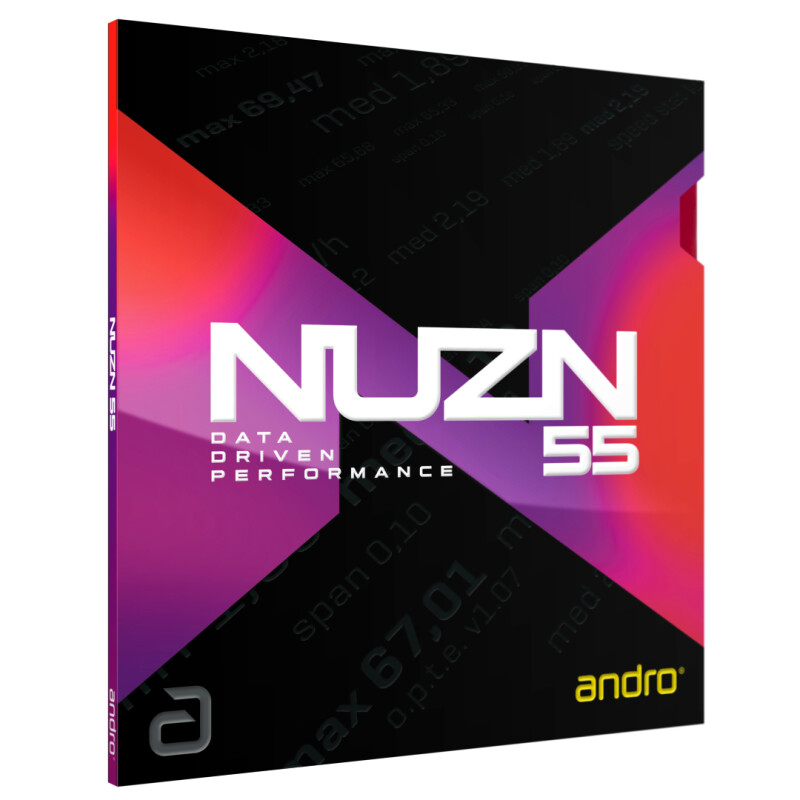
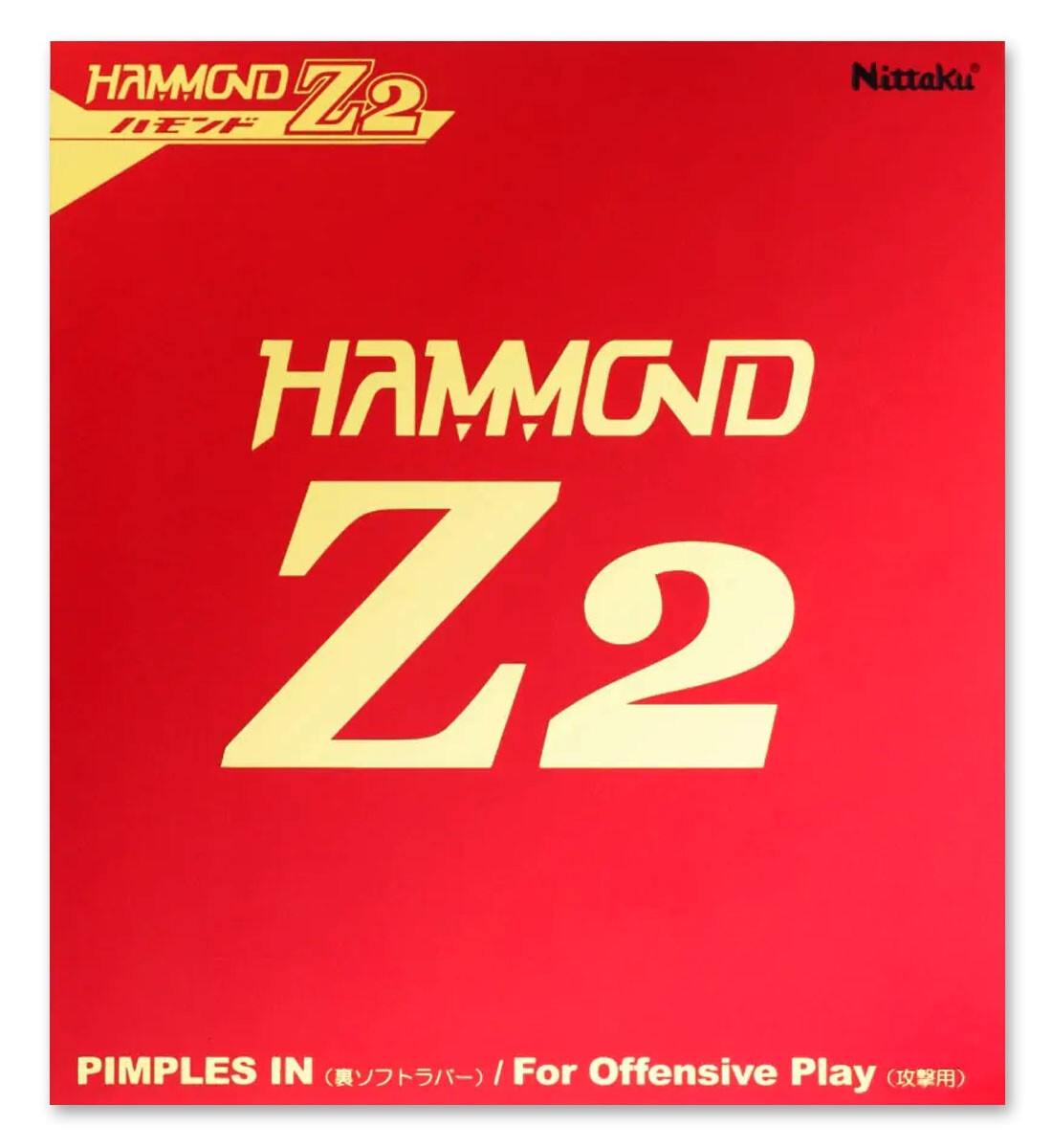
We may earn a commission from links on this page. Learn more.
The honest headline: these two are functionally tied
Andro NUZN 55 and Nittaku Hammond Z2 share the same 8.8 rating, and unlike most match-ups in this guide, the axis-by-axis data backs up the tie almost exactly. Speed differs by only 0.3 points (9.6 vs 9.3), spin by 0.1 (9.4 vs 9.3), tackiness by 0.1 (2.2 vs 2.1), and durability by 0.1 (8.2 vs 8.1). None of those gaps would be detectable in play. If you came here expecting a clear winner, the data does not support one - and that is itself useful information: do not let marketing copy talk you into switching between these two on performance grounds alone.
The two gaps worth reading
Control shows the largest gap in the pair at 0.4 points, and it favors Hammond Z2 (9.1 vs 8.7). That is real but modest - noticeable in extended rallies and passive exchanges, not a night-and-day difference. Throw is the next largest gap at 0.5 points, again favoring Hammond Z2 (6.5 vs 6.0), meaning Hammond Z2 gives a slightly higher, marginally safer arc when opening against backspin. Neither gap is large enough to be a deciding factor on its own, but together they suggest Hammond Z2 has a small edge in forgiveness while NUZN 55 has a small edge in outright speed - an edge so slight (0.3 points) that most players would not feel it shot to shot.
What actually differentiates them
Since the performance numbers are close, the real differences are sponge hardness and origin. NUZN 55 runs a 55-degree sponge; Hammond Z2 is 52 degrees - both hard, but NUZN 55 is the firmer of the two, consistent with its 0.3-point speed edge. Hammond Z2 is made in Japan, which reviewers flag as giving it a distinct, non-ESN feel and character compared to NUZN 55’s ESN-style tensor construction - a feel difference, not a performance one, and it shows up in reviewer language rather than in the radar numbers. Revspin’s own aggregate places Hammond Z2 among the highest-rated rubbers in its category, per its listed pros, so the reputation is not a fluke of our own scoring - it is corroborated independently. Racket Insight’s review and discussion on Reddit r/tabletennis both describe Hammond Z2 as hard, spinny, and unforgiving of passive strokes, but with above-average durability for its category despite not technically being an ESN-style tensor.
Should you switch?
Almost never, on pure performance grounds. If you already own and like one of these, the axis deltas here do not justify replacing it with the other - you would be paying to shuffle sideways. The one legitimate reason to switch is fit with your blade: Hammond Z2 pairs better with OFF-minus or more flexible blades according to its own listed cons, while NUZN 55’s harder sponge wants a stiffer, faster blade to control it. If your current blade fights your rubber, that blade-rubber mismatch is a better reason to switch than anything in the radar chart.
Fit summary
Both are forehand-oriented rubbers for upper-intermediate to advanced attacking players comfortable with hard, demanding sponges. Neither suits passive players or defenders - NUZN 55’s own cons explicitly rule out chopping-oriented styles, and Hammond Z2 demands active, well-timed strokes per its listed cons too. Pick based on blade compatibility and whether you prefer ESN-style (NUZN 55) or Japan-made non-ESN (Hammond Z2) rubber character, not based on the numbers in this comparison.
Short game and serves
Neither rubber’s pros lean heavily on touch play, but the listed strengths do differ at the margins. NUZN 55’s own pros specifically call out generating strong spin on short pushes and serves, plus an enlarged sweet spot that rewards well-timed attacks even under time pressure - useful if your game includes fast, spinny short serves alongside power looping. Hammond Z2’s own pros instead emphasize that active blocks and smashes are extremely dangerous and that it produces excellent serve spin generation of its own, framing it as a rubber that punishes opponents on both offense and off the bounce. Neither description points to a rubber built for a passive, contact-only short game - both want an active stroke, which is consistent with the near-identical hardness and speed numbers.
Frequently asked questions
Is there a real performance difference between Andro NUZN 55 and Nittaku Hammond Z2?
Barely. Four of six axes differ by 0.3 points or less - speed, spin, tackiness and durability are all close to tied. Control and throw show the largest gaps, both around 0.4 to 0.5 points in favor of Hammond Z2.
Which is more durable, NUZN 55 or Hammond Z2?
They are effectively tied, 8.2 versus 8.1 - a 0.1-point gap that will not be noticeable in real use.
Is Hammond Z2 made the same way as NUZN 55?
No. Hammond Z2 is made in Japan and reviewers describe it as having a distinct non-ESN character, while NUZN 55 follows an ESN-style tensor construction.
Should I switch from one to the other?
Not for performance reasons - the axis gaps are too small. A better reason to switch is blade compatibility: Hammond Z2 suits OFF-minus or more flexible blades, while NUZN 55's harder sponge wants a stiffer blade.