Andro NUZN 55 vs Nittaku Fastarc G-1: Which Should You Buy?
| Andro NUZN 55 | Nittaku Fastarc G-1 | |
|---|---|---|
| Our rating | 8.8/10 | 8.8/10 |
| Best side | Forehand | Both wings |
| Control (different scales) | 6.9 | medium-high |
| Speed (different scales) | 9.8 | 15.0 (Nittaku) |
| Spin (different scales) | 9.8 | 12.5 (Nittaku) |
| Sponge hardness | 55° | 47.5° |
| Type | tensor/non-tacky | tensor inverted |
| Uncut weight | 77 g | 69 g |
A row marked “different scales” puts two rating systems in one line. Those cells are not a single score you can subtract.
We may earn a commission from links on this page. Learn more.
The headline: same rating, opposite games
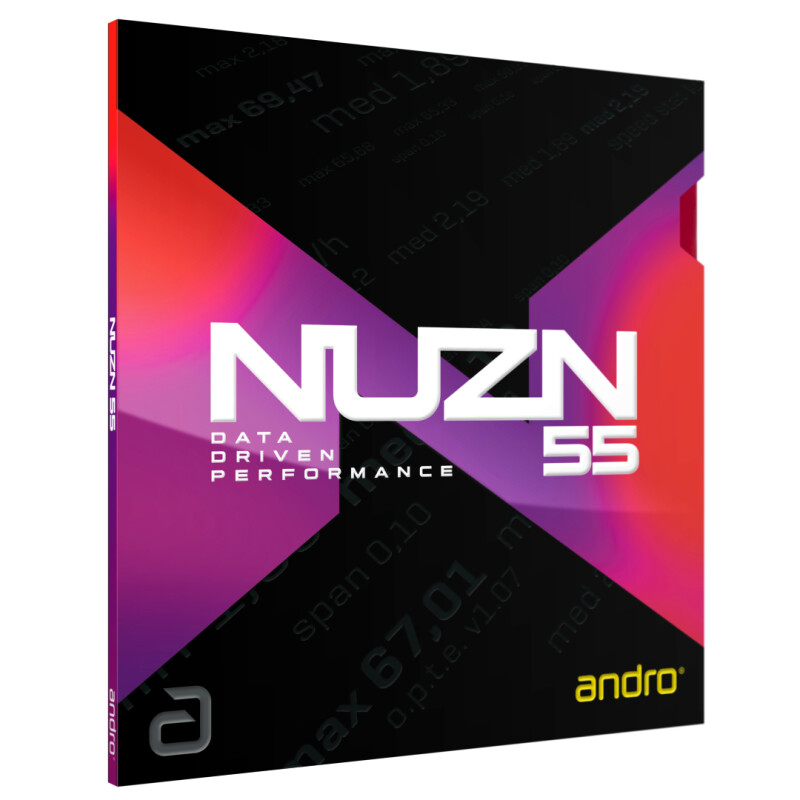
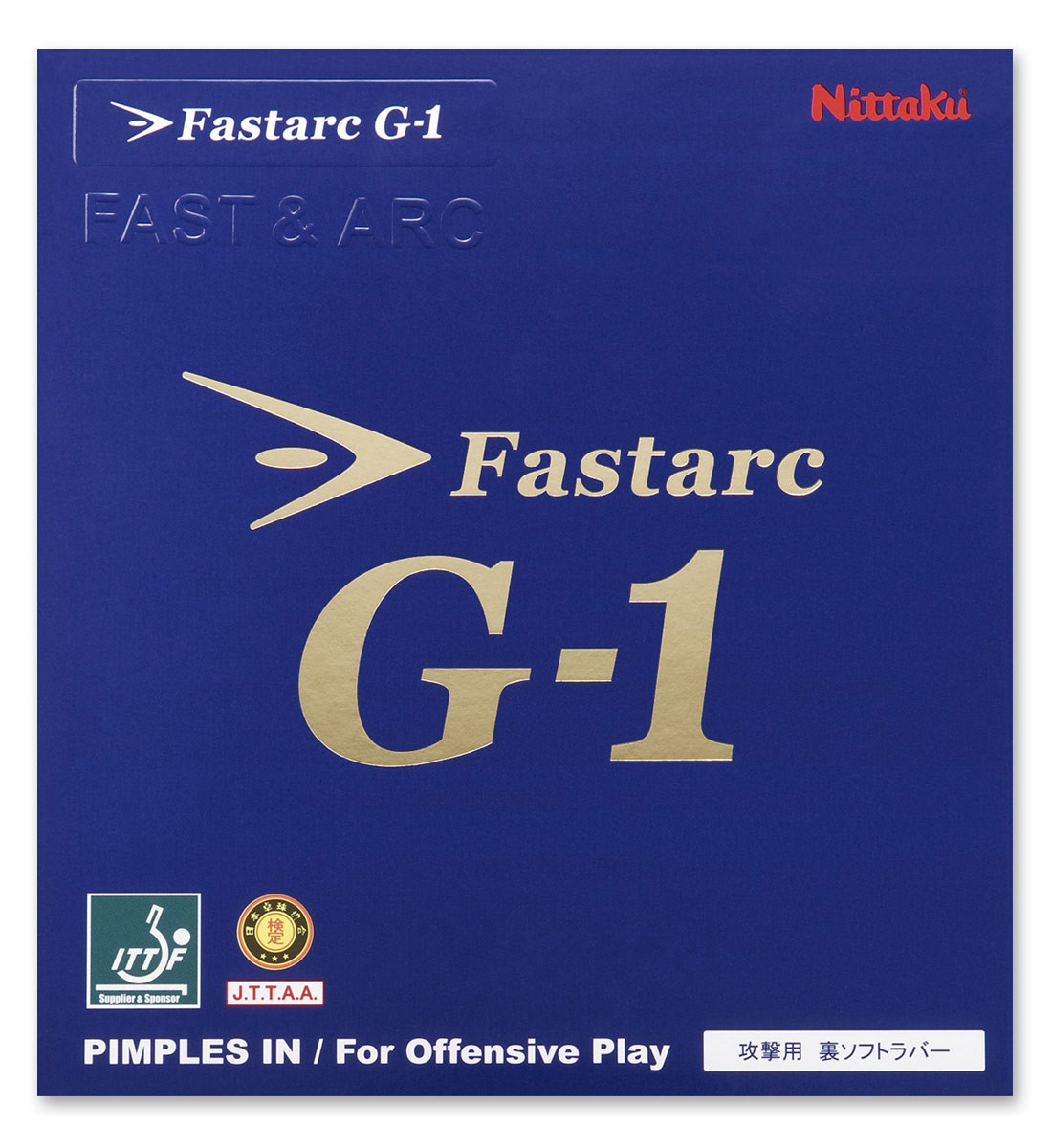
Andro NUZN 55 and Nittaku Fastarc G-1 both sit at 8.8 in our aggregate rating, so the number alone tells you nothing useful. What separates them is trajectory. NUZN 55 is a 55-degree, non-tacky tensor built for players who generate their own power; Fastarc G-1 is a softer 47.5-degree all-court tensor built to be forgiving. If you only read one section, read the throw gap below - it is the whole story here.
Where the axis data actually matters
The throw axis is the largest gap in this pair by a wide margin: NUZN 55 scores 6.0, Fastarc G-1 scores 8.5, a 2.5-point spread that is easily the biggest of any axis we track for these two rubbers. Throw is how high and forgiving the ball’s arc is off the rubber. A gap this size is not a rounding error - it is the difference between a rubber that sends the ball out flat, punishing anything less than a full, committed stroke (NUZN 55), and one that Nittaku itself markets around a high, safe arc for opening loops against backspin (Fastarc G-1). If you loop backspin with anything less than clean technique, this one number should decide the comparison.
Speed favors NUZN 55 by 1.5 points (9.6 vs 8.1) - a gap large enough to feel immediately on drives and counters, not a placebo difference. Durability favors NUZN 55 by 1.2 points (8.2 vs 7.0), consistent with Andro’s own claim that NUZN 55 holds up comparably to premium Dignics-tier rubbers.
Two axes are close enough to ignore as decision factors. Spin is a 0.5-point gap (9.4 vs 8.9) - real but secondary to throw and speed. Tackiness sits at a 0.3-point gap (2.2 vs 2.5), and both numbers are low regardless, so neither rubber should be picked for grip-dependent short game.
What reviewers actually say
TableTennis11’s blog and Megaspin’s product reviews both frame NUZN 55 as a rubber for players already comfortable activating a hard tensor sponge, not a starter rubber. Racket Insight’s review of Fastarc G-1, by contrast, keeps coming back to the phrase Nittaku itself uses: fast with an arc. That is the throw-axis gap showing up in independent testing, not just in our numbers.
Should you switch?
If you already play NUZN 55 well - meaning you have the swing speed to activate a 55-degree sponge and are not struggling with control - switching to Fastarc G-1 buys you an easier margin on opening loops at the cost of some top-end speed and durability. That is a reasonable trade if inconsistency against heavy backspin is your actual problem.
If you play Fastarc G-1 and are looking at NUZN 55 because it looks flashier on paper, be honest about your technique first. NUZN 55’s own listed cons include a very steep learning curve and punishing mis-timed shots with drops and errors - this is not a rubber that forgives borrowed power. Fastarc G-1’s forgiving arc exists specifically to cover the technique gap that NUZN 55 will expose.
Fit summary
NUZN 55 is a forehand-only pick for advanced and elite players stepping up from softer tensors who want more raw speed and spin and can supply their own power. Fastarc G-1 works on either wing for intermediate-to-advanced attackers who want heavy spin and real speed without giving up a forgiving, high arc, at a lower cost than Tenergy while aging like it, per Nittaku’s own durability positioning. Weight is a secondary factor worth noting: NUZN 55 is 77g uncut versus Fastarc G-1 at 69g, so NUZN 55 also adds noticeably more weight to your blade.
Frequently asked questions
Is Nittaku Fastarc G-1 easier to control than Andro NUZN 55?
Yes, notably. Fastarc G-1 scores 8.5 on throw versus NUZN 55's 6.0, a 2.5-point gap - the largest in this comparison - meaning it gives a higher, safer arc that is more forgiving of imperfect timing.
Which rubber is faster, NUZN 55 or Fastarc G-1?
NUZN 55, by 1.5 points on our speed axis (9.6 vs 8.1). That is a real, feelable gap, not a rounding difference.
Can a beginner use Andro NUZN 55?
Andro's own listed cons describe a very steep learning curve and say it punishes mis-timed shots with drops and errors, so it is built for advanced and elite players, not beginners.
Does Fastarc G-1 last as long as NUZN 55?
NUZN 55 rates higher on durability, 8.2 versus 7.0, a 1.2-point gap - though Fastarc G-1 is still described as Tenergy-like in how slowly its performance drops off over months.