Friendship 729 Battle II vs JOOLA Dynaryz AGR: Which Should You Buy?
| Friendship 729 Battle II | JOOLA Dynaryz AGR | |
|---|---|---|
| Our rating | 8.5/10 | 8.7/10 |
| best_side | FH | FH |
| control | 8 | 7 |
| speed | 8 | 9.6 |
| spin | 9 | 9.3 |
| sponge_hardness | hard | Hard (around 50 degrees EUR, purple Hyperbounce sponge) |
| type | tacky | inverted |
| weight_uncut_g | 68 | 71 |

We may earn a commission from links on this page. Learn more.
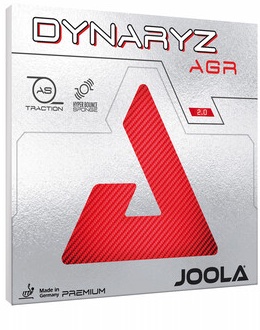
Both are forehand attacking rubbers, but they reach speed differently. The Battle II is a hard, tacky Chinese sheet with a low diving arc and long dwell that loads serves and brush loops with elite spin and linear no-catapult control. The Dynaryz AGR is among the fastest tensors available, rated faster than Tenergy 05 and 64, with elite spin from a grippy Advanced Traction Surface topsheet and a catapult that keeps its hard 50-degree Hyperbounce sponge explosive.
On style and speed, the AGR is the more explosive close-table weapon, effortless at lifting backspin and firing low, fast loops, third-ball attacks and finishing strokes, but it has limited passive control, a low unforgiving short game, and is too much for players around 1600 and below. The Battle II offers heavy tacky spin with more linear control, but it too demands committed strokes and is weaker far from the table.
Choose the Dynaryz AGR if you are an advanced forehand-dominant attacker who plays close to the table with clean, committed strokes and wants maximum speed and spin, accepting limited passive control and durability often around four to six months. Choose the Battle II, the lower rated but far cheaper option, if you want elite tacky serve and loop spin on a budget with a more linear, controllable feel.
FAQ
Which is faster?
The Dynaryz AGR is the faster rubber, among the fastest tensors available and rated faster than Tenergy 05 and 64. The Battle II is surprisingly fast for a tacky rubber but is best close to the table.
Which has more passive control?
The Battle II has more passive control, with a linear, no-catapult feel. The AGR has limited passive control and a low, unforgiving short game.
Which suits a lower-rated player?
Neither is ideal for lower-rated players. The AGR is too much for players around 1600 and below, and the Battle II demands strong technique and committed strokes.
Which lasts longer and costs less?
The Battle II is far cheaper and its tackiness fades after about two months, while the AGR carries premium flagship pricing and is often dead in roughly four to six months under heavy use.