Weekly Equipment Watch #245: Xiang Peng's 0-3 Upset and the Anti-Topspin Specialists
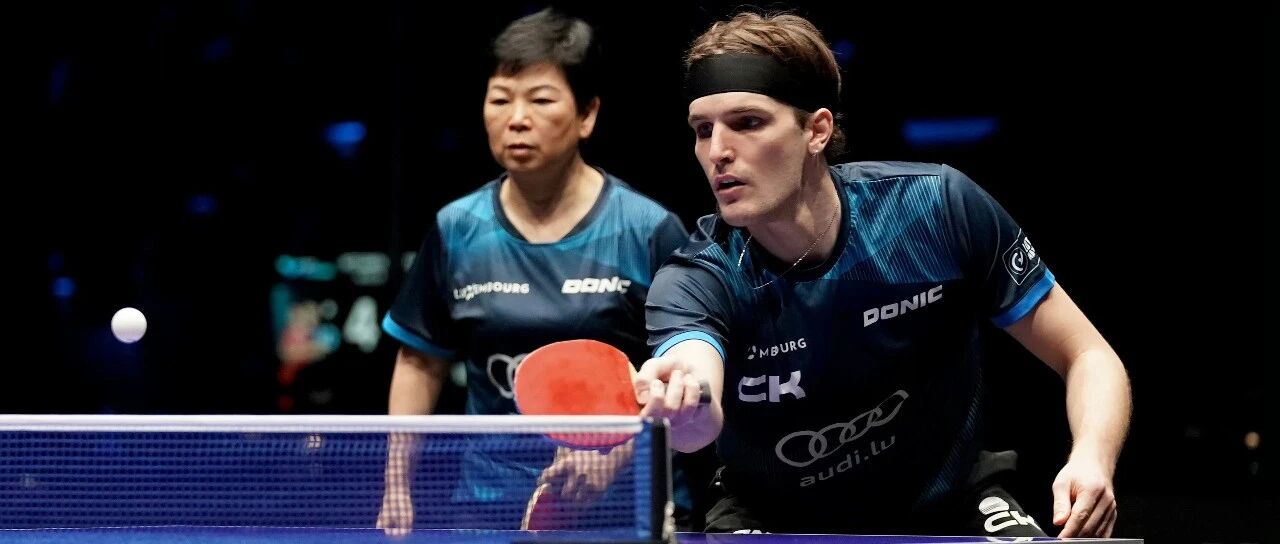
At the WTT Contender Taiyuan — a tournament many top players skipped — Xiang Peng lost 0-3 to Luka Mladenovic of Luxembourg, going out in the first round. The three game scores were 6-11, 5-11, and 8-11. In the second game he trailed 0-9 at one point.
Is this the same Xiang Peng who was Wen Ruibo’s idol and the World Junior Champion who swept Moregard in the final? Yes — same guy, same name.
Back in the day, DHS signed Xiang Peng (a forehand-dominant player) and Butterfly signed Lin Shidong (backhand-dominant). Both camps must have thought they had a great hand to play. So how did things end up like this?
As for Luka, he comes from Luxembourg — a small but wealthy country — and is Ni Xialian’s mixed doubles partner. He’s been training and competing under her guidance since childhood. His career-best world ranking is somewhere outside the top 80. And yet he beat Xiang Peng. His antispin rubber clearly played a decisive role.
Why are unconventional rubbers so effective right now? Germany’s Sabine Winter, whose game was transformed by switching to pimple rubbers, reached the World Cup women’s singles semifinals and climbed to world No. 9. This is partly a product of the plastic ball era. Our national team players keep getting tripped up by these weird rubbers for a few reasons: under plastic the quality of a single big shot has dropped; the training environment within the team has become less stylistically diverse than it once was, meaning adaptability has suffered; and individual players haven’t developed the mental flexibility or tactical creativity to handle unfamiliar problems under pressure.
Even Zhang Zhihe — who is famously prone to upsets and joked about as someone who only knows what he’s practiced — managed to beat Luka 3-2 the last time they met. Xiang Peng, on the other hand, had virtually no answers and almost no tactical adjustment throughout.
Luka’s setup: forehand inverted rubber (ZYRE-03), backhand antispin — same model as Winter, the Dr. Neubauer ABS 3 PRO. On the backhand he mainly blocks and pushes, and can occasionally flip his paddle to attack with the inverted side. On the forehand, though it looks like he’s using inverted, he sometimes flips to use the antispin side to receive serve.
As I’ve noted before, the women’s national team lacks the ability to simplify complex problems — that’s why they struggle against unconventional rubbers.
Xiang Peng faces essentially the same issue. The game plan could actually be quite straightforward: either serve fast and long to Luka’s backhand — where the antispin gives back a lower-quality ball and his inverted rubber attack is not that threatening — or serve no-spin or float balls short into his middle-forehand zone, then pounce on any chance to loop. Antispin is actually very vulnerable to no-spin balls. Long pimples (especially oversized illegal ones) are even more afraid of them.
Let me share a quick personal story. I once played a player rated around 2000 who was flipping between short pimples and long pimples. A retired provincial team coach went up first and actually lost the first game 1-3. Of course, once he figured it out he went back and won 3-0 easily.
When I took my turn, I’m objectively weaker than he is — but I kept mixing up my serves well and pushed heavy enough backspin that people jokingly say my ball needs a crane to lift. The opponent made a ton of errors and I won 3-0 without much trouble.
The point is: because players lack any real experience against unconventional rubbers, China has dropped a lot of inexplicable matches lately. And this 0-3 loss is obviously a blow to Xiang Peng, who had just been added to the World Team Championships roster — Taiyuan was supposed to be a chance for him to prove himself.
Below are the equipment setups of the featured antispin specialists.