Tibhar K3 Series Rubbers: The Peak of Effortless On-Table Consistency
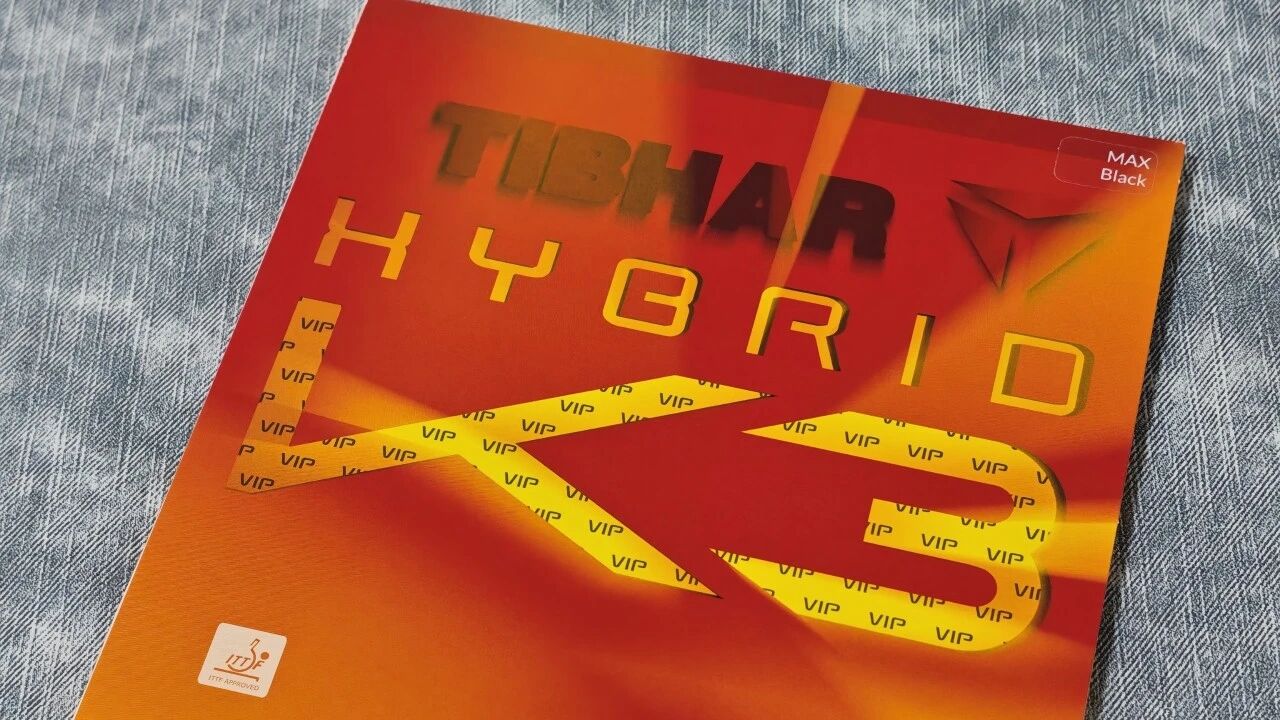
Five years ago I played with the Tibhar K3. Performance-wise it was the very balanced type, and what stuck with me was its remarkably high margin for error and on-table rate. But I later lost interest in it, because its built-in energy faded too fast: a hardness that started out fine for the forehand would, after ten days to a couple of weeks, clearly feel like it no longer had enough support there — better moved to the backhand.
Later they released the K3 PRO. Because I disliked how the original K3 shed its energy and hardness, I never tried it. More recently they launched the K3 VIP, with hardness now up to 59 degrees. This time I tried the PRO alongside it. I deliberately switched between two blades of different construction and played for more than 20 days, specifically to see whether that energy-and-hardness loss was still there.
Hardness After Break-In
First, the change in hardness.
-
K3 PRO — 53-degree hardness, 71g for the whole sheet. Right out of the gate the hardness was quite good and well suited to the forehand. But after I peeled it off to swap blades, plus 20 days of play, the hardness dropped by about 3 degrees — less than the original K3 lost. It now works very nicely on the backhand.
-
K3 VIP — rated hardness now up to 59 degrees, about 73g for the whole sheet. On first contact I felt it was a touch too hard, and my strokes sprayed a bit out of control. So I gave it a good thrashing too, peeled it off and swapped blades. Honestly I was hoping it would lose a little hardness — and happily, it dropped about 4 to 5 degrees. Now on the forehand the hardness is just right, especially comfortable.
How They Play
As for performance, the only difference between these two rubbers is the sponge hardness; they play essentially the same. Over these 20-odd days, what struck me is just how high the on-table rate is — it gives you the feeling that whatever you do, the ball goes on. Crisp, springy feel, a lightly tacky topsheet; on serves and short backspin control over the table it produces very good spin without popping the ball up. On both forehand and backhand attack, looping stability is extremely high, the arc is comfortable to shape, there is plenty of room to adjust, and the speed is relatively fast. Note that, compared with Hurricane, you need to drive more forward.
The key point worth stressing is its exceptional margin for error. You won’t feel it just doing drills — but once you start a match, it keeps producing unexpected balls. Plenty of times my footwork wasn’t in place and I had to reach with my hand, and it still let me land the ball steadily, even with decent quality, surprising the opponent and still winning the point.
Pairing Advice
A few pairing suggestions. I’d put the K3 VIP on the forehand, and the K3 PRO on the backhand of a shakehand or the forehand of a penhold. I tried both inner- and outer-fiber blades, both on the stiffer side, and the results were good. Personally I don’t think this crisp, springy kind of rubber suits a blade with large overall flex and high elasticity — they aren’t the same style. It’s like two people dating: if their personalities clash, the pairing is one awkward moment after another. Right now I have it on my outer-fiber Yu Ziyang blade and I’m about to run it as my main racket for a while.
Verdict
For the sheer margin for error it brings, the very high on-table rate, and the way it gives the user an extra chance to land one more ball in a match, I think this rubber is very much worth recommending.