The King of Rubber Swaps, and Truls Moregard's Weak Spot
1
If I had to nominate someone as the “king of rubber swaps,” the first name that comes to my mind is Franziska.
At the Singapore Grand Smash that just wrapped up on March 1, I had updated Franziska’s equipment: Franziska ZLC, forehand Dignics 05, backhand Tenergy 09c (suspected). Then yesterday in the Chongqing Champions Series round of 16, he got hammered by Wang Chuqin — and he’d changed rubbers again: forehand ZYRE-03, backhand Dignics 09c. Back to the configuration from the Muscat event at the end of January, where he reached the men’s singles final before losing 3–4 to Lebrun.
I can’t claim 100% accuracy when it comes to tracking equipment, but it’s pretty high — and in terms of timeliness, if I’m not first globally, I’m at least top three. Because who else spends their days looking at hundreds of photos the way I do?
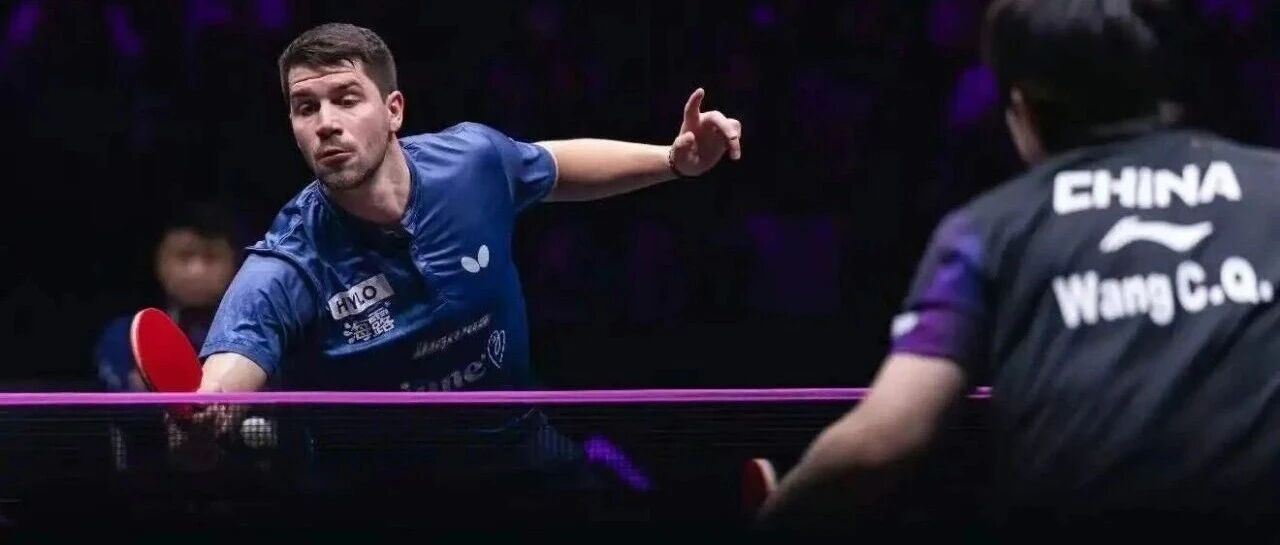
That 0–3 loss Franziska took against Wang Chuqin didn’t have a lot to unpack. His receive was consistently poor, and everything he sent over seemed to land exactly within Wang Chuqin’s expected range — almost like practice. To beat an opponent like that, you first have to produce balls that are outside his rhythm, outside what he’s anticipating. Players like Lind, and Moregard in his fleeting moments of success against Wang Chuqin, have managed that.
2
Moregard’s weak spot.
For most players whose forehand is strong — especially their pendulum serve loop — but whose backhand is weaker, the backhand corner deep ball (bottom-left) is probably their Achilles heel.
That long ball to the baseline requires more footwork adjustment, and you have to account for whether the ball is long or half-long. On half-long balls, they often prefer to step around and loop with the forehand. But if you push it back deep enough, they can’t always loop cleanly — sometimes all they can do is a high-looping push. And when your return (a fast poke long) is quick enough, they may not have time to step around, and the backhand isn’t stable enough for an attack.
In the men’s singles round of 16, Moregard lost 1–3 to Lebrun — and that’s exactly the trap he fell into.
Watching a match like this, the calmest person in the room should be Stiga. After all, both players are their contracted athletes — it’s all in the family.
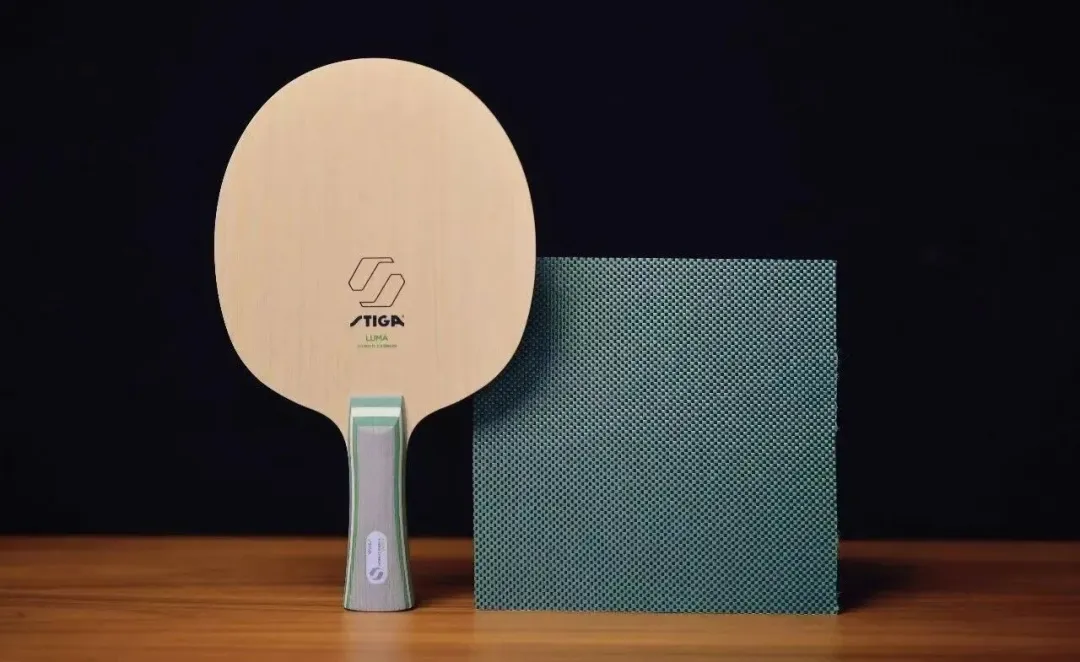
Moregard: Cyber 6 Gold Label, two-sided Helix Platinum 55 Lebrun: Luma mixed carbon, NEO Blue National Hurricane, DNA Hybrid 55
Stiga might still feel a little anxious though, because after Lebrun won this match, everyone started asking when the Luma would go on sale. Unfortunately, the current estimate is May or June — possibly even later.
In game one, Moregard won 11–8. In the receive phase, Lebrun was still “dabbing” a lot, so his receive wasn’t sharp. Especially when you’re using a sticky Chinese rubber, you have to be willing to put more power in to control it. That’s a property of sticky rubbers.
In game two, Moregard lost 10–12. If he’d won this game, the outcome might have been completely different. He was leading 8–3 when Lebrun found the holes. Lebrun sent two fast, direct long serves straight to Moregard’s backhand — very effective. Moregard couldn’t return them with quality. He was quickly pulled back to 7–9 (Lebrun trailing).
In the closing points, Moregard’s backhand was still overused. In many similar situations in the past, he would step around and forehand-loop the half-long ball, which worked quite well.
By games three and four, Lebrun’s game plan was sharper: on the receive, avoid short pushes whenever possible — either push long or attack with a flick right away. Very clear tactical execution. In the stands, China national team head coach Qin Zhijian was briefing Xiang Peng and Chen Yuanyu, as if saying: this is how the game is supposed to be played.
Back to the round of 32, Karlberg lost 2–3 to Harimoto Tomokazu. Similar story. Karlberg, Europe’s young version of Ma Long, is slick with his small ball game and forehand half-long-ball attack (classic Swedish style), but his backhand stability is also average. Harimoto’s short push and fast long push were executed at a rapid pace, and in the deciding game Karlberg’s backhand attack made many errors.
On the equipment side, Karlberg recently abandoned the familiar special-issue Innerforce ALC and switched to Boll ALC (which he’d used for a stretch several years ago) — doesn’t seem to be a great fit.
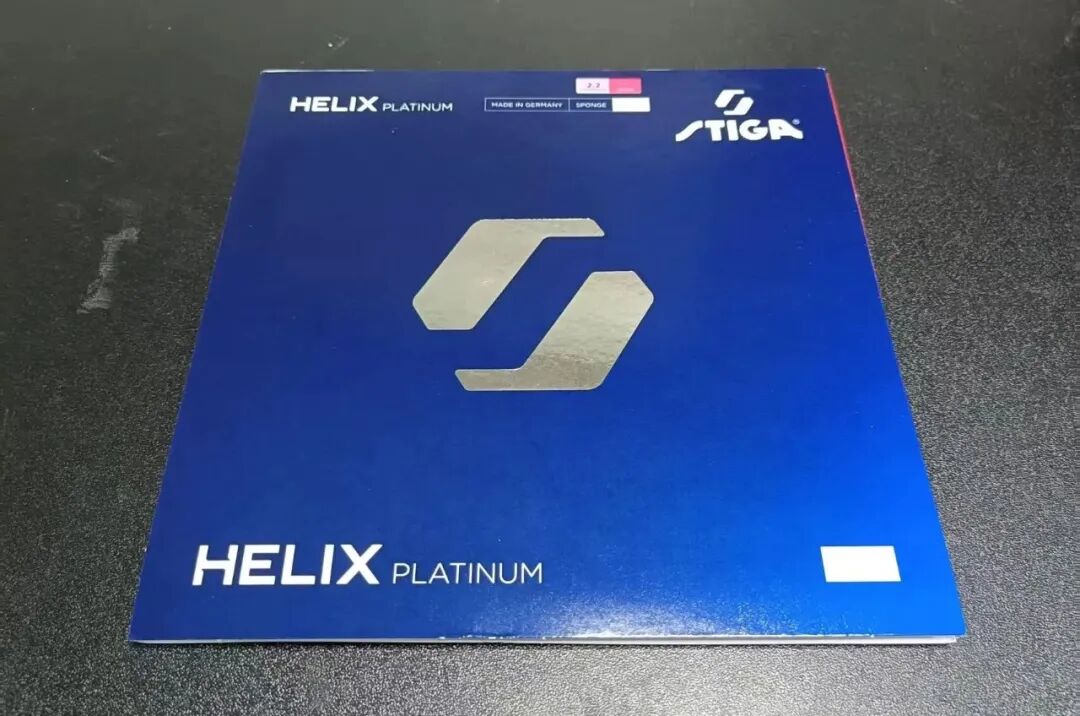
Now back to the Helix 55 that Moregard is using. I’ve also posted a short clip of myself playing with this rubber on Bilibili.
This is probably my favorite forehand European rubber of the past couple of years. The loop-kill is crisp and vicious. The surface friction has a certain toughness, spin values go a step beyond DNA Platinum XH, and the sponge absorption is better than Helix Platinum XH. On half-long-ball loop-kills it feels stable yet dominant. For players who like forehand tacky rubbers, Helix 55 really is impressive — it has a feel somewhat like Tenergy 19 with slightly more drive. Sponge hardness is between T05 and T05 Hard; I don’t find it too stiff.