How Players Choose and Think About Rubber Hardness (Part 1)
There’s a story that sticks with me. Some years ago, I teamed up with a friend’s older brother for a tournament. He had been playing two sides of Butterfly Tenergy 05 but couldn’t find any Butterfly rubber at the last minute. So he ended up sticking on two sheets of Donic Bluefire M2. Interesting situation — normally you’d go for M1, which is closer to T05 in hardness and performance.
But he said: at that point he wasn’t playing much, was still getting his form back, and even chose M2 on the forehand — just to be more consistent and handle all kinds of techniques. He was right. He played well in the tournament.
Onodera Shohei: Forced into a Harder Rubber
Setup: Super Viscaria, Dignics 09c on both sides
This player isn’t at the very top — around top 16 at the All-Japan Championships. But I found his interview interesting.
He said he started out on two sheets of Dignics 05 (D05). Then three years ago he switched his forehand to D09c first, and this spring he switched the backhand to D09c as well. He admitted that softer rubber gives better control. (D09c is harder than D05, and in his hands it also feels harder.) But when he plays in the Japan Table Tennis League against higher-level opponents, D09c gives him higher quality shots.
Commentary: The “higher quality” he’s talking about comes partly from feeling D09c as harder, and partly because D09c has better spin. Other players might feel D05 gives better quality — everyone has different needs.
Objectively, he also found that having one side slightly harder and one slightly softer gave a better feeling when hitting.
Commentary: Players who are balanced on both sides can use the same hardness on both — think Sasmysonov, Felix Lebrun, Hugo Calderano. Forehand-dominant players like me tend to keep the forehand harder and the backhand softer.
He also mentioned: when you’re in good form, go harder; when form is off, go softer to improve consistency. This reminded me of the national team: during big tournament prep, some players would start with, say, 40-degree rubber, and only after training settled in and they hit their stride would they bump up to 41.
One final point: rubber hardness correlates with weight. You can judge hardness by weighing the rubber — packaging included — before opening it. Heavier generally means harder. When I was picking Hurricane 8-80 rubbers for forehand and backhand, besides choosing between 37 or 38 degrees, I also weighed them: lighter ones went to the backhand, heavier ones to the forehand.
Mizutani Jun’s Understanding of Rubber Hardness
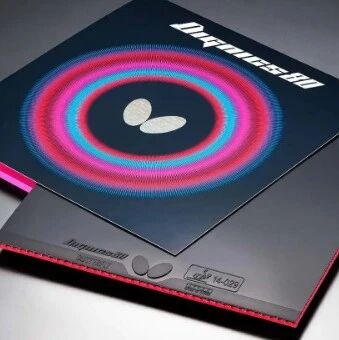
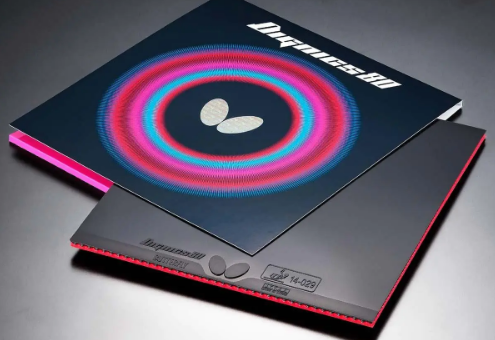
Setup: Mizutani Jun ZLC, Dignics 80 on both sides
His take: softer rubber gives better control, while attacking players tend to prefer harder rubber. In other words — go softer to improve control, go harder to boost attack. Of course, the key is whether you can actually handle the harder rubber.
Soft rubber has a longer dwell time and a lingering feel. Hard rubber leaves the blade faster and is relatively harder to control. But the trend these days is clearly toward harder rubber. Soft rubber tends to slip when absorbing incoming spin.
Rubber feel also changes with temperature. In warm weather, rubber feels relatively softer. In cold weather, it stiffens up — which is why you see players breathing on their rubber sheets in winter.
Mizutani also mentioned that rubber weight represents hardness. The heavier, the harder. He generally picks sheets of similar weight, but still presses the rubber with his fingers to gauge elasticity. He saves the best-feeling sheet for the critical matches later (like a final — though for him that mostly means domestic Japanese finals), and uses the second-best for the first day or two.
Which raises the question: why doesn’t Onodera Shohei also use the press-and-feel method? It’s a skill, sure — but the real reason might be that Butterfly doesn’t sponsor him. He pays out of pocket. So he has to weigh the rubber with packaging still on, without opening it. You can’t feel what you can’t unwrap.