Ten Petals: How National Team Men and Women Choose Blade Weight
1
Watching NBA news the other day — saw some soft performances from Embiid, and a fan commented that Harden wasted two years in Philly.
Somebody replied: “Without a good agent, your career plan is just one big mess.”
Another fan shot back: “Isn’t that most of our lives?”
A third chimed in: “Yeah — stumbling through it all without ever quite figuring it out.”
It got me thinking: when I was young, I used to feel my father hadn’t done enough to develop me. Now I feel I haven’t done enough for my son. So often we have the heart but not the means. Some things maybe only become clear at the very end.
2
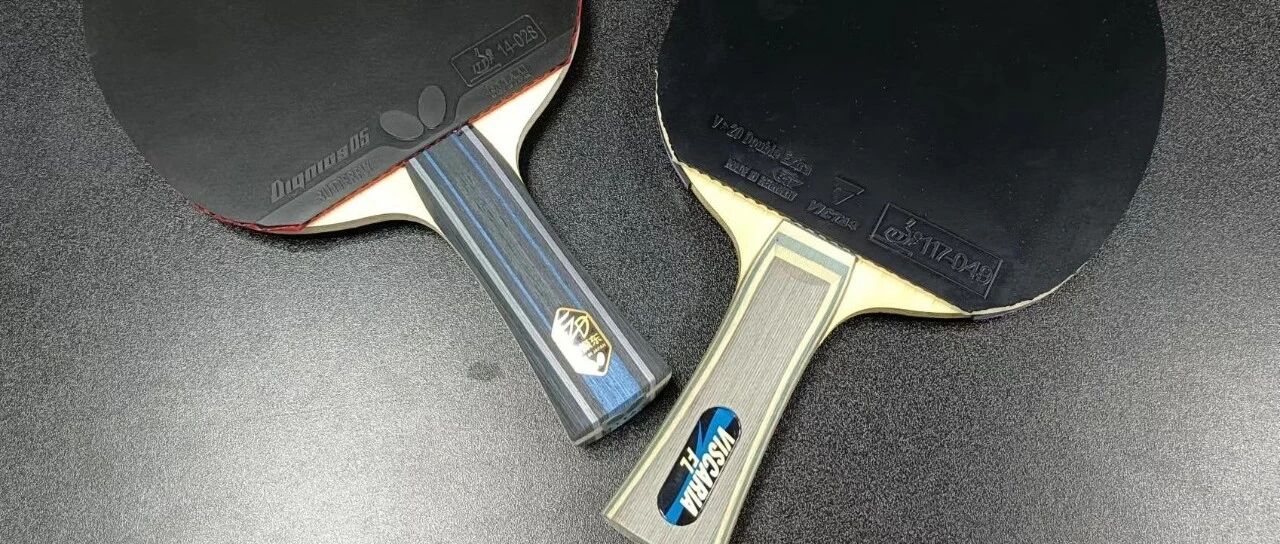
A reader asked about Tenergy 19. My take: think of it as a softened Dignics 05. The dense pip layout and the feel of the topsheet give T19 a similar bite and crispness to D05 when generating spin. The topsheet is also more durable than T05 or T80. As for sponge hardness, it’s relatively easy to flex through on the backhand. If you can’t handle D05 on the backhand, T19 is worth a try.
3
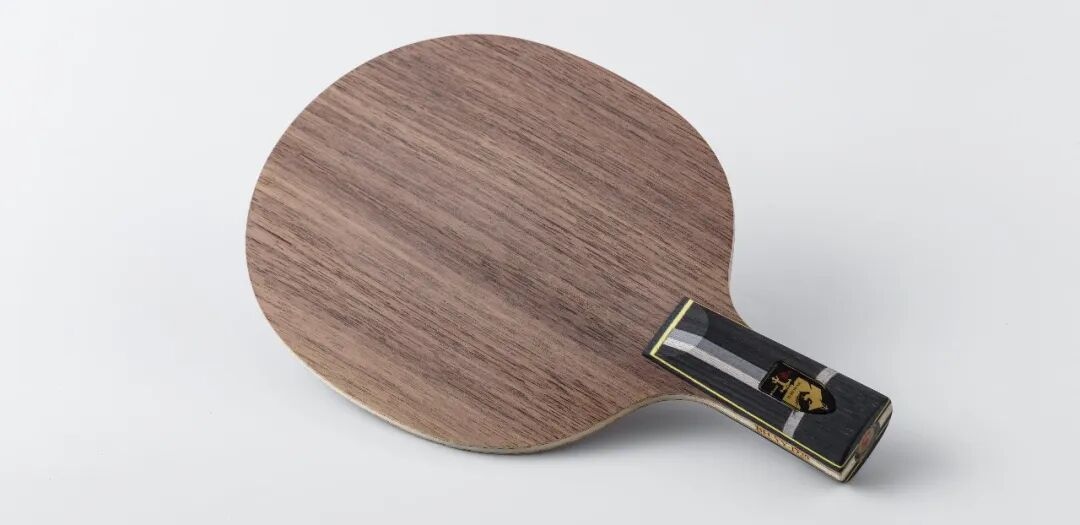
Last time I mentioned that you don’t necessarily need to flex completely through a rubber — as long as the ball carries real threat and you stay in control. Take the Bharal (Yan Yang), for instance: that hard wood face and solid construction mean moderate swing power only flexes part of the blade. Full flex is hard to achieve. But it naturally produces high speed, is crisp off the bat, and still grips the ball. In essence, it’s the same principle as the Super Zhang Jike. Very different construction, but for penhold players, the Bharal is kind of the budget-friendly version of the Super ZJK, in a way.
4
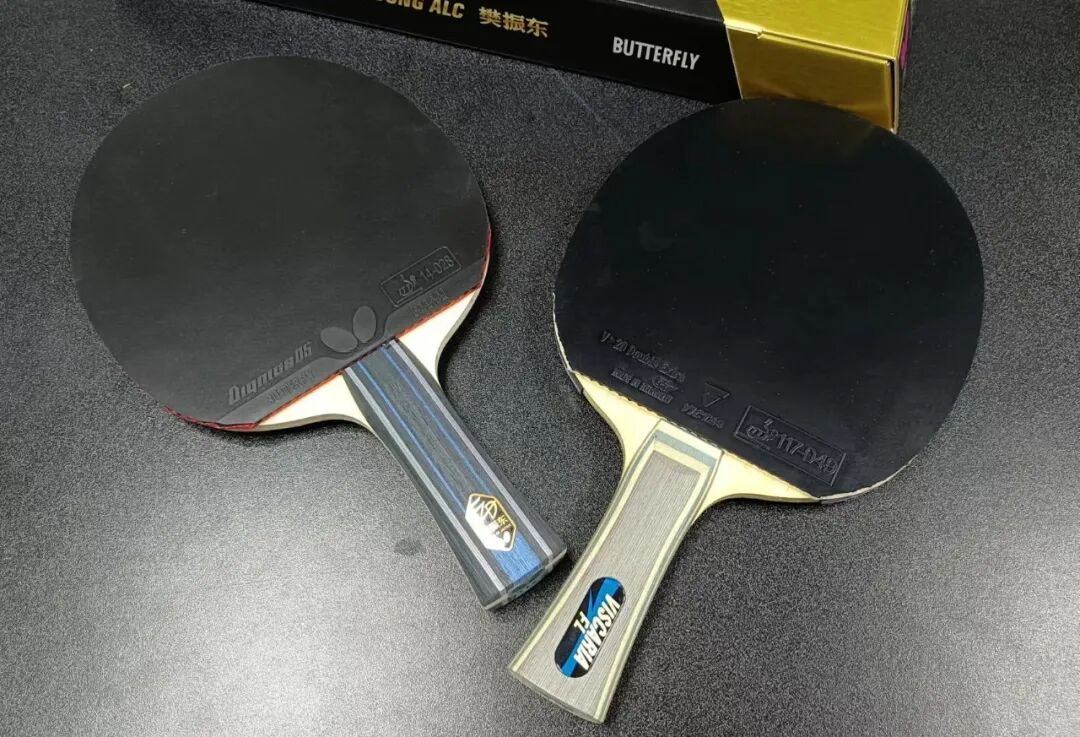
Ding Ning’s EG at 82g, Wang Manyu’s Vis at 84g, Chen Qi’s EG at 97g. Zhou Qihao and Fan Zhendong favor the gold-label Vis and tend to go 95g and up. Some of this is confirmed fact, some is rumor. But it reflects the real difference in how male and female players select blade weight.
I also recall an interview with Yan An, who said he liked around 88g — close-to-table speed becomes sharper at lighter weights. The lighter the blade, the faster the swing recovery.
5
On the Fan Zhendong ALC — some say it has a “small sweet spot.” What’s really happening is that when you don’t put in full power, the blade grabs the ball too much and doesn’t travel well. But when you accelerate with the paddle head, it launches explosively. That paddle-head sweet spot is exactly what raises its power ceiling. It’s a characteristic of the blade.
Similar to what some people call the “dropout” issue with the Innerforce ZLC — it’s just a characteristic, not necessarily a flaw.
6
Red and black rubbers really do have different properties, influenced by the dye. Dr. Zhang Xiaopeng wrote years ago — roughly paraphrased — that black is stickier and red is faster. That explains why you see players put the red rubber on the backhand and black on the forehand: it maximizes each side’s strengths. Backhand technique involves smaller, more compact strokes, so you want clean and direct response.
7
Beyond red and black: some blue rubbers I’ve tried are grabbier than either; some green ones feel almost plasticky — less sensitive to incoming spin — though that’s not universal across all brands using those colors.
8
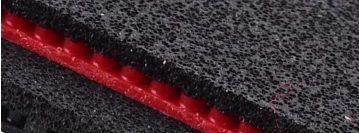
Dye also affects the sponge. Joola’s black carbon sponge, for example, doesn’t actually contain carbon — it’s just a carbon-black dye giving it that dark color.
9
Samsonov used to wear Asics badminton shoes — the Blade model. While badminton and table tennis shoes share many similarities, players who favor an aggressive first-strike style — low stance, early attack — are better served by thinner table tennis-specific shoes like the Hyperbeat 4 or Excounter 2. If you’re tall or play a steadier, more patient rallying style, badminton shoes can work fine.
The more aggressively you attack, the thinner and more responsive you want your footwear.
10
In theory, the higher the sponge hardness, the higher the ceiling for generating spin.