Choosing the Right Sponge Thickness for Your Table Tennis Rubber
1. Pimples-Out Without Sponge vs. Long Pips With Sponge
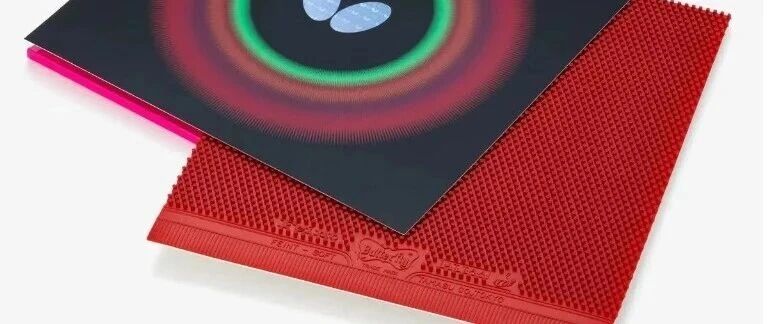
I wrote about this before. What happens when you use Feint Long III with OX (no sponge) versus with 1.3mm sponge? With OX Feint Long III, an incoming backspin ball comes back as topspin. With 1.3mm Feint Long III, an incoming backspin can still generate a little backspin of your own on the return. The reverse-spin effect is weaker than with OX, but with the right hand action there are more spin variation possibilities.
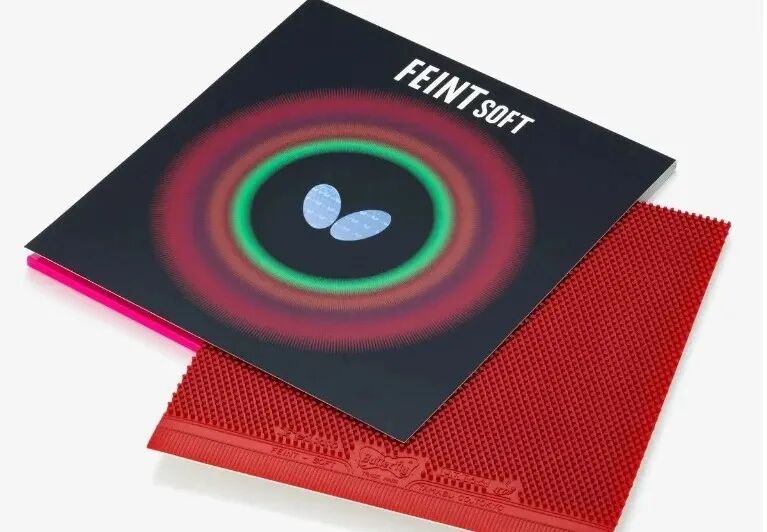
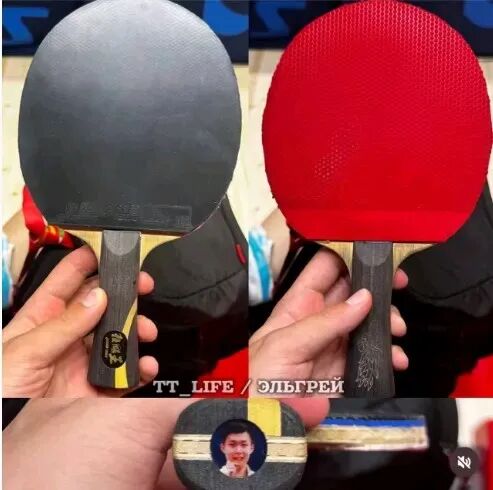
He Zhuojia chose the relatively thicker Feint Soft (1.3mm) because it gives more spin variation — and because she plays an attacking long-pips style where more sponge means more power.
Broadly speaking, OX (no sponge) produces the most pronounced reverse-spin effect. That is almost certainly the main reason that the illegal “hardened” long pips circulating today are predominantly OX — the practical in-game effect is more direct and more disorienting.
Rubbers with sponge are more stable for passive blocking and absorbing shots. That said, with OX, because incoming energy transmits through to the blade itself, a heavily topspun ball will also have some of that spin absorbed by the blade.
2. Sponge Thickness for Pips Rubbers Depends on Your Stroke Penetration
For pips-out rubbers — short pips and medium pips — the sponge thickness choice mainly comes down to whether you can actually stroke through it. From what I have observed of national players and retired professionals, 1.8mm and 2.0mm are the most common choices for short and medium pips.
Thinner sponge is easier to penetrate and gives a crisper feel; thicker sponge theoretically has more power but requires more effort to hit through. Just go with whatever thickness you can actually penetrate consistently. Because pips play is somewhat specialized, if you can get through it, directional control is better and you can tap into the blade’s stiffness for added speed.
For inverted rubber, you can still play well without fully penetrating — dwell time carries you. But for pips rubbers, penetrating is ideal. Fully through the sponge, your placement guidance improves noticeably.
3. Inverted Rubber Sponge Thickness
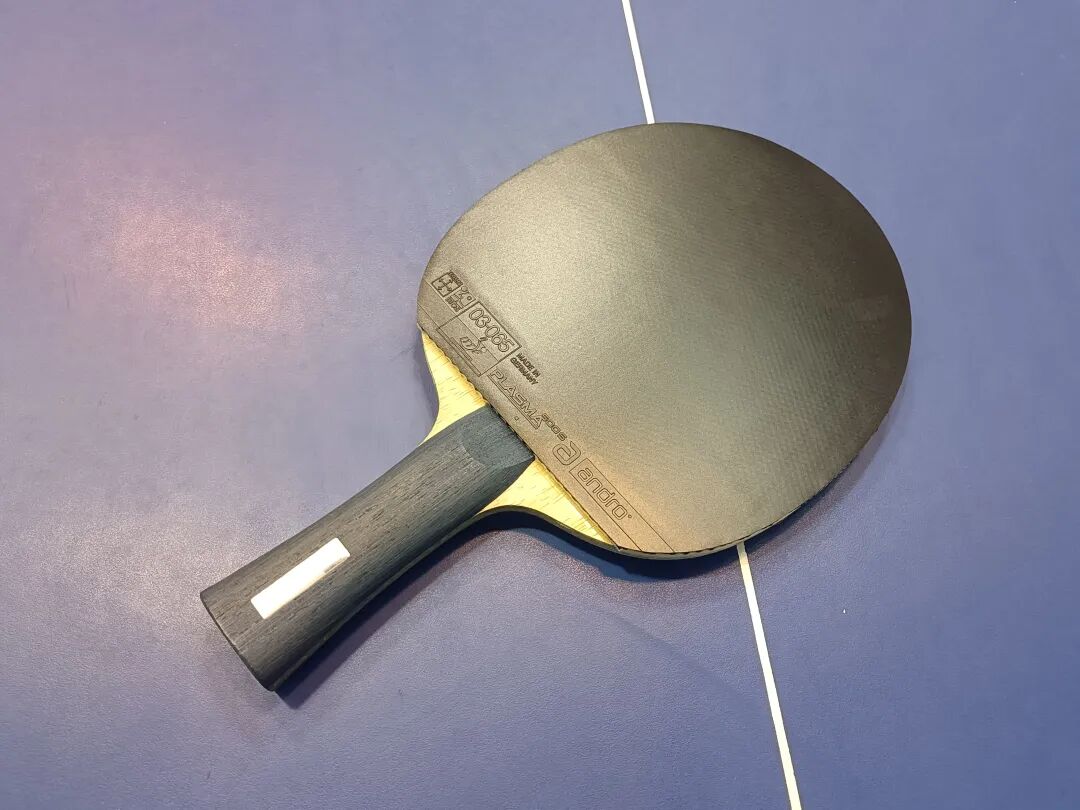
For inverted rubbers, the choice is relatively more straightforward. Take the lightly tacky newcomer Plasma 500S: the 2.1mm version has less penetration than Max, but because 2.1mm is easier to stroke through, it works well on the backhand.
Thinner sponge tends to give a “balanced looping and driving” feel. For example, 1.9mm T05 or D09c has been called a backhand magic rubber by some players. Personally I am not keen on 1.9mm because the dwell feel drops off noticeably and spin output is weaker than 2.1mm. It is lighter, but the penetration is also weaker.
Players who like 1.9mm T05 or D09c, or 2.5mm Z03, are prioritizing stroke penetration — they want a crisper feel. If you can comfortably manage 2.1mm, the spin output and power will be greater.
Equipment selection, especially rubber choice, should ultimately come down to your own inner sense of feel. That is also what makes analyzing gear for other players so tricky — everyone feels things differently.
A thinner backhand rubber makes the forehand easier to penetrate too. A thicker backhand rubber gives the forehand more raw power.
4. Not Everyone Chooses Maximum Thickness on the Forehand
Two things to consider. First, if your forehand attack style leans toward speed — faster swings and quick exits — go slightly thinner for easier penetration. If you prioritize spin, or if you emphasize absolute single-shot quality, go thicker.
Second, consider the pairing. A thick or stiff blade can use slightly thinner sponge. That said, the general advice is still to try the thicker option first — if it does not work out, step down.
Because on the forehand, damage potential is critical. Thinner sponge tends to produce lower-threat balls.