WTT Champions Chongqing: Equipment and Technique Takeaways, Part 1
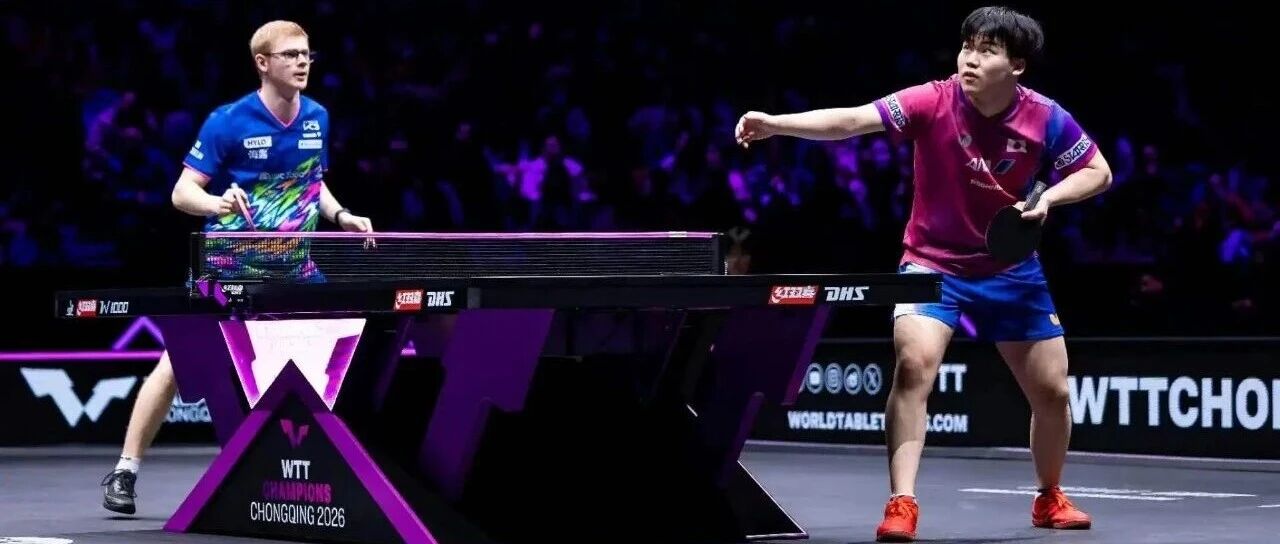
1. The Fast Deep Serve
Sending a long fast ball at the drop of a hat is the signature move of Matsushima Kiryu and Felix Lebrun. Watch their semifinal — it’s four words: no negotiation, just attack. And the fast deep serve is one of the most critical building blocks.
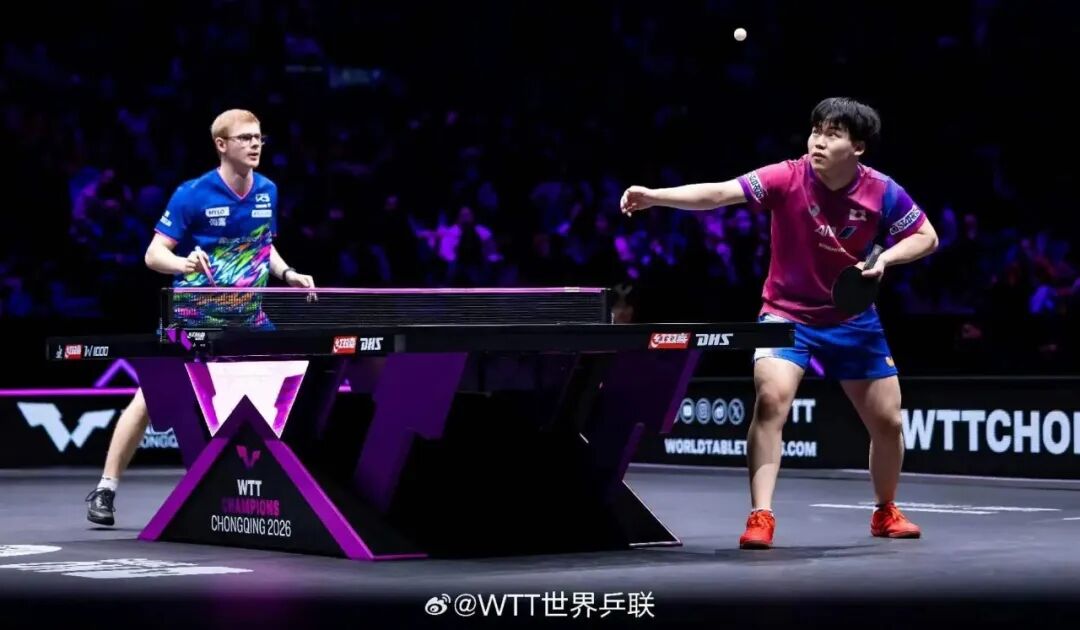
A couple of years ago I was already amazed by how often Harimoto Miu used the fast deep serve. I never expected so many young players to be deploying it at such high frequency now, with non-Chinese players using it even more aggressively than the Chinese national team.
At this Chongqing event, Satsuki Odo’s hook fast deep serve played a decisive role in her wins over Wang Manyu and Chen Yi. Particularly in the match against Manyu, she simplified her tactics and avoided getting drawn into close-table exchanges.
2. High-Quality Counter-Loops and Counter-Drives Have Become a Mature Tactic
I can’t quite remember when directly counter-looping an opponent’s topspin for a winner first started trending. But I have a vivid early memory of Ma Long using it beautifully — though he relied more on a step-around forehand counter-loop. Today’s non-Chinese players use it more aggressively, especially on the backhand side. Serve, anticipate a weak topspin or flat ball from the opponent, then fire off a backhand counter-drive, a violent fast tear, or a counter-loop. Watch Felix Lebrun against Tom Jardim, or Matsushima against Wang Chuqin — it’s unmistakable. The Odo-vs-Manyu match was the same: essentially decided in three balls or fewer.
Back in October at the China Grand Slam, Matsushima had just switched to ZYRE-03 on his backhand and beat Liang Jingkun 3-2. In my article at the time I said it suited him well — great for defense, you can just push forward mindlessly, and in key moments it keeps you in the topspin-vs-topspin grind where you just keep going forward. Since switching to that rubber, Matsushima’s backhand flat hits, counter-drives, and counter-tears have all become more consistent. Two wins over Wang Chuqin in the past six months — you can’t ignore the equipment contribution.

If your backhand game relies heavily on counter-loops, counter-drives, and flat hits at high frequency, I believe a frictionless or lightly tacky inverted rubber would be a better choice — it’s less vulnerable to incoming spin and gives a better speed feel. Not every player should use Hurricane on the backhand. If you can produce better control and spin variation with it, great. But if you’re just trying to beat your opponent with raw speed and aggression, why use Hurricane on the backhand? It’s both exhausting and slow.
Notably, some Chinese national team players seem to have noticed this. Over the past six months, Wang Yidi and Chen Yuanyu have both switched from two-sided Hurricane to K3 Pro on the backhand. Others like Xiang Peng have been experimenting with Jekyll and Hyde C55.0 on the backhand as well.
3. Mid-to-Deep-Table Counter-Attacking Has Become More Three-Dimensional
At deep table, it’s no longer mainly defense — players seize every opportunity to counter-attack. Lin Shidong, Alexis Lebrun, and Hugo Calderano are the standout examples here. Hugo in particular is playing with increasing confidence and aggression. Generally speaking, counter-attacking from deep table requires a rubber with solid catapult effect and good arc control. A lightly tacky outer rubber is a relatively accessible choice — it provides dwell time without being too tiring.
On that note, there were suggestions from some players that Lin Shidong switch rubbers on his forehand. Here’s my take: switching to a specially hardened K3 Pro or D09c like the Lebrun brothers use isn’t out of the question, but habits are hard to break. And honestly, when Hurricane is well boosted — just check the pimple texture on the forehand side of players like Xiao Pang, Da Tou, or Liang Jingkun online — it’s not like it can’t work.
For frictionless rubbers, the catapult effect is better, which makes deep-table counter-attacking less taxing. But arc control is comparatively weaker. That’s why Moregard switched from DNA Platinum to Helix, which has better surface friction, improving both spin and the arc feel when retreating to counter-attack.
Of the two, DNA Platinum is more direct in power transfer — recreational players find it easier to generate speed. Helix has better surface friction and more spin, but the power threshold is slightly higher than DNA Platinum.