After a Sleepless Night, I Finally Cracked China's Secret to Defending the Title
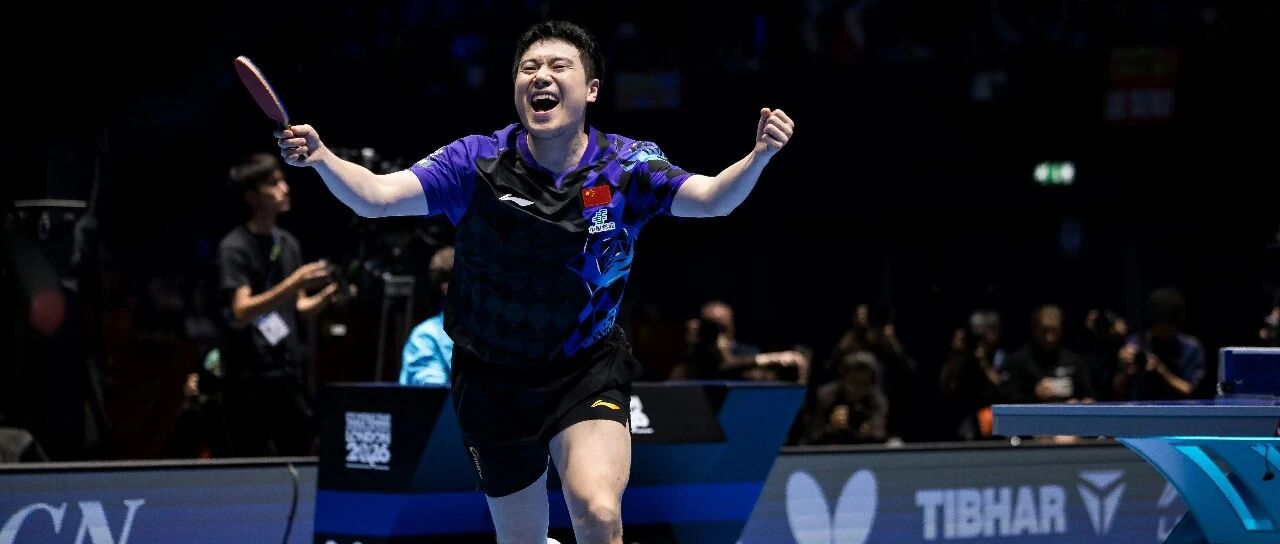
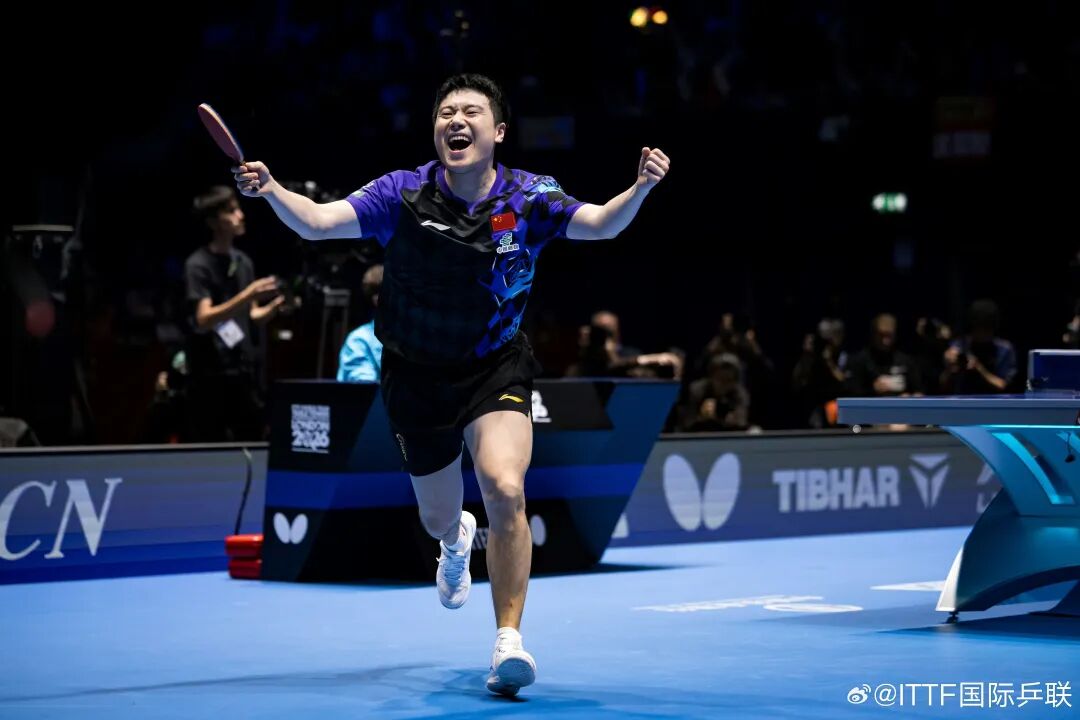
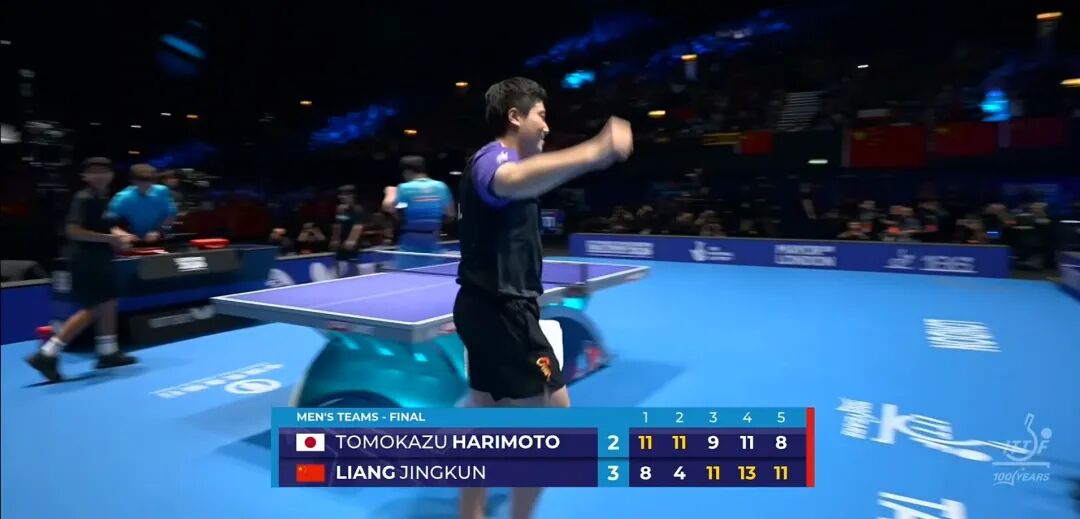
In the early hours of the morning, the Chinese men’s team defeated Japan 3-0 to secure their 12th consecutive World Team Championship title. Think about it: a team that lost two matches in the group stage then dismantled the spirited French team in the semifinals and the brilliantly talented Japanese team in the final by wide margins. It’s hard to believe.
If you watched the matches, you’d find that reality is stranger than fiction. Liang Jingkun had just produced a legendary comeback win over Felix Lebrun. Less than 24 hours later, another insane comeback. The kind of thing that, if your nerves aren’t solid, could make you faint just watching.
Then you think back to the Macao World Cup, where Hiroto Shimizu led Wang Chuqin 3-2 before getting turned around. How can Japan just never seem to close out that final step? China clearly has some ultimate code that hasn’t been shared with the world. After thinking it over all night, I finally distilled it into four words.
1 — The Harder the Headwind, the More Dangerous He Becomes: Liang Jingkun 3-2 over Tomokazu Harimoto
How do you even describe Liang Jingkun’s tactical level? It’s genuinely difficult. You simply cannot watch the Liang Jingkun of the first two games against Alexis Lebrun and the Liang Jingkun of the last three games and believe they are the same person. Then in the team final against Tomokazu Harimoto, he lost the first two games, fell 3-8 behind in the decider, and then won eight straight points to complete the comeback. The more you watch, the more impossible it seems.
The best way to describe him: in ordinary conditions he’s a solid star player; in a headwind he becomes a superstar. And the harder the wind blows, the more fired up he gets.
After watching Harimoto lose to Wang Chuqin, the younger Lebrun probably found it easier to forgive his brother — because he would understand that even if he had been on the court, facing this kind of headwind deity, there was no guarantee he would have survived either. Wang Chuqin isn’t lacking ability; he just needs a stiff breeze to wake himself up.
This is roughly what a superstar goalkeeper does. Not the lowest tier of superstars — rather someone who filters out ordinary stars and stands guard at the gate, standing there alongside the rest.
Back to the match: losing the first two games against Harimoto came down to backhand-to-backhand exchanges. Early on things were fine, but then Harimoto adjusted to Liang’s spin, the line of play became too predictable, and once Harimoto picked up the pace, it flew.
From the third game onward, Liang started from his serve, trying to prevent Harimoto from getting an early flip, using forehand-side short control to restrain him. He also played more backspin balls. Crucially, Liang gradually realized that speed was more important than ball quality. In other words, putting in maximum power actually made it easier for Harimoto to redirect — better to dial back the force a little and put more energy into transitioning faster.
By the end of the fourth game, Harimoto started fading. I wrote in one of the fan groups at the time that Harimoto had already gone nervous; he likely wasn’t going to clear this hurdle.
Liang Jingkun completed another routine “five-game special.” In the decisive game, with Harimoto leading 8-3, he suddenly forgot how to play. Mainly he gave Liang an opening, and Liang just stayed close to the table and ground it out. Why did Harimoto’s hands go tight? He has a condition: once he takes the lead, he doesn’t know how to play anymore. This isn’t the first time.
Another important factor: when he can’t accelerate, he runs out of ideas. On the equipment side, ZYRE-03 reinforces this tendency — it’s excellent when you can push the pace, but offers little value when you can’t, and it’s prone to errors. Unless you can keep charging forward without hesitation.
2 — Wang Chuqin Has a Hidden Card: 3-1 over Hiroto Shimizu
Before the match I thought it was roughly 50-50. After watching it, just as a friend put it, Wang Chuqin had been holding back: the brilliant moves that won him the last two games against Shimizu at the World Cup were saved for the end — dropping the flip entirely on the return of serve, mixing short pushes and long chops, and that was enough to settle it.
The elegant simplicity of it.
Hiroto Shimizu is genuinely dangerous. His backhand drive is breathtakingly dominant, his forehand has strengthened considerably, and his topspin-to-topspin exchanges are ferocious.
But the more I watch, the more I notice the same issue with his ZYRE-03: when he can’t accelerate, errors pile up. Or put another way, its spin variation isn’t rich enough — when speed generation is blocked, the threat drops sharply and the range of options shrinks too much.

In topspin rallies it’s terrifying, but throw in more backspin balls and it doesn’t handle them as steadily as Hurricane or D09c. Is that an advantage of tacky rubbers? Well, not entirely. I’d even argue that Tenergy has richer spin variation than ZYRE-03. Of course, ZYRE-03 doesn’t get eaten by spin as easily and can accelerate wildly — that part is real too.
This brings us close to China’s ultimate code for defending the title: the doctrine of the mean.
What does “the doctrine of the mean” truly mean? Opposing extremes, opposing excess and deficiency, keeping things proportionate, seeking dynamic balance, pursuing harmony between heaven and humanity. It is an active choice, not passive compromise.
On the court, it shows up in many ways. For instance: when your momentum is running high and you feel great, leave a margin. Because that’s precisely when danger may arrive.
Liang Jingkun leading 10-3 in the fourth game against Alexis Lebrun, only to be clawed back to 10-all.
Wang Chuqin blazing through the second game against Wu Jeoncheng 11-1, then dropping the next two 8-11 and 7-11.
Wang Chuqin winning the third game 11-2 against Shimizu far too easily, only to fall behind by a large margin at the start of the fourth.
Beyond that, you can’t have only one way to win. Shimizu’s explosive, all-in style has an incredibly high ceiling — but it can also bottom out badly. That’s why he could go 0-3 against Qiu Dang in the group stage and 1-3 against Glassmacher in the knockouts: he only has one tempo, and that tempo is acceleration.
A true champion needs to be “complete” — to have different solutions for different problems. That way, facing different opponents, encountering different difficulties, you can always readjust and ultimately solve the puzzle.
At the same time, in terms of mindset: don’t get cocky when winning, don’t despair when losing. As coach Wang Hao put it: one point at a time. Simple words, but the truth is in them. Maybe all of this is just what we’d call championship pedigree.