Equipment or Technique? Rubber Brand Breakdown Among the World's Top 100 Male Players

Equipment or technique — which matters more in table tennis? A rubber sheet survey of the world’s top 100 male players reveals: German-made rubbers (ESN family) account for approximately 47.5%; Japanese-made rubbers (primarily Butterfly) account for about 39.5%; and Chinese-made rubbers (primarily DHS) account for about 12.5%.
Former Japanese national team player Yusuke Oshima commented: “I got used to the bounce of Japanese rubber, and when I tried to switch to Chinese rubber it completely backfired. At the amateur level, many people clearly have a technique problem but put the blame on their equipment — that kind of thinking will never lead to improvement.”
Rubber Brand Market Share Among Men’s World Top 100
Forehand counts as 1 sheet, backhand counts as 1 sheet.
| Brand (Country) | Sheets | Share |
|---|---|---|
| Nittaku (JPN) | 1 | 0.5% |
| Dr. Neubauer (GER) | 1 | 0.5% |
| XIOM (KOR) | 2 | 1% |
| Yasaka (JPN) | 4 | 2% |
| GEWO (GER) | 4 | 2% |
| VICTAS (JPN) | 6 | 3% |
| STIGA (SWE) | 7 | 3.5% |
| Joola (GER) | 12 | 6% |
| Donic (GER) | 15 | 7.5% |
| DHS (CHN) | 25 | 12.5% |
| Butterfly (JPN) | 79 | 39.5% |
Community reaction was mixed. One commenter noted: “Whether it’s German, Chinese, or Japanese, the best rubber is the one that suits you. A veteran park player with an oxidized paddle can still take down a ‘pseudo-expert’ wielding Butterfly T05.”
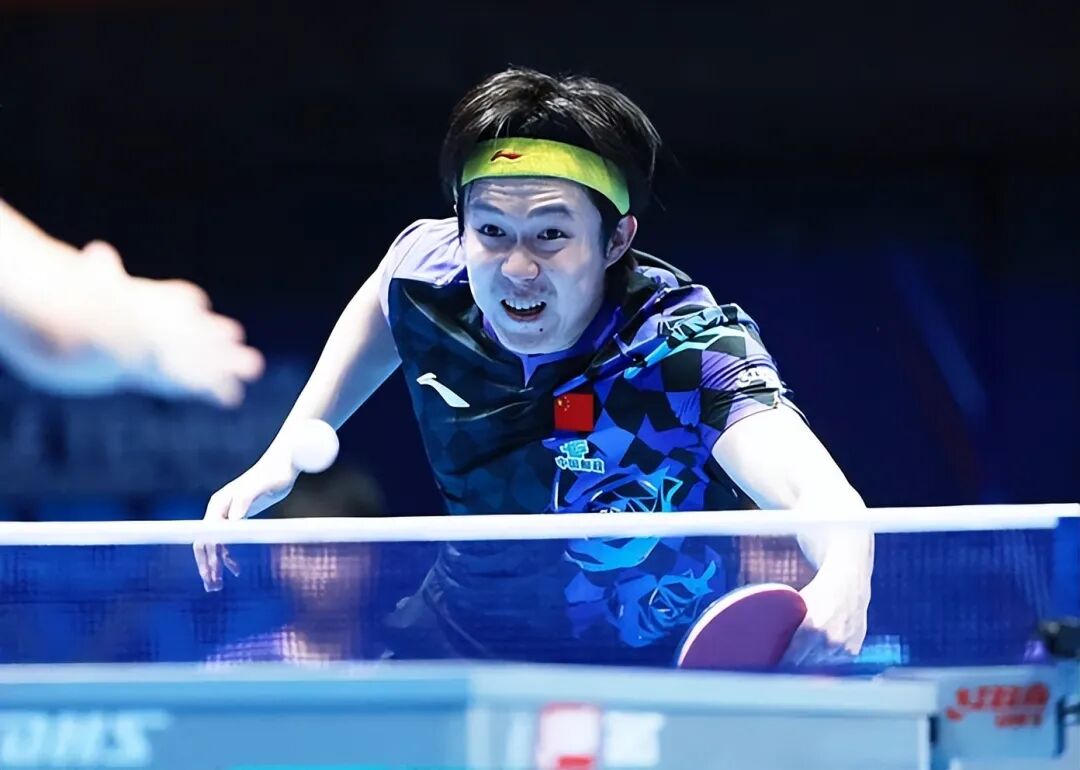
World No. 1 Wang Chuqin uses DHS rubber on both wings: NEO Hurricane 3 Blue Sponge on the forehand and Hurricane 8 on the backhand.
Oshima’s Warning on Equipment Changes
After graduating from university, Oshima switched to Chinese-made tacky rubber on his forehand following a discussion with his coach. The result: “It was completely wrong.”
Chinese rubber and Japanese rubber have fundamentally different bounce characteristics. The feeling of “the ball not coming off fast enough” caused him to unconsciously over-swing. Not only did his international results decline — he also developed a shoulder injury that kept him from training for a month and a half.
Oshima’s conclusion: “At the amateur level, many people clearly have a technique problem but shift the blame to their equipment.” He went further: changing equipment might produce short-term wins, “but if the root problem is technical and you don’t confront and fix it, your growth as a player will stagnate.”
His core message for improvement: “First, re-examine your technique honestly. Then choose equipment that can support where you’re at and where you’re going. That attitude is the single most important key to improvement.”