Stiga Offensive Classic vs Tibhar Stratus Power Wood: Which Should You Buy?
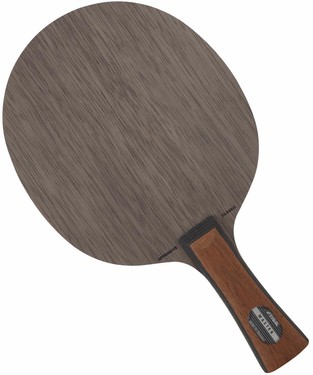
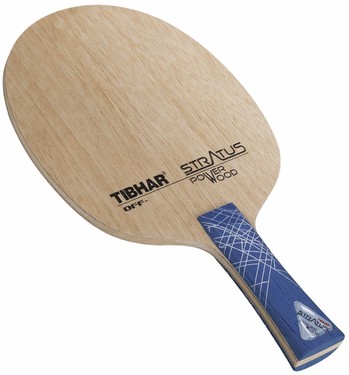
| Stiga Offensive Classic | Tibhar Stratus Power Wood | |
|---|---|---|
| Our rating | 8.4/10 | 9.0/10 |
| Feel | thin, flexible, soft-medium springy all-wood with strong vibration and feedback | Elastic with long dwell time, lively yet controlled, larger-than-average head and big sweet spot |
| Handle | FL/ST/AN (WRB hollow-handle version also sold) | FL / ST / AN |
| Plies | 5W (all wood) — outer veneers commonly described as koto or limba over spruce and ayous | 5-ply all wood (Limba-Limba-Ayous-Limba-Limba) |
| Speed | OFF- (offensive minus; community-rated, occasionally felt as ALL+ to OFF) | OFF- |
| Sponge thickness | 5.4 mm | 6.2 mm |
| Weight | 83 g | 90 g |
We may earn a commission from links on this page. Learn more.
Fast Verdict
Both of these are 5-ply all-wood blades built for players who are learning to loop, and both show up constantly in “best budget blade” threads on Reddit r/tabletennis. They are not equally rated, though: Tibhar Stratus Power Wood carries a community score of 9.0 against the Stiga Offensive Classic’s 8.4, and the axis-by-axis data explains why. If you are choosing between the two with no prior loyalty to either brand, the numbers lean toward the Stratus. If you already own an Offensive Classic and are wondering whether to replace it, the answer is more nuanced.
What The Axis Numbers Actually Say
Pull the axis deltas apart and one gap dominates on paper: the Stratus rates 2.5 points higher on the weight axis, 8.2 versus 5.7. That is the largest single delta in this pair, but it deserves a second look before you treat it as decisive. The spec sheet’s actual gram weights are close: 83g for the Offensive Classic against 90g for the Stratus, only a 7-gram difference. That tells us the composite weight axis is capturing more than raw mass. It is almost certainly picking up the Stratus’s larger head and bigger, more forgiving sweet spot, which reads to reviewers as more heft and stability rather than simply more grams on a scale.
The two axes that translate most directly into what you feel on the table are control (8.3 versus 9.3, a 1.0-point gap) and consistency (7.9 versus 9.1, a 1.2-point gap). A full point of control at this level is roughly the difference between a loop that clears the net with margin to spare and one you have to steer by hand. Revspin’s aggregated reviews and the Megaspin buyer reviews on the Offensive Classic both flag its small sweet spot and its habit of flexing and sailing long on hard loops, which is exactly what a lower control score predicts. The Stratus’s bigger head and higher control number mean more of your medium-effort loops land safely inside the table, and that matters more to an improving player than any raw speed advantage.
Speed does differ meaningfully as well, 7.6 versus 8.9, a 1.3-point gap, and stiffness differs too, 3.8 versus 4.9, which lines up with reviewer language describing the Offensive Classic as thin and flexible while the Stratus is described as elastic with a longer dwell time. But there is one axis where the two blades are identical: hardness, both scored exactly 5.4. That is a genuine null result, not a rounding artifact. Whatever separates these two blades, the raw hardness of the wood at contact is not one of the things doing the separating, so do not let any marketing language about “distinct feel” talk you into believing hardness is a real differentiator here.
Where The Gap Is Too Small To Matter
Not every number on this sheet should change your decision. The 0.0 delta on hardness is the clearest example of a non-difference. Even the 1.0-point control gap, while statistically real, will not announce itself on your first ten shots with a new blade; it shows up over a season of play as fewer loops sailing off the far end of the table, not as a dramatic first-impression difference you would notice in a five-minute test hit.
Playstyle Fit
The Offensive Classic’s own review base, TableTennisDaily and Megaspin buyer reviews included, repeatedly calls it a classic prized for honest feedback and a flexible, forgiving feel for close-to-table looping, at the cost of a smaller sweet spot and a thin top veneer that can splinter at the edges. It suits players who value feel and price over outright forgiveness. The Stratus, per its Tabletennis11 and Megaspin coverage, is positioned squarely as a value-for-money 5-ply for beginner-to-intermediate two-winged loopers who want a bigger margin for error and more built-in pace, with the tradeoff of a slightly head-heavy balance and backhand blocks that reward precise timing.
Should You Switch?
If you already own and like the Offensive Classic, the case for switching is thin. You would be trading a blade whose flex and feedback you presumably enjoy for one with more raw forgiveness and pace, and that is only a real upgrade if your specific complaint is loops sailing long or a sweet spot that feels too small. If you have not bought either yet and are simply building a first attacking setup, the Stratus’s higher scores across control, consistency, and speed, combined with its reputation as one of the best-value 5-ply blades on the market, make it the safer default pick.
Bottom Line
The Stratus Power Wood is measurably the more forgiving, faster, and more consistent blade of the two, but the Offensive Classic’s flex and feedback have earned it two decades of loyal reviews for a reason. Choose the Offensive Classic if you specifically want that thinner, flexier feel at a slightly lower price point. Choose the Stratus if you want the higher floor on control and consistency while you are still building your looping game.
Frequently asked questions
Is the Tibhar Stratus Power Wood really better than the Stiga Offensive Classic, or just newer?
It rates higher on control, consistency, and speed in aggregated reviews, and its larger sweet spot is a real, reviewer-confirmed difference, not just a newer-product bias. The Offensive Classic still wins on raw feel and feedback for players who prefer a thinner, more flexible blade.
Should I upgrade from the Offensive Classic to the Stratus Power Wood?
Only if your specific frustration is loops sailing long or a sweet spot that feels too small. If you like the Offensive Classic's flex and feedback, there is no data-backed reason to switch.
Do these two blades actually feel different in hardness?
No. Their hardness scores are identical at 5.4, so any perceived hardness difference between them is likely coming from the rubber setup, not the blade itself.