Stiga Clipper Wood vs Stiga Infinity VPS V: Which Should You Buy?
| Stiga Clipper Wood | Stiga Infinity VPS V | |
|---|---|---|
| Our rating | 8.4/10 | 8.6/10 |
| Feel | solid, medium-stiff, hard fast all-wood with a big sweetspot | stiff thin outer (Diamond Touch), medium-hard |
| Handle | FL/ST/AN/PEN | FL/ST/AN |
| Plies | 7W (all wood) - limba outer plies over an ayous core, no carbon or synthetic layers | 5W (all wood) |
| Speed | OFF | OFF |
| Sponge thickness | 6.3 mm | 5.8 mm |
| Weight | 90 g | 88 g |
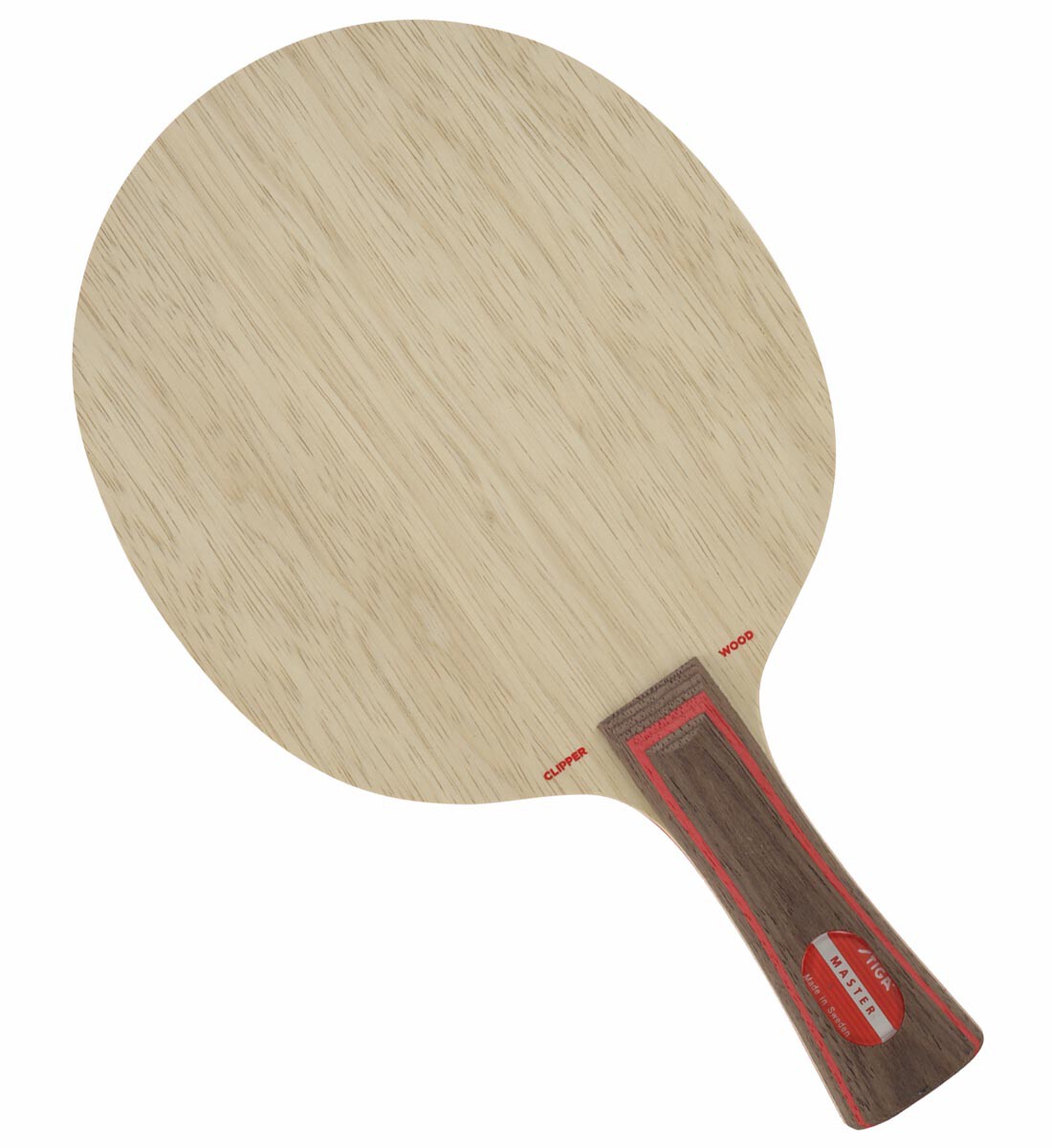
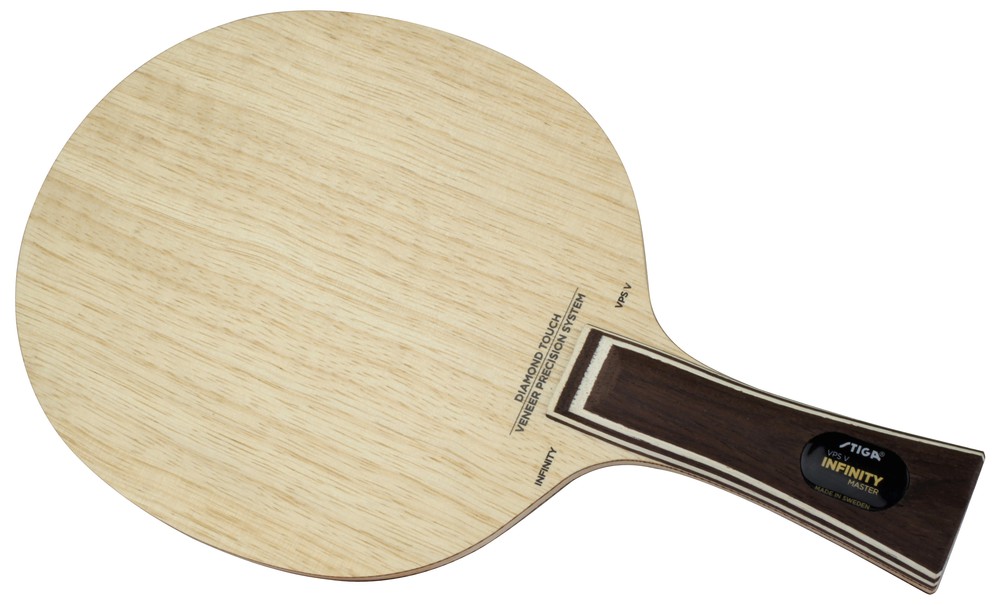
We may earn a commission from links on this page. Learn more.
The one axis where these two are genuinely tied
Start with speed, because it’s the axis most likely to get argued about, and the data says there’s nothing to argue: both blades rate exactly 8.6. That’s not a rounding artifact - the Clipper Wood’s own review notes flag this directly, listing as a con that its “real-world speed sits in OFF, not the OFF+ its reputation suggests.” In other words, the Clipper Wood has a reputation for being faster than the Infinity VPS V, but the aggregated user data says they’re identical. If a comparison elsewhere tells you the Clipper is meaningfully faster, that comparison is repeating a myth the data doesn’t support.
Where the real gap is
Consistency is the one axis with a genuinely large spread: 7.4 for the Clipper Wood against 9.0 for the Infinity VPS V, a 1.6-point gap - the largest delta in this comparison and one of the larger consistency gaps across this whole set of rewrites. That tracks with the VPS V’s build: its Diamond Touch outer and stiffer 5-ply construction are designed to give “power in the fast game and control in the short game, with strong stability,” while the Clipper’s 7-ply all-wood construction, despite a famously “big sweetspot and excellent, confidence-building control,” seems to trade a little shot-to-shot repeatability for that classic wood feel.
Hardness runs slightly in the Infinity VPS V’s favor too (6.3 vs 5.7, a 0.6-point gap), and control edges toward it as well (8.9 vs 8.5, 0.4 points) - both modest but directionally consistent with the consistency gap. Stiffness (5.9 vs 5.4) and weight (8.2 vs 7.5, tracking a near-identical 90g vs 88g stock spec) are both small enough to treat as noise rather than a real differentiator.
What each blade rewards
The Clipper Wood’s reputation, backed by Revspin, Reddit’s r/tabletennis, and the Tabletennis11 blog, centers on “rock-solid blocking that absorbs incoming energy” and “outstanding short-game touch on pushes and drop shots” - it’s built for close-to-mid-table all-round attackers and looper-blockers who want a big, forgiving sweet spot more than outright pace, and its own notes recommend pairing it with faster European or Japanese rubber to unlock the power it doesn’t generate on its own.
The Infinity VPS V, reviewed by Revspin, Megaspin, and Tabletennis11, is pitched at “dynamic, spin-first offensive players who want a controllable all-wood OFF blade with many gears for heavy brush looping” - a blade with more range across different shot types, but one that arrives fairly raw, with a thin outer veneer that needs sealing and wings that may want light sanding before use.
Handle options set them apart too
One practical difference the axis numbers don’t capture: the Clipper Wood is available in penhold (PEN) alongside flared, straight, and anatomic, while the Infinity VPS V ships in flared, straight, and anatomic only. If you’re a penhold player, that alone may decide this comparison regardless of the consistency gap.
Is it worth switching?
Going from Clipper Wood to Infinity VPS V mainly buys you consistency, a real 1.6-point gain, and a bit more control, at the cost of a rawer out-of-box blade that needs prep work and, per its own review notes, gives up “a little power to carbon blades from well behind the table” - not a concern if your game lives close to the table, which is exactly where both of these blades are meant to be played anyway.
Bottom line
Treat the speed axis as settled - these are equally fast, whatever their separate reputations claim - and make your decision on consistency and out-of-box readiness instead. The Clipper Wood is the more finished product for players who want a big sweet spot and don’t want to prep a blade before playing; the Infinity VPS V rewards the extra sealing work with a meaningfully more consistent, more gear-rich blade for spin-first players who loop heavily on both wings.
Frequently asked questions
Is the Stiga Clipper Wood actually faster than the Infinity VPS V?
No. Both rate exactly 8.6 on speed in Revspin's data; the Clipper's reputation for extra pace is not backed by the aggregated numbers.
Which blade is more consistent?
The Infinity VPS V, by a real 1.6-point margin (9.0 vs 7.4) - the largest gap in this comparison.
Does the Infinity VPS V need any preparation before use?
Yes - reviewers note it ships fairly raw, with a thin outer veneer that needs sealing and wings that may want light sanding.
Is the Clipper Wood available for penhold players?
Yes, it comes in a penhold handle option; the Infinity VPS V does not.