Stiga Allround Evolution vs Stiga Offensive Classic: Which Should You Buy?
| Stiga Allround Evolution | Stiga Offensive Classic | |
|---|---|---|
| Our rating | 8.2/10 | 8.4/10 |
| Feel | soft, high feedback | thin, flexible, soft-medium springy all-wood with strong vibration and feedback |
| Handle | FL/ST/AN | FL/ST/AN (WRB hollow-handle version also sold) |
| Plies | 5W (all wood) | 5W (all wood) — outer veneers commonly described as koto or limba over spruce and ayous |
| Speed | ALL+ | OFF- (offensive minus; community-rated, occasionally felt as ALL+ to OFF) |
| Sponge thickness | 5.4 mm | 5.4 mm |
| Weight | 80 g | 83 g |
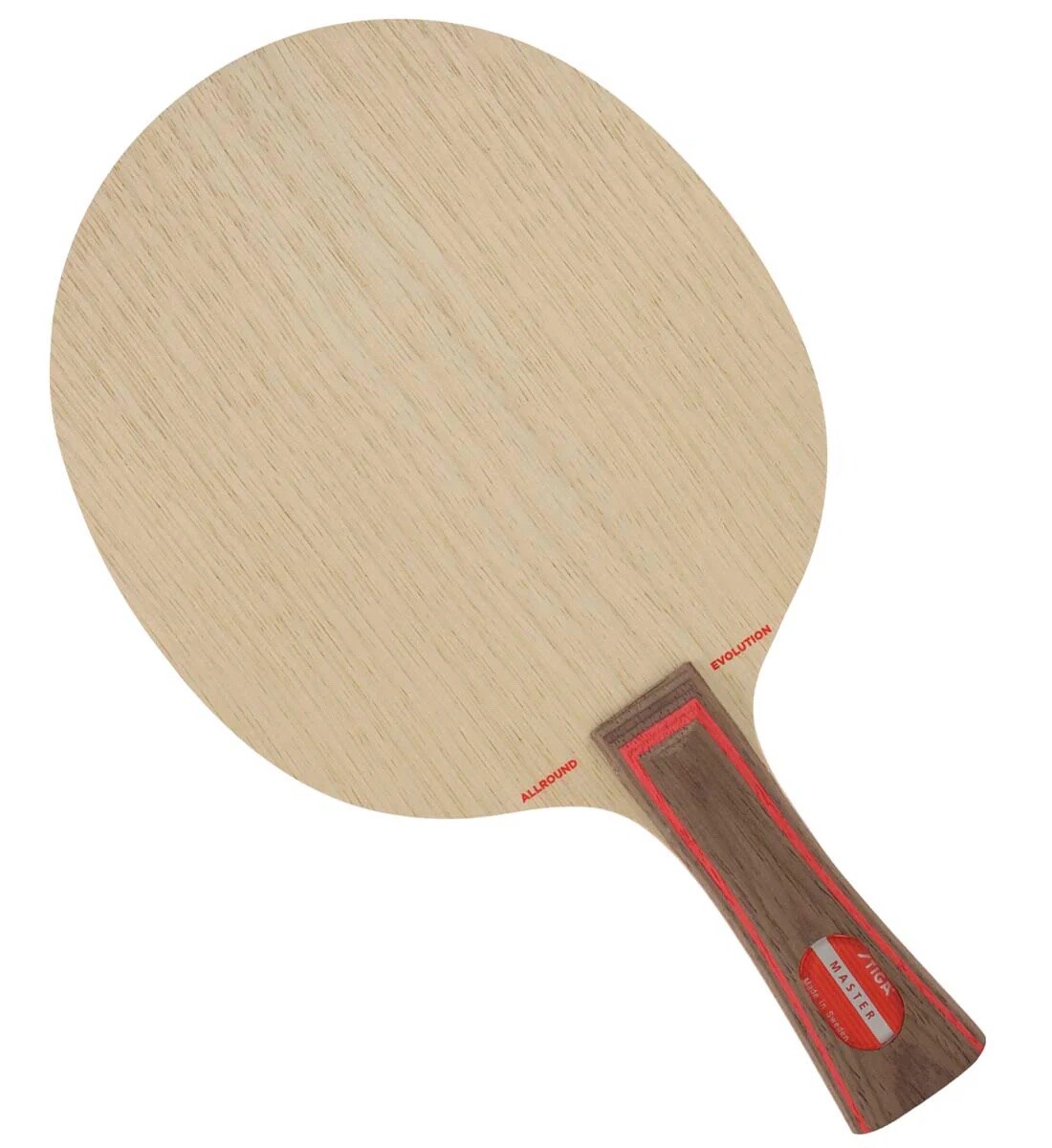
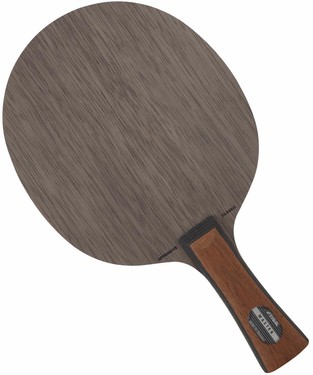
We may earn a commission from links on this page. Learn more.
Where the numbers actually diverge
Revspin’s aggregated user ratings put the Stiga Allround Evolution at 8.2 and the Stiga Offensive Classic at 8.4 - close enough that neither blade “wins” on overall score. What separates them shows up axis by axis. The biggest real gap is on the weight axis: Allround Evolution rates 4.6 against Offensive Classic’s 5.7, a 1.1-point spread that lines up with the spec sheet too - 80 grams stock versus 83 grams. It is a small number in grams but it is the kind of difference you can notice in the first few minutes of a session, especially on quick blocks near the table.
Consistency is the other axis worth paying attention to: Allround Evolution scores 8.8, Offensive Classic 7.9, a 0.9-point edge for the Allround Evolution. That tracks with what both product pages actually say - the Offensive Classic’s own listed con is that it “flexes a lot on power loops, so hard hits can sail long,” alongside a “small sweet spot.” A blade that is more forgiving shot-to-shot is worth more to a player who is still grooving a stroke than a blade that is theoretically 0.3 points faster.
Speed (7.3 vs 7.6) and hardness (5.0 vs 5.4) are both inside half a point of each other - differences you would be hard-pressed to feel blind. If a page tries to sell you on the Offensive Classic being “the fast one,” don’t buy it; on this data it isn’t, meaningfully.
What each blade is actually built for
The Allround Evolution’s own positioning is explicit: it exists as “a small, safe step up in speed from the Stiga Allround Classic,” aimed at beginners who want maximum control and feedback while they learn correct strokes. Revspin and Megaspin reviewers back that up, and the pairing advice - medium or medium-hard non-tensor rubber, including tacky Chinese rubber - reinforces that this is a foundational, learn-to-loop blade, not a long-term ceiling.
The Offensive Classic is aimed one notch further along: “improving and intermediate attackers who play close to the table” who want to build a looping game while still prioritizing feedback and price over raw speed. Two decades of reviews, cited across Revspin, Reddit’s r/tabletennis, TableTennisDaily, and Megaspin, back its reputation as a value classic. It is also explicitly framed as the next step for players who have outgrown the Allround Classic - not the Allround Evolution.
Is it worth switching?
If you already own an Allround Evolution and are wondering whether the Offensive Classic is the next rung on the ladder: probably not yet. The two blades sit close enough on speed (0.3), control (0.4) and hardness (0.4) that the switch buys you very little, and it actually costs you 0.9 points of consistency plus a step toward a smaller sweet spot and known edge-splintering issues that current owners report needing to seal against. The Offensive Classic makes more sense as a move for someone coming from the older, slower Allround Classic - not from the Allround Evolution, which already occupies similar territory with a bit more built-in forgiveness.
Build differences that matter in practice
Both are 5-ply all-wood blades at 5.4mm thick, which keeps this an apples-to-apples fight rather than wood-versus-carbon. The Offensive Classic is also sold in a WRB hollow-handle version, giving it a lighter-handle option the Allround Evolution doesn’t offer. Its top veneer, described by reviewers as koto or limba over spruce and ayous, is thinner and more prone to edge splintering than the Allround Evolution’s finish, which reviewers repeatedly praise as a high-quality Swedish finish.
Bottom line
Pick the Allround Evolution if you are newer to the sport and want the more consistent, more control-first of the two. Pick the Offensive Classic if you have already outgrown a slower Allround Classic and want a well-documented, inexpensive stepping stone toward an attacking game, and you are willing to trade a little consistency and sweet-spot size for a blade with two decades of proven track record behind it. Neither is a clear upgrade over the other; they serve slightly different points on the same beginner-to-intermediate control-blade spectrum, and the honest answer for most Allround Evolution owners is to keep playing it until their technique, not their equipment, is the limiting factor.
Frequently asked questions
Is the Stiga Offensive Classic faster than the Allround Evolution?
Only slightly. Revspin's data shows a 0.3-point speed gap (7.6 vs 7.3), small enough that most players will not feel a real difference on the table.
Should I upgrade from the Allround Evolution to the Offensive Classic?
Not urgently. The two blades are close on speed, control and hardness, and the Allround Evolution actually rates 0.9 points higher on consistency, so the switch trades away some forgiveness for very little gain.
Which blade has a bigger sweet spot?
Neither review set claims a large sweet-spot advantage for the Offensive Classic; in fact it lists a small sweet spot as one of its own cons.
Do both blades pair with the same rubber?
Mostly. The Allround Evolution pairs best with medium or medium-hard non-tensor rubber, including tacky Chinese rubber, while the Offensive Classic takes medium or soft rubbers.