Stiga Allround Evolution vs Stiga Intensity NCT Carbon: Which Should You Buy?
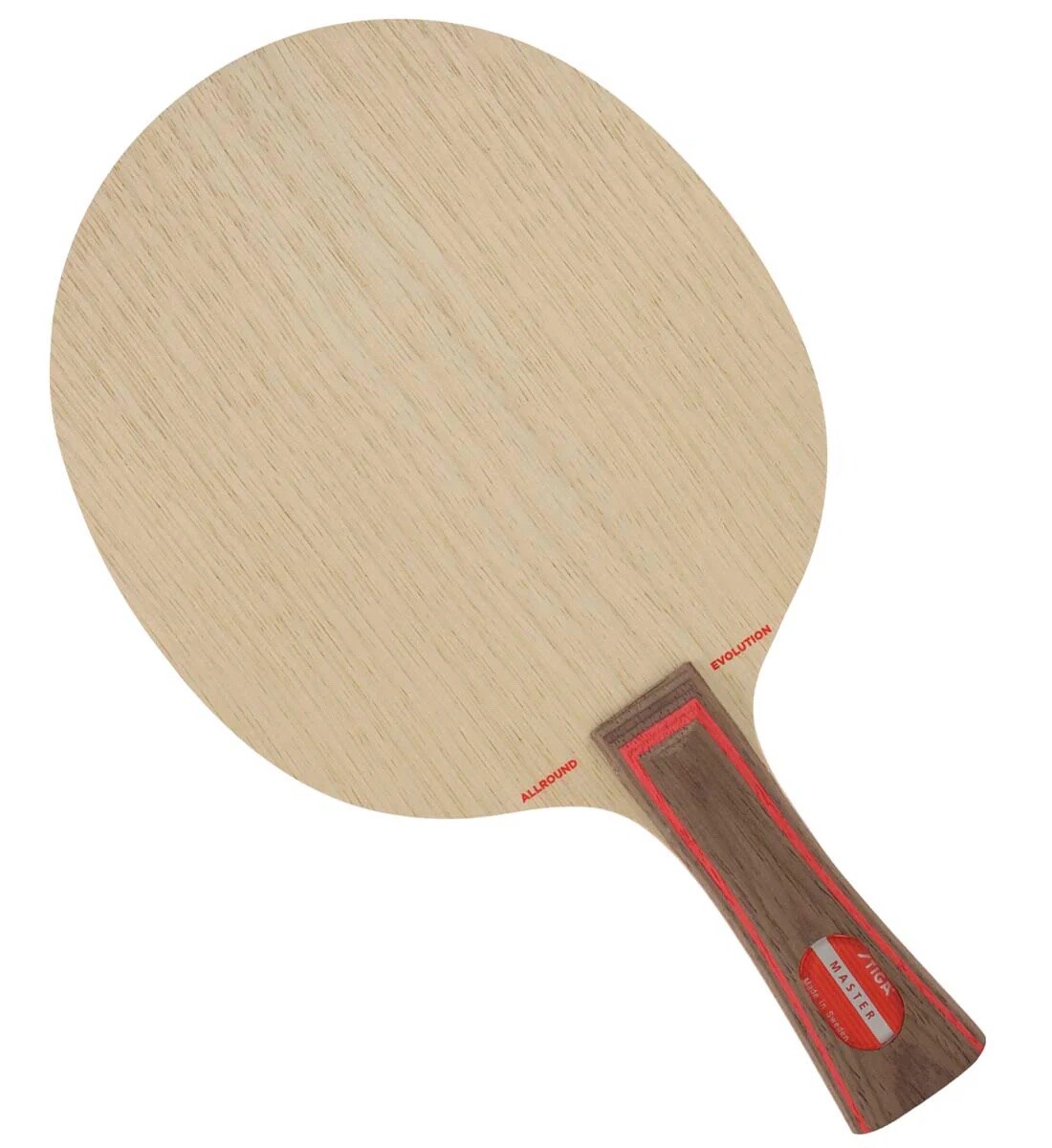
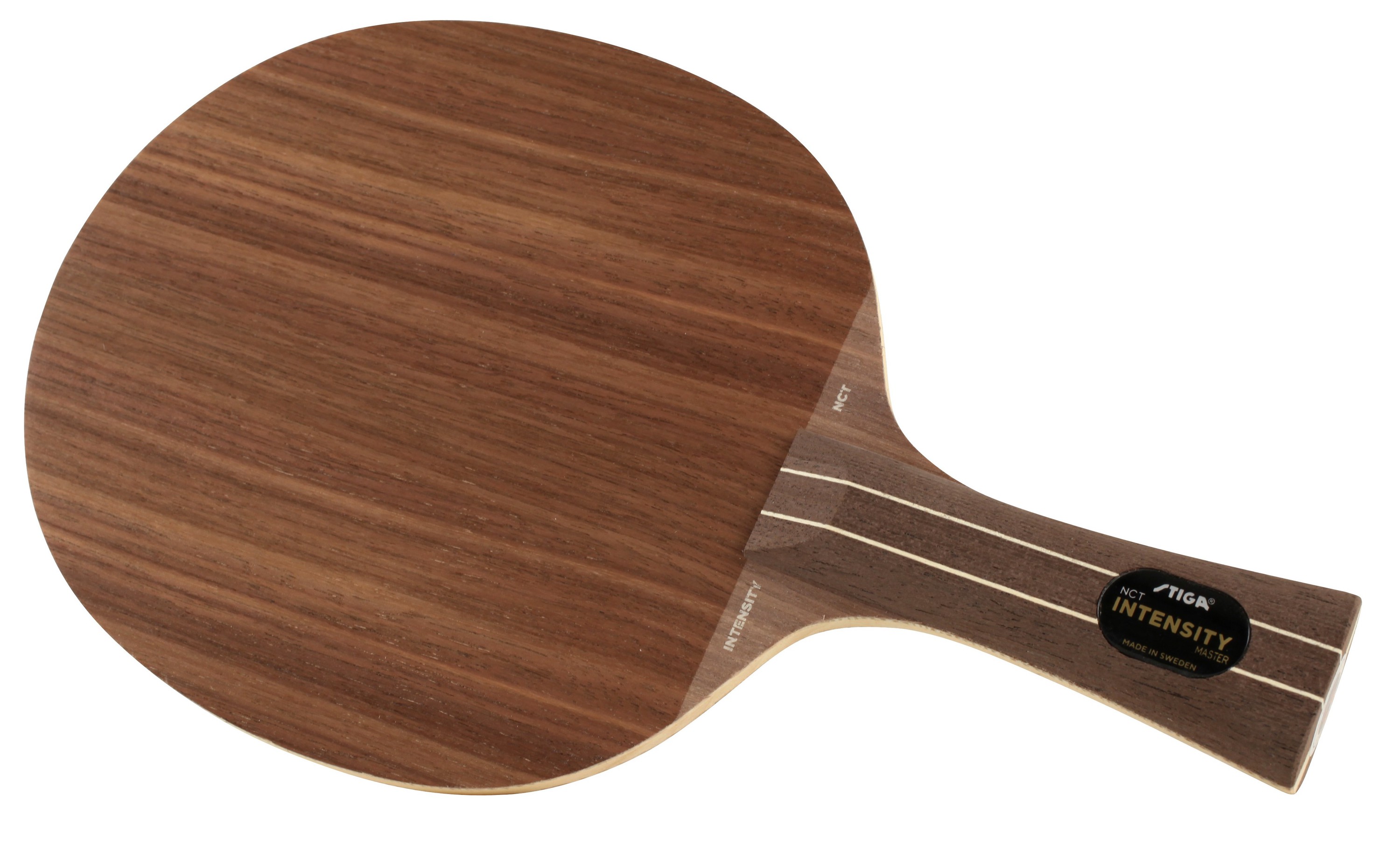
| Stiga Allround Evolution | Stiga Intensity NCT Carbon | |
|---|---|---|
| Our rating | 8.2/10 | 8.0/10 |
| feel | soft, high feedback | medium-soft, good dwell, large sweet spot |
| handle | FL/ST/AN | Flared, Anatomic, Straight, Chinese Penhold |
| plies | 5W (all wood) | 5 wood + 2 carbon NCT |
| speed | ALL+ | OFF- |
| thickness_mm | 5.4 | 5.9 |
| weight_g | 80 | 82 |
We may earn a commission from links on this page. Learn more.
A Paradox in Reverse: the Blade That Loses Every Axis Still Isn’t “Worse” Overall
The Allround Evolution edges the Intensity NCT Carbon on overall rating, 8.2 to 8.0 — despite the Intensity NCT Carbon leading on every single measured axis, from a tiny 0.3-point control edge to a full 2.5-point stiffness gap. If you only looked at the radar numbers, you’d expect the Intensity NCT Carbon to carry the higher overall score. It doesn’t, and the reason is almost certainly audience breadth rather than raw capability: the Intensity NCT Carbon’s own con list states outright that it “demands solid fundamentals, so beginners should skip it” and that it’s “built for offense, not defensive or all-round play.” A blade that performs better on every measured axis but excludes a large chunk of the playing population from recommending it will naturally settle to a lower overall score than a more versatile blade that’s merely very good rather than exceptional at any one thing.
The Three Big, Real Gaps: Speed, Stiffness, Hardness
Three axes show large, unambiguous differences. Speed runs 2.0 points in the Intensity NCT Carbon’s favor (9.3 vs 7.3) — one of the biggest speed gaps in this whole comparison set. Stiffness is even larger at 2.5 points (6.9 vs 4.4), and hardness follows at 2.1 points (7.1 vs 5.0). All three tell the same story: the Intensity NCT Carbon’s 5-wood-plus-2-carbon construction produces a fundamentally firmer, faster platform than the Allround Evolution’s all-wood build. This isn’t subtle — these are among the largest deltas anywhere in this dataset, and you should expect to feel this difference immediately in hand, not just over time.
Control and Consistency: Virtually Tied, Despite the Speed Gap
Here’s the detail that should reassure anyone worried that “faster” means “less controllable”: control is nearly tied (9.0 vs 8.7, a 0.3-point gap) and consistency is equally close (9.2 vs 8.8, a 0.4-point gap) — both favoring the Intensity NCT Carbon by a hair. The carbon layer and larger sweet spot (explicitly called out in its own pros: “large sweet spot turns off-center contact into a usable ball, not a mishit”) mean the extra speed and stiffness aren’t costing forgiveness. That’s a genuinely well-engineered blade on the numbers — the caveat is entirely about who it’s built for, not how well it performs.
Weight: a Minor, Real Difference
Weight is close (4.6 vs 5.3, a 0.7-point gap), corresponding to a real but small 2-gram difference in the spec sheet (80g for the Evolution, 82g for the Intensity NCT Carbon). This shouldn’t factor much into your decision on its own.
An Ergonomic Detail the Radar Can’t Capture
Worth flagging outside the axis data entirely: the Intensity NCT Carbon’s own con list notes “sharp edges where face meets handle can dig into a shakehand player’s middle finger.” That’s a physical comfort issue independent of performance, and it’s the kind of thing that only shows up in hands-on reviews, not in aggregated ratings — check it against your own grip if you’re sensitive to handle shape.
The Migration Path, Again Written Into the Source Text
Similar to the Allround Classic and Offensive Classic pairing elsewhere in this dataset, the upgrade path here is explicit rather than inferred. The Intensity NCT Carbon’s own bestFor names its ideal buyer as “loop-dominant players moving from all-wood blades to their first carbon composite” — and the Allround Evolution’s bestFor completes the other half of that path, describing itself as offering “a small, safe step up in speed from the Stiga Allround Classic” for players building strokes. Read together, these two blades describe a progression: Allround Classic, to Allround Evolution, to Intensity NCT Carbon, each step trading some control-first forgiveness for more speed, stiffness, and offensive ceiling.
Should You Switch From the Evolution to the Intensity NCT Carbon?
If you have solid fundamentals already — meaning you’re not making frequent technical errors that a softer, more forgiving blade would mask — the Intensity NCT Carbon’s numbers make a strong case: more speed, more control, more consistency, all at once. If you’re still developing your stroke, its own review base is explicit that you should skip it for now; the gap in accessibility, not performance, is the real reason to stay on the Evolution.
Bottom Line
This is a case where every number favors one blade, yet the sensible recommendation isn’t simply “buy the higher-scoring one on each axis.” The Intensity NCT Carbon is a legitimately superior offensive tool by the data, but it’s explicitly gatekept to players with fundamentals already in place. The Allround Evolution’s slightly lower ceiling is the price of being usable by a much wider range of players, and that’s exactly what its higher overall rating is telling you.
Frequently asked questions
If the Intensity NCT Carbon wins every axis, why does the Allround Evolution have a higher overall rating?
Because the Intensity NCT Carbon's own con list states it demands solid fundamentals and isn't built for beginners or all-round play, narrowing its audience even though its raw numbers are higher.
Is the Intensity NCT Carbon much faster?
Yes — a 2-point speed gap (9.3 vs 7.3), one of the largest in this dataset, driven by its carbon-composite construction.
Does the extra speed cost control on the Intensity NCT Carbon?
No — control and consistency are both nearly tied with the Allround Evolution, meaning the added speed doesn't come at the expense of forgiveness.
What's the natural progression between these two blades?
Per their own descriptions, the Allround Evolution is a safe step up from the Allround Classic, and the Intensity NCT Carbon is designed for players moving from all-wood blades to their first carbon composite — together they describe a progression.