Stiga Allround Classic Carbon vs Stiga Offensive Classic: Which Should You Buy?
| Stiga Allround Classic Carbon | Stiga Offensive Classic | |
|---|---|---|
| Our rating | 7.8/10 | 8.4/10 |
| feel | Medium stiffness, wood-like touch with carbon crispness, small vibration, large sweet spot | thin, flexible, soft-medium springy all-wood with strong vibration and feedback |
| handle | FL, ST, WRB | FL/ST/AN (WRB hollow-handle version also sold) |
| plies | 5 wood + 2 carbon | 5W (all wood) — outer veneers commonly described as koto or limba over spruce and ayous |
| speed | ALL+ | OFF- (offensive minus; community-rated, occasionally felt as ALL+ to OFF) |
| thickness_mm | 5.6 | 5.4 |
| weight_g | 81 | 83 |
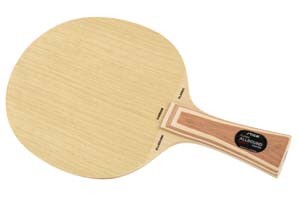
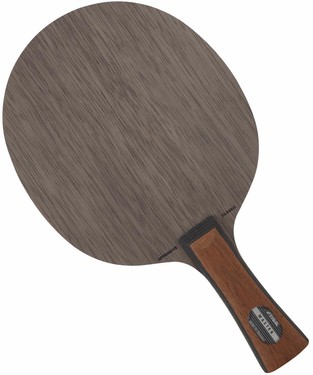
We may earn a commission from links on this page. Learn more.
The Paradox: OC Rates Higher Overall, Yet Loses on Control and Consistency
The Offensive Classic carries a higher overall rating (8.4) than the Allround Classic Carbon (7.8), which on first glance suggests across-the-board superiority. The axis data tells a more interesting story: the AC Carbon actually leads on both control (9.0 vs 8.3, a 0.7-point gap) and consistency (9.6 vs 7.9, a 1.7-point gap — the largest gap between these two blades on any axis). The overall rating gap isn’t about raw performance stats; it’s about value, versatility, and two decades of reputation as, in the words of its own review base, “a classic.” Don’t let the headline number substitute for the axis breakdown — if control and shot-to-shot predictability are what you’re optimizing for, the AC Carbon is objectively ahead.
Same Raw Speed Score, Different Marketing Label
Here’s a detail worth knowing before you buy on classification alone: both blades post an identical 7.6 raw speed rating, yet Stiga markets the AC Carbon as ALL+ and the Offensive Classic as OFF-. If you were shopping by label alone, you’d assume the Offensive Classic hits noticeably harder. The aggregated data says it doesn’t — at least not in raw speed. Whatever speed difference shows up in practice likely comes from how each responds to a hard swing (stiffness), not from a baseline speed gap that doesn’t exist in the numbers.
Consistency Is the Biggest Real Gap, and It Explains the Offensive Classic’s Main Complaint
A 1.7-point consistency gap is large in this dataset, and it lines up directly with the Offensive Classic’s own listed weakness: “flexes a lot on power loops, so hard hits can sail long.” A blade that flexes more under load is, by definition, going to feel less consistent shot to shot than one with a carbon layer locking the hitting surface in place. The AC Carbon’s carbon plies (5 wood + 2 carbon, versus the Offensive Classic’s 5-ply all-wood build) are the structural reason it posts a 9.6 consistency score — among the highest of any blade in this lineup — while the thinner, more flexible Offensive Classic sits almost two points lower.
Stiffness (4.9 vs 3.8) Is the Mechanism, Not Just a Number
The 1.1-point stiffness gap is the underlying cause of both the consistency gap and the flex-related con above. Carbon plies raise stiffness; thinner all-wood construction lowers it. A stiffer blade gives you a more locked-in response and a larger forgiving sweet spot (both AC Carbon pros), at some cost to the “high throw” and easy topspin generation that reviewers credit to the Offensive Classic’s flex. Hardness, by contrast, is essentially tied (5.2 vs 5.4) — don’t expect a different sensation on contact from hardness alone; any difference you feel comes from stiffness and ply construction, not surface hardness.
The Migration Path Is Already Written Into the Data
Unusually for this comparison, the Offensive Classic’s own “bestFor” description names a predecessor directly: it’s positioned to fit “Allround Classic graduates after a touch more pace without giving up feel.” That’s a real, stated upgrade path — if you’ve outgrown a control-first blade in the same family and want more attacking range while keeping a wood-forward, high-feedback feel, the Offensive Classic is the documented next step, not a sideways move. The trade you’re making is exactly what the axis data shows: give up 0.7 points of control and 1.7 points of consistency for a thinner, springier, higher-throw platform that reviewers on TableTennisDaily and Megaspin call one of the best value blades across two decades.
Who Should Stay Put
If you already own the AC Carbon and aren’t struggling for pace, the numbers don’t support switching. You’d be trading away your best attributes — control and consistency — for a blade rated only equal on raw speed and worse on both of those axes. The people the Offensive Classic’s own bestFor and pros describe — “attackers who play close to the table,” people who “care more about feedback and price than raw inherent speed” — are a specific profile, not a strict upgrade for every AC Carbon owner.
Practical Build Notes
Weight and thickness are close enough not to matter much on their own (81g/5.6mm for AC Carbon vs 83g/5.4mm for Offensive Classic), but handle options differ slightly: the AC Carbon comes in FL, ST and WRB, while the Offensive Classic adds an AN option alongside FL/ST, plus a separate WRB hollow-handle version sold on its own. If handle shape matters alongside blade characteristics, check it against whichever handle you’re used to.
Bottom Line
Choose the AC Carbon if control and predictable, repeatable shots matter more to you than pace, especially while you’re still developing technique. Choose the Offensive Classic if you already have a stroke and specifically want the extra throw and forgiving looping character reviewers have valued for two decades — understanding you’re trading away some control and consistency to get it. Don’t choose the Offensive Classic expecting more raw speed than the AC Carbon; the data says that gap doesn’t exist.
Frequently asked questions
Is the Offensive Classic faster than the Allround Classic Carbon?
No — raw speed is tied at 7.6 for both; the ALL+ vs OFF- labels are marketing classifications, not a measured speed gap.
Why does the Offensive Classic have a higher overall rating despite lower control and consistency scores?
Overall rating reflects value and reputation as well as raw performance; the Offensive Classic is prized for its price, feel, and two decades of positive reviews even though the axis data favors the AC Carbon on control and consistency.
I own the Allround Classic — should I upgrade to the Offensive Classic?
According to the Offensive Classic's own positioning, yes — it's specifically described as suited to Allround Classic graduates after a touch more pace without giving up feel.
Which blade has a bigger sweet spot?
The AC Carbon, per its carbon-reinforced, stiffer construction (4.9 vs 3.8 stiffness); the Offensive Classic's own con list notes a small sweet spot.