Nittaku Violin vs Sanwei T5000: Which Should You Buy?
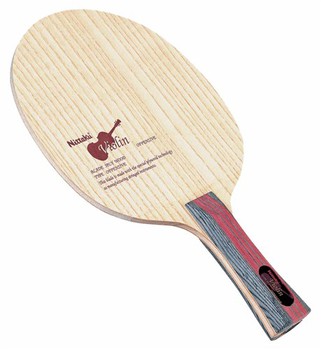
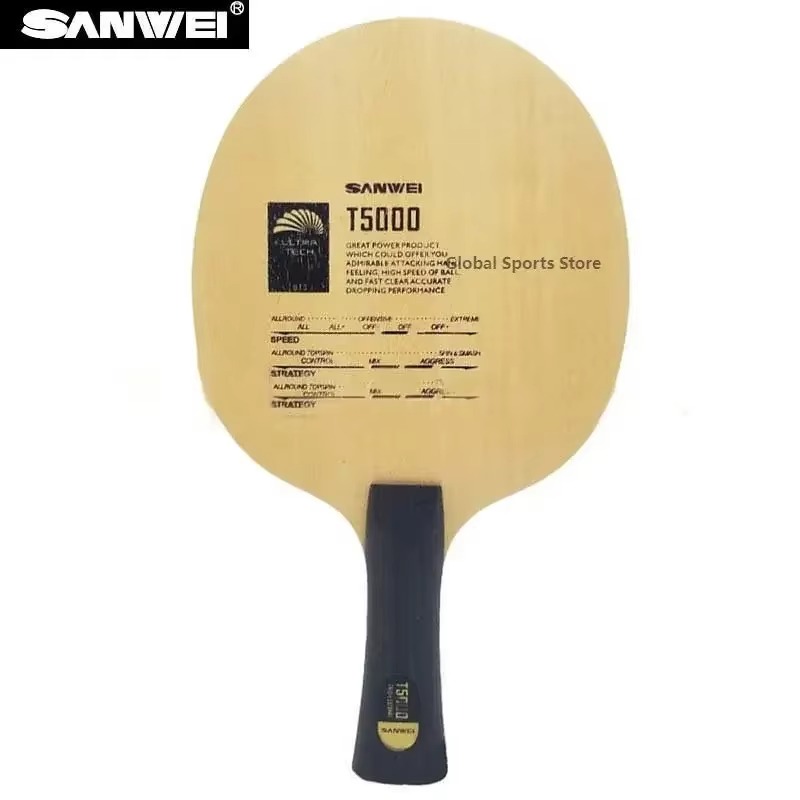
| Nittaku Violin | Sanwei T5000 | |
|---|---|---|
| Our rating | 8.4/10 | 8.1/10 |
| feel | Soft, warm and flexible with long dwell, premium hand-crafted Japanese all-wood feedback | Stiff with crisp carbon feedback; solid rebound and good sweet spot consistency |
| handle | FL | Flared (FL) |
| plies | 5-ply all wood (Kiri core with White Ash outer plies) | 5 wood + 2 carbon (7 total) |
| speed | ALL+ | OFF |
| thickness_mm | 5.3 | 6.5 |
| type | ALL+ | — |
| weight_g | 86 | 86 |
We may earn a commission from links on this page. Learn more.
Choose Nittaku Violin (8.4 rating) if you value control, feel, spin, and technique-building—a warm, flexible all-wood blade ideal for looping and close-to-mid distance play. Choose Sanwei T5000 (8.1 rating) if you want stiff rebound, consistent sweet spot, and carbon-blade catapult at under fifteen dollars.
Violin is handcrafted Japanese premium: soft, flexible, long dwell time, and excellent with tensor rubbers. T5000 is affordable entry-level carbon: stiffer, faster, and consistent across different rubber types. Violin suits developing players moving away from speed-focused setups; T5000 suits budget builders or backup-blade seekers. Both are good value in their class, but for opposite reasons: Violin for feel and control, T5000 for speed and sweetspot consistency.
FAQ
Which is better for learning looping?
Violin. Its long dwell time and flexible feel make spin and arc more forgiving. T5000’s stiff carbon is less suitable for building loop technique.
Can I use Violin with hard, fast rubbers?
Yes, but it shines most with tensor rubbers that match its flexible character. T5000 is blade-agnostic and accepts any rubber type.
Is T5000 really as fast as premium blades?
No—it’s OFF-rated, not as fast as high-end carbons, but offers noticeable speed boost for the price. Violin is slower but more refined.
Which needs a break-in period?
Violin is relatively stiff when new and benefits from play time to loosen up. T5000 is ready to use immediately.