Nittaku Acoustic vs Stiga Clipper Wood: Which Should You Buy?
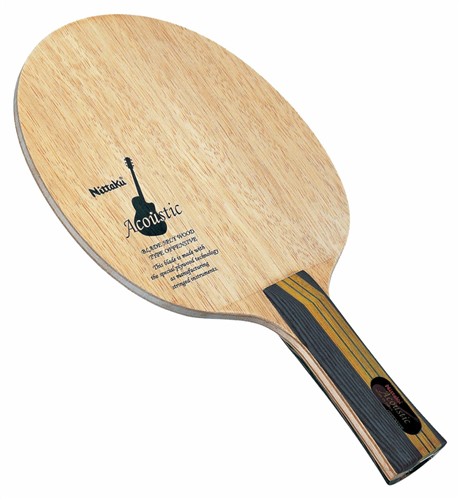
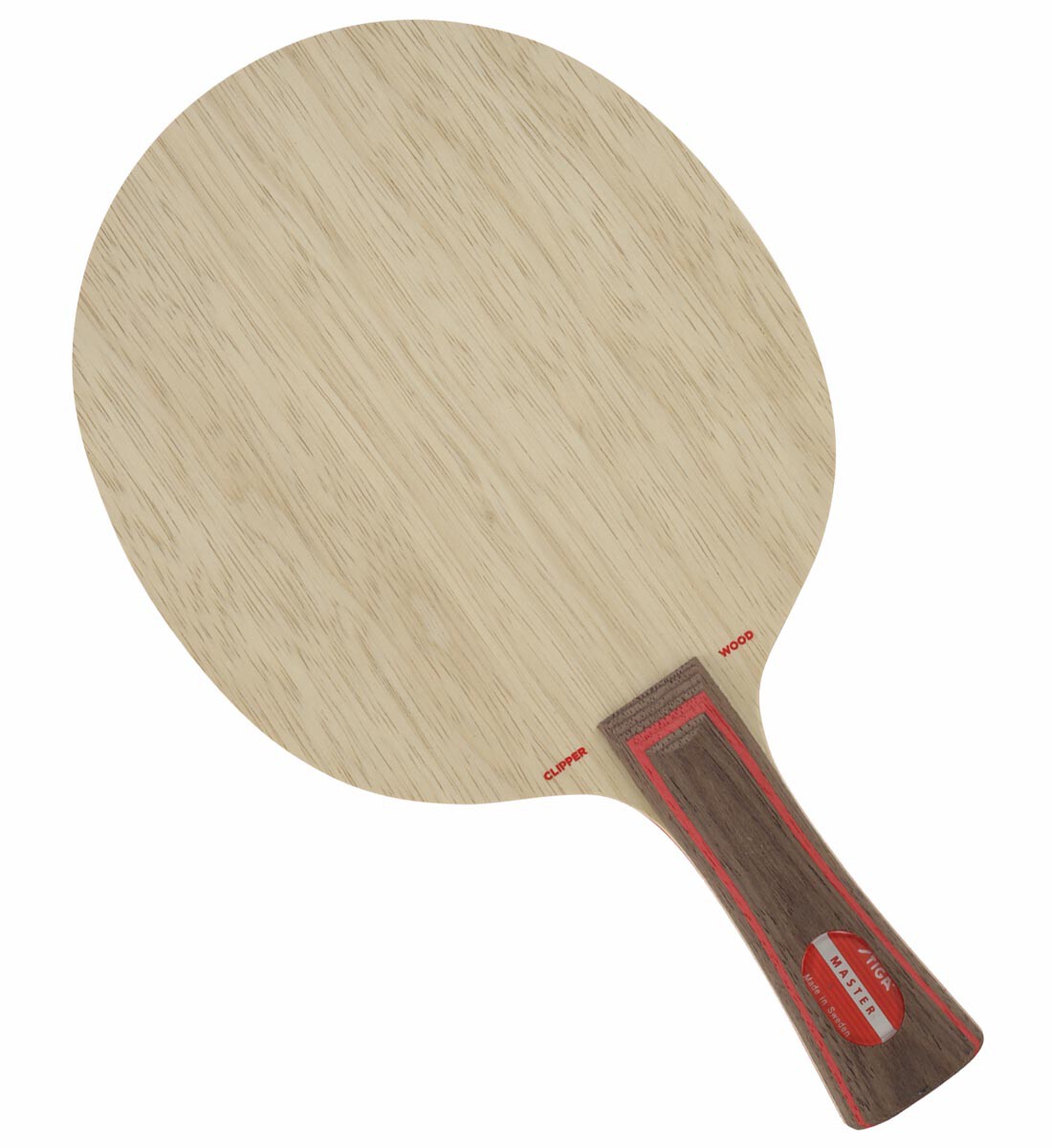
| Nittaku Acoustic | Stiga Clipper Wood | |
|---|---|---|
| Our rating | 8.7/10 | 8.4/10 |
| Feel | Crisp all-wood feel with a large sweet spot, long dwell and a signature acoustic sound | solid, medium-stiff, hard fast all-wood with a big sweetspot |
| Handle | FL/ST | FL/ST/AN/PEN |
| Plies | 5-ply all wood (Limba outer veneers over a tung and ayous core) | 7W (all wood) - limba outer plies over an ayous core, no carbon or synthetic layers |
| Speed | OFF- | OFF |
| Sponge thickness | 5.7 mm | 6.3 mm |
| Weight | 88 g | 90 g |
We may earn a commission from links on this page. Learn more.
Identical speed, very different everything else
Start with the number that removes a variable from this decision entirely: speed is 8.6 for both blades, a delta of exactly zero. Whatever else separates the Nittaku Acoustic from the Stiga Clipper Wood, it is not raw pace — these two all-wood blades hit the same speed ceiling on the aggregated data. That is useful information on its own: if a seller or a forum thread tells you one of these is faster than the other, the Revspin-based radar data doesn’t support it.
Where they actually diverge
Consistency is the standout gap: 9.5 for the Nittaku Acoustic versus 7.4 for the Stiga Clipper Wood, a 2.1-point delta — the single largest gap in this comparison and one of the largest across this entire batch. That is a real, decision-relevant difference: the Acoustic is rated as dramatically more predictable stroke to stroke. Control also favors the Acoustic, 9.3 versus 8.5, a 0.8-point edge — meaningful, though not as dramatic as the consistency gap.
Stiffness runs the other way: 4.3 for the Acoustic versus 5.9 for the Clipper Wood, a 1.6-point gap, with hardness adding another 0.8 points (4.9 vs 5.7). The Clipper Wood is the stiffer, harder-hitting blade of the two despite the identical speed score, which suggests its speed comes more from a firmer, more direct rebound, while the Acoustic’s equal speed comes from a longer dwell time and bigger sweet spot instead. Two different paths to the same speed number.
What the sources say
Revspin’s aggregate reviews and Reddit’s r/tabletennis threads both describe the Clipper Wood in almost identical terms: a big sweet spot, rock-solid blocking, and outstanding short-game touch, echoed by the Tabletennis11 blog’s four-blade Stiga roundup. But its own con list is blunt about the trade-off behind that 2.1-point consistency gap: real-world speed sits in OFF, not the OFF+ its reputation suggests, it asks the player to generate power, and it carries a known Stiga splintering tendency that leads many owners to seal the blade themselves. The Nittaku Acoustic’s sources, Revspin, Megaspin, and Table Tennis Spot’s dedicated review, instead emphasize class-leading control and feedback, with the consistency score backed by praise for a large sweet spot and long dwell across pushing, blocking, and looping alike.
Migration advice
If you play the Stiga Clipper Wood and are drawn to the Nittaku Acoustic, the case for switching rests almost entirely on that 2.1-point consistency gap and the 0.8-point control edge, not on speed, which won’t change. If unpredictable timing or splintering edges have been frustrating you, this upgrade targets those specific complaints directly. If you like the Clipper Wood’s stiffer, more direct feel and its compatibility with faster European or Japanese rubbers, be aware the Acoustic will feel noticeably softer and slower to release the ball, even though the speed number reads the same on paper.
Going the other way, from Acoustic to Clipper Wood, mainly makes sense if you want a stiffer platform to pair with faster rubbers, or if the Acoustic’s narrow standard handle, a known complaint requiring grip tape or an LG/G-Revision swap, doesn’t fit your hand. The Clipper Wood offers FL, ST, AN, and even penhold shapes out of the box.
Fit and scenario
Both blades suit close-to-mid-table attackers, but the Acoustic is the safer pick for players who value predictability above all — its 9.5 consistency score is not matched anywhere else in this dataset — while the Clipper Wood suits players who want a stiffer, more traditional 7-ply feel and don’t mind sealing the edges themselves to guard against the well-documented Stiga splintering issue. Given the identical speed rating, this decision should come down to consistency and feel preference, not an imagined pace gap.
Frequently asked questions
Which blade is faster, the Acoustic or the Clipper Wood?
Neither. Both score exactly 8.6 on the aggregated speed axis, so any claimed speed advantage between them isn't backed by the data.
What actually separates these two blades?
Consistency, by 2.1 points (9.5 vs 7.4), the largest gap in this comparison, plus a 0.8-point control edge for the Acoustic.
Does the Stiga Clipper Wood really splinter?
Reviewers note a known Stiga splintering tendency at the edges, and many owners seal the blade themselves as a precaution.
Which blade suits a stiffer, more traditional feel?
The Clipper Wood, which scores 1.6 points higher on stiffness (5.9 vs 4.3) and pairs well with faster European or Japanese rubbers.