Donic Waldner Allplay vs Tibhar Stratus Power Wood: Which Should You Buy?
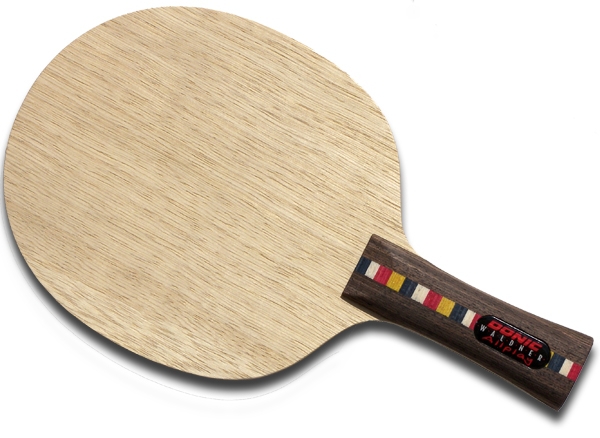
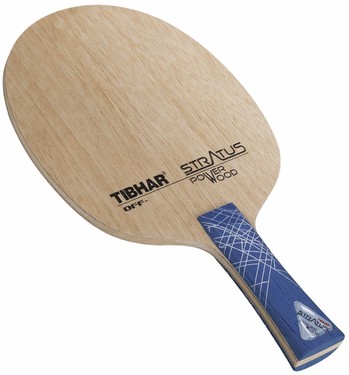
| Donic Waldner Allplay | Tibhar Stratus Power Wood | |
|---|---|---|
| Our rating | 8.2/10 | 9.0/10 |
| feel | Soft and forgiving with good dwell time, slight stiffness at sweet spot | Elastic with long dwell time, lively yet controlled, larger-than-average head and big sweet spot |
| handle | FL (flared), classic dark-brown wood | FL / ST / AN |
| plies | 5-ply all wood (Limba-Ayous-Ayous-Ayous-Limba) | 5-ply all wood (Limba-Limba-Ayous-Limba-Limba) |
| speed | ALL | OFF- |
| thickness_mm | 5.4-5.6 mm | 6.2 |
| weight_g | approx 85-87 g | 90 |
We may earn a commission from links on this page. Learn more.
The Donic Waldner Allplay (8.2) and Tibhar Stratus Power Wood (9.0) are both all-wood blades, but Tibhar is widely called the best value 5-ply blade. It’s heavier (90g vs 85-87g), thicker (6.2mm), with a larger head, longer dwell time, and big sweet spot. The Tibhar plays faster (OFF- vs ALL) and is genuinely lively and elastic with crisp feedback.
Both suit beginners and loopers, but Tibhar offers more bang for the buck—more speed, more forgiveness, more spin potential. The Donic is lighter and more adaptable across rubber types. Choose Tibhar if you want value and spin; choose Donic if you want versatility and lightness.
FAQ
Is Tibhar Stratus really better value?
Widely yes. At a similar or lower price, it offers more speed (OFF- vs ALL), a larger sweet spot, and a lively, elastic feel.
Is Tibhar Stratus head-heavy?
Slightly. Some players find it a touch heavy, but most see this as adding natural acceleration to drives.
Which generates more spin?
Tibhar Stratus Power Wood—longer dwell time gives a higher, longer arc and heavy spin on loops.
Which is lighter?
Donic Waldner Allplay (85-87g vs 90g), making it slightly easier to maneuver.