Donic Bluefire M1 vs Yasaka Rakza X: Which Should You Buy?
| Donic Bluefire M1 | Yasaka Rakza X | |
|---|---|---|
| Our rating | 8.4/10 | 8.4/10 |
| best_side | Forehand | both |
| control | 9.1 / 10 | medium-high |
| speed | 9.7 / 10 | high |
| spin | 9.0 / 10 | high |
| sponge_hardness | 47.5 degrees (medium-hard) | 47.5 (medium-hard, roughly 45-50 degrees) |
| type | Inverted / Tensor | tensor inverted |
| weight_uncut_g | approx 49 g | 69 |
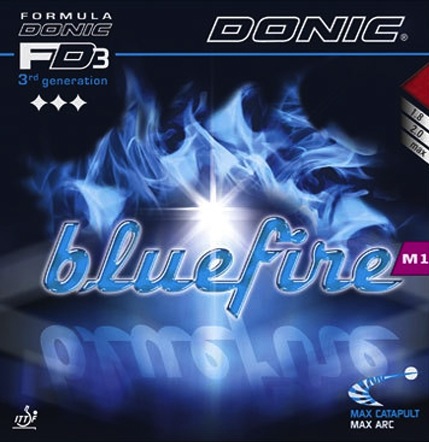
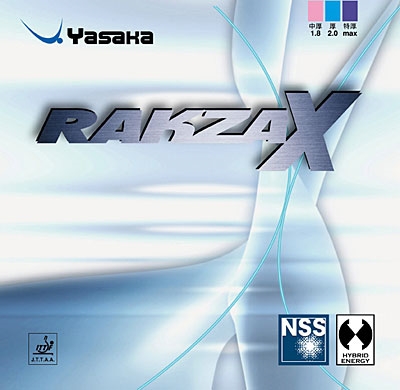
We may earn a commission from links on this page. Learn more.
Both are rated at or near 8.4 and deliver competitive spin, but serve different skill levels. The Bluefire M1 targets elite forehand attackers (1500+ USATT) who accept unforgiving response in exchange for 9.7 speed and a high throw angle that produces heavy loops. The Rakza X suits intermediate to advanced players stepping up from Rakza 7: it adds control and blocking prowess to the Rakza family while maintaining high spin and a forgiving high-arc feel. Both rubbers are heavyweight options—the X adds noticeable weight to the racket—so pair carefully with lighter blades. Choose M1 for pure forehand speed; choose Rakza X for more rounded control with predictable, low-spin-sensitivity response.
FAQ
Which one has better grip and spin?
Both have high spin, but Rakza X features outstanding grip that overrides incoming spin and produces a more linear, predictable response. The M1 offers extreme spin via its high throw angle but demands active strokes to unlock it.
Are these rubbers suitable for beginners?
Neither is beginner-friendly. The M1 is explicitly too fast for players under 1400 USATT. Rakza X is easier than M1 but still demands solid stroke development, making it better for intermediate players upgrading to stronger equipment.
What’s the weight difference?
M1 is lighter at approximately 49g, while Rakza X is heavier at 69g. The extra weight in Rakza X adds noticeable racket swing resistance and requires careful blade pairing.