Donic Bluefire M1 vs Tibhar Evolution EL-S: Which Should You Buy?
| Donic Bluefire M1 | Tibhar Evolution EL-S | |
|---|---|---|
| Our rating | 8.4/10 | 8.5/10 |
| best_side | Forehand | either |
| control | 9.1 / 10 | 86 |
| speed | 9.7 / 10 | 87 |
| spin | 9.0 / 10 | 90 |
| sponge_hardness | 47.5 degrees (medium-hard) | medium-hard |
| type | Inverted / Tensor | tensor |
| weight_uncut_g | approx 49 g | 74 |
We may earn a commission from links on this page. Learn more.
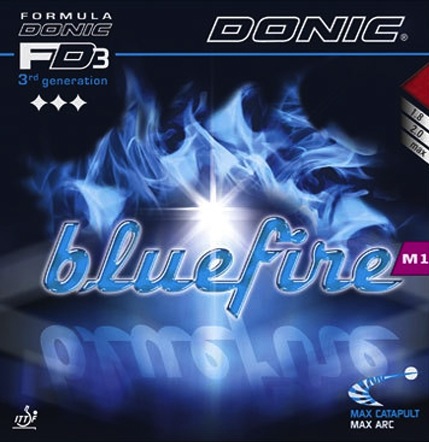
The Donic Bluefire M1 and Tibhar Evolution EL-S represent two distinct approaches to high-level rubber performance. The M1 is the fastest rubber in its series with a 9.7/10 speed rating and exceptional close-to-table controllability, making it ideal for advanced forehand attackers who thrive on hard topspin loops from mid-range. However, its hardness and unforgiving nature require strong technique, and it performs poorly on backhand due to its design.
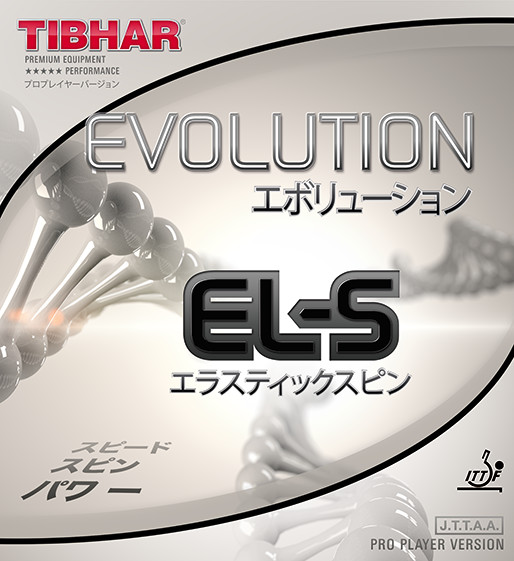
The Evolution EL-S counters with a more balanced profile: it achieves a 9.0/10 spin rating versus M1’s 9.8/10, but compensates with excellent short game performance (9.5/10) and genuine backhand-forehand versatility. Its 87/100 speed matches Tenergy 80, putting it below the M1 but sufficient for most attacking scenarios. EL-S is also more durable and budget-friendly.
Choose the M1 if you are a 1500-plus USATT player seeking maximum forehand speed and can master its demanding feedback. Choose EL-S if you want a tensor that handles both wings reliably and won’t penalize mishits as heavily.
FAQ
Which rubber is better for backhand play?
Evolution EL-S is far superior for backhand. The Bluefire M1 is designed explicitly for forehand, with its high throw angle making it impractical for backhand loops and blocks. EL-S works on both sides, though its elevated throw angle can cause flat backhand hits to sail long.
What is the difference in speed between these two?
Bluefire M1 rates 9.7/10 speed, making it the hardest and fastest of the M-series. Evolution EL-S is rated 87/100 speed, equivalent to Tenergy 80. The M1 is noticeably faster but requires advanced arm acceleration to unlock that speed without errors.
Do these rubbers need boosting?
The M1 performs best with factory boost initially but fades after 1-2 months. Evolution EL-S does not explicitly require boosting and maintains more stable performance across its lifetime, though durability declines after 4-6 months of regular play.
Which rubber is more forgiving for off-center hits?
Evolution EL-S is considerably more forgiving. The M1 is described as very unforgiving and demands proper technique on every stroke. This makes EL-S better for intermediate players or those still refining their consistency.
How long do these rubbers last?
Both have similar durability concerns: M1 loses factory boost after 1-2 months, while EL-S degrades noticeably after 4-6 months of regular play. Neither is built for extreme longevity.