Donic Bluefire M1 vs JOOLA Dynaryz AGR: Which Should You Buy?
| Donic Bluefire M1 | JOOLA Dynaryz AGR | |
|---|---|---|
| Our rating | 8.4/10 | 8.7/10 |
| best_side | Forehand | FH |
| control | 9.1 / 10 | 7 |
| speed | 9.7 / 10 | 9.6 |
| spin | 9.0 / 10 | 9.3 |
| sponge_hardness | 47.5 degrees (medium-hard) | Hard (around 50 degrees EUR, purple Hyperbounce sponge) |
| type | Inverted / Tensor | inverted |
| weight_uncut_g | approx 49 g | 71 |
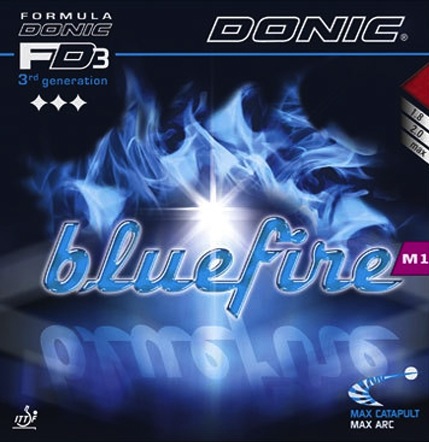
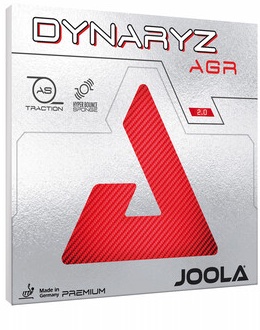
We may earn a commission from links on this page. Learn more.
Select Donic Bluefire M1 if you want a hard, fast forehand tensor competitive with Tenergy 05 at a lower price with better long durability and good short-game control. It suits spin-dominant loopers who play close-to-mid distance. Choose JOOLA Dynaryz AGR if you are an advanced close-to-table attacker who prioritizes maximum speed and elite spin output with a hard 50-degree Hyperbounce sponge. The AGR is rated faster than Tenergy 05 but offers limited passive control and demands clean, committed technique. M1 is a reliable specialist; AGR is an elite finisher.
FAQ
Which is faster?
The JOOLA Dynaryz AGR at 9.6, rated faster than Tenergy 05 and Tenergy 64.
Which has better short-game control?
The Donic Bluefire M1 with excellent close-to-table controllability for pushes and flicks.
How long do these rubbers last?
M1 holds grip for roughly 1-2 months; AGR is often dead in 4-6 months under heavy use.
Who should avoid AGR?
Players rated around 1600 and below, beginners, and anyone who needs passive control or plays far from the table.