DHS Gold Arc 8 vs Gewo Nexxus EL Pro 48: Which Should You Buy?
| DHS Gold Arc 8 | Gewo Nexxus EL Pro 48 | |
|---|---|---|
| Our rating | 8.4/10 | 8.7/10 |
| best_side | forehand or backhand | Forehand or backhand |
| control | medium-high | 96 |
| speed | high | 118 |
| spin | high | 128 |
| sponge_hardness | 47.5 deg (also a 50 deg version), ESN scale | 48 degrees (medium-hard) |
| type | non-tacky high-elastic ESN tensor, inverted | Inverted tensor |
| weight_uncut_g | 69 | approx. 68-72 g |
We may earn a commission from links on this page. Learn more.
Higher axis scores for Gold Arc 8, higher overall rating for the Nexxus — here’s why that’s not a contradiction
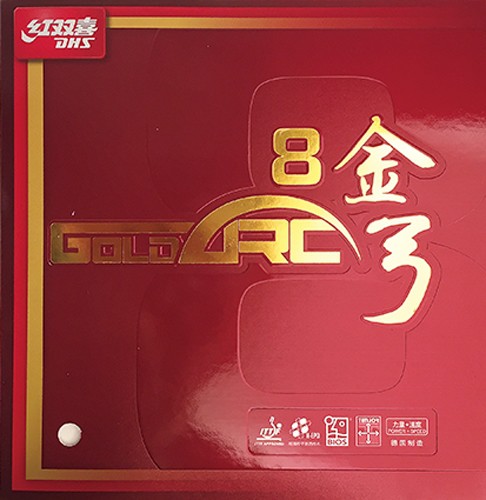
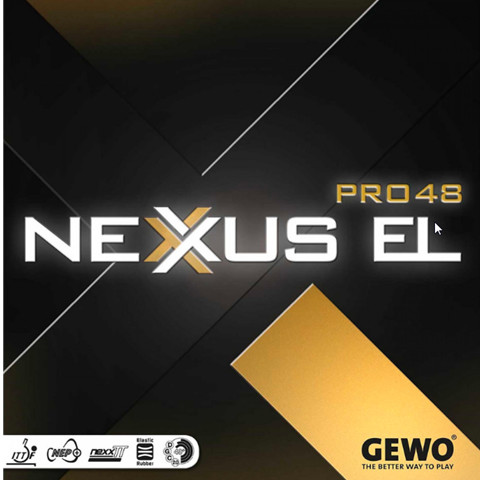
Look at the six axis deltas for this pair and every single one favors the DHS Gold Arc 8: speed by 0.2, spin by 0.3, control by 0.3, throw by 0.7, tackiness by 0.5, durability by 1.1. Yet the Gewo Nexxus EL Pro 48 carries the higher overall rating, 8.7 versus 8.4. That’s not a data error — it reflects that the overall score also folds in value-for-money and how a rubber performs specifically for the player it’s aimed at, and the sourced material for the Nexxus is unusually enthusiastic about exactly the kind of player it fits: intermediate-to-advanced attackers who loop hard.
The gap that matters most: throw angle
A 0.7-point throw gap (5.7 vs 5.0) sounds modest until you read what it predicts. Both rubbers’ own sourced cons confirm it: the Nexxus’s listed con is a high throw angle and fast pace that require an adjustment period, while Gold Arc 8’s higher throw score lines up with reviewers calling its blocking simply superb and its short game very easy. If you’re switching from a flatter, lower-throw rubber, expect the Nexxus’s arc to feel different under your hand before it feels better.
Durability: the real cost-of-ownership gap
The largest single delta here is durability — 8.3 for Gold Arc 8 versus 7.2 for the Nexxus, a 1.1-point gap. RacketInsight and Tabletennis11 both flag Gold Arc 8 as excellent value partly because of how long it lasts; the Nexxus’s own sourced con is blunter — its topsheet firms up and loses grip if neglected and needs regular cleaning to hold its performance. If you don’t maintain your rubber religiously, that gap will show up as a shorter effective lifespan on the Nexxus, which is worth weighing against its lower sticker price relative to full Tenergy.
Tackiness and spin: both essentially non-tacky, both genuinely spinny
Tackiness sits at 2.0 vs 1.5 — both are non-tacky ESN-style tensors, and a 0.5-point gap at this end of the scale is close to meaningless in play; neither rubber grips the ball on contact the way a true tacky Chinese rubber does. Spin (9.3 vs 9.0) and speed (9.4 vs 9.2) both lean slightly toward Gold Arc 8, but by margins under 0.3 that most players will not isolate from stroke-to-stroke variation.
What the sources actually emphasize
Revspin’s rubber page and Megaspin’s reviews of the Nexxus keep circling back to outstanding spin generation when the ball fully engages the sponge and Tenergy-class performance at a significantly lower price — the pitch is ceiling and value relative to top-tier tensors, not raw axis-by-axis dominance. RacketInsight’s and Tabletennis11’s Gold Arc 8 coverage instead emphasizes balance and ease: very easy short game, works well on both wings, and cheaper still than the Nexxus.
Should you switch?
If you’re on Gold Arc 8 and considering the Nexxus for its Tenergy-adjacent reputation, be honest about your willingness to maintain the topsheet and adapt to a higher-throw, faster-paced feel — the axis data says you’d be giving up measurable throw safety, durability and a touch of control for a rubber whose main selling point is ceiling at full engagement. Going the other way, from Nexxus to Gold Arc 8, makes sense if you want lower maintenance and better blocking without sacrificing much spin.
Bottom line by player type
Developing-to-advanced loopers who want a spinny, controllable, low-maintenance sheet for either wing at a lower price than Tenergy or Dignics: DHS Gold Arc 8. Intermediate-to-advanced attackers who loop hard, generate their own pace, and will keep the topsheet clean in exchange for high dwell and a Tenergy-adjacent ceiling: Gewo Nexxus EL Pro 48.
Frequently asked questions
If Gold Arc 8 wins every axis, why does the Nexxus have a higher overall rating?
The overall rating also reflects value and fit for its target player, not just the raw per-axis numbers — sourced reviews rate the Nexxus's ceiling and Tenergy-adjacent performance very highly for hard-looping attackers, even though it trails Gold Arc 8 on this radar's individual axes.
Which rubber needs more maintenance?
The Nexxus. Its own sourced con warns the topsheet firms up and loses grip if neglected, and it scores lower on durability (7.2 vs 8.3).
Is either rubber tacky?
No — both are non-tacky tensors (tackiness scores of 2.0 and 1.5), so neither will grip the ball on contact the way a Chinese tacky rubber does.
Which rubber is easier to block with?
DHS Gold Arc 8, per its higher throw score (5.7 vs 5.0) and reviewer descriptions calling its blocking simply superb.