Butterfly Viscaria vs Yasaka Ma Lin Soft Carbon: Which Should You Buy?
| Butterfly Viscaria | Yasaka Ma Lin Soft Carbon | |
|---|---|---|
| Our rating | 9.0/10 | 8.1/10 |
| Feel | medium-hard | medium-soft and flexible for a carbon blade, with clear feedback and a large sweet spot |
| Handle | FL/ST/AN | FL/ST/AN |
| Plies | 5W+2 Arylate-Carbon | 7-ply (5 wood plus 2 very thin carbon layers) — same outer veneer as the Yasaka Extra |
| Speed | OFF | OFF- |
| Sponge thickness | 5.8 mm | 5.8 mm |
| Weight | 87 g | 87 g |
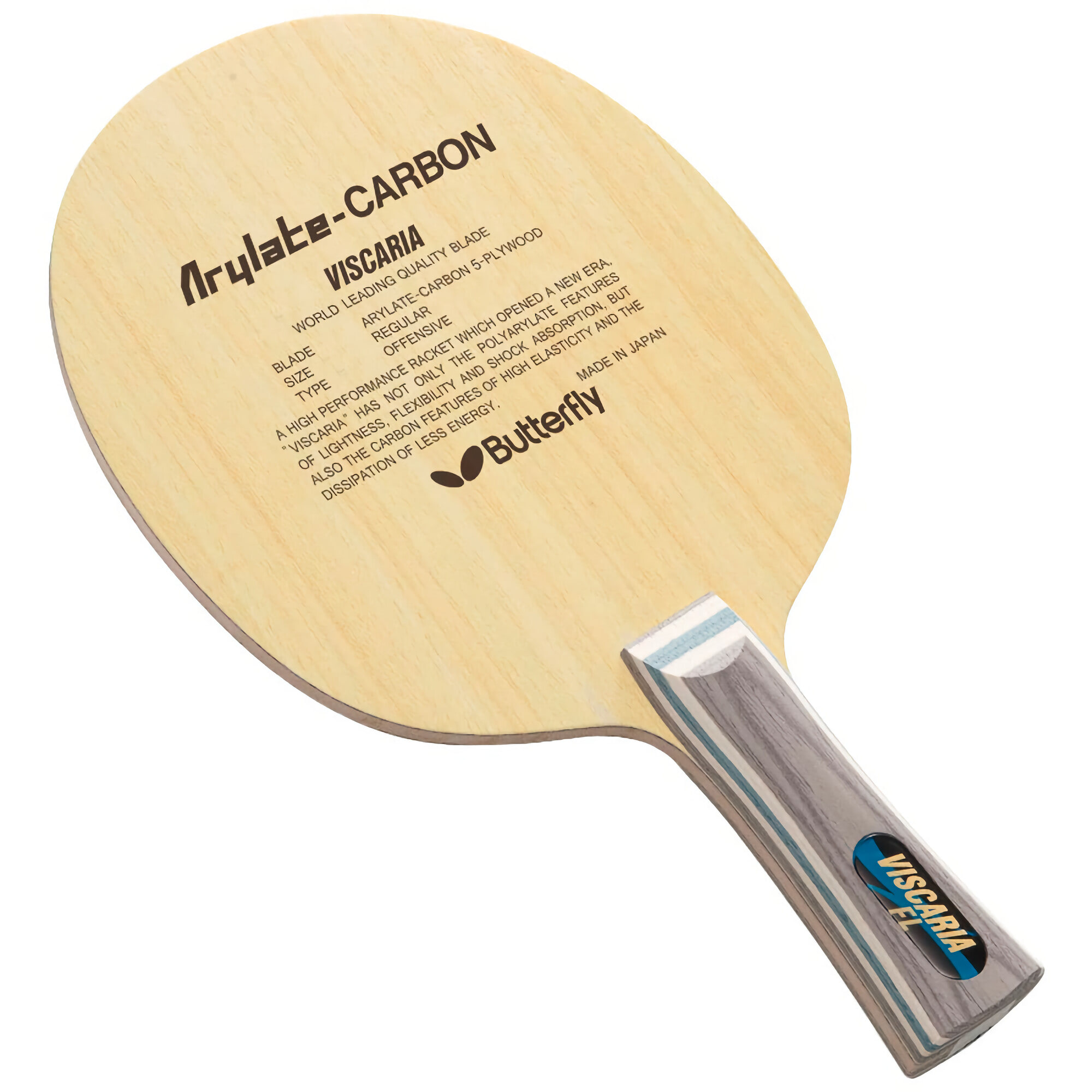
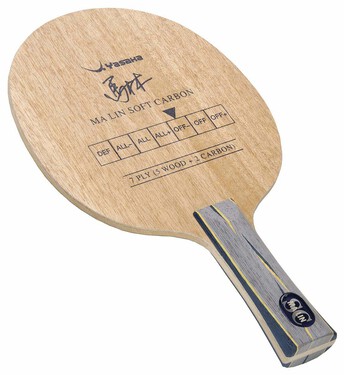
We may earn a commission from links on this page. Learn more.
The biggest gap in this comparison: a 2.5-point consistency spread
Consistency is the standout axis here: the Viscaria scores 9.2 and the Yasaka Ma Lin Soft Carbon scores 6.7 — a 2.5-point spread, the largest single-axis gap in this pairing. That number is not abstract; it maps directly onto a real, sourced complaint about the Ma Lin Soft Carbon. Megaspin’s and Tabletennis11’s reviews both describe it as vibrating and feeling sluggish when you miss the sweet spot, which is exactly what a lower consistency score predicts. The Viscaria’s large, forgiving sweet spot means off-center contact costs you less; the MLSC’s medium-soft, flexible build is more punishing off-center even though it’s praised for its short game when you do connect cleanly.
Speed and hardness: the Viscaria pulls clearly ahead
Speed shows a real 1.4-point gap (9.0 vs 7.6) and hardness a 1.2-point gap (5.7 vs 4.5). Put together, these numbers describe two blades built for different jobs: the Viscaria is a firmer, faster all-court attacking tool, while the MLSC is deliberately softer and slower, which is precisely why its own sourced pros lead with outstanding short game and linear, predictable power with no uncontrollable kicks rather than raw pace. Control and stiffness gaps are smaller and real but secondary — 0.5 and 0.4 points respectively, favoring the Viscaria in both cases but not enough to be the headline story here.
The one axis that’s a dead tie
Weight comes out identical at 7.1 for both blades, and both share the same 87g listed weight and identical 5.8mm thickness. So if you were assuming the Ma Lin Soft Carbon feels lighter because it’s the cheaper, softer option, it doesn’t, at least not by the numbers. Whatever difference you feel in hand is coming from flex and hardness, not mass.
What actually differentiates these two blades in real play
Reddit’s r/tabletennis threads and Megaspin’s product reviews for the MLSC keep returning to blocking and short-game touch — pushes, serves, and close-to-table exchanges — as its strongest suit, aided by unusually clear ball feel for a carbon blade. That is a genuinely different priority from the Viscaria’s sourced strengths (Mogu Liao Pingpang and Heima Liao Pingpang both cover it in the context of an all-court attacking build that handles looping, blocking, flat hitting, pushing and the short game all well). The MLSC’s own cons list — short dwell time makes generating heavy spin harder and aggressive far-table attackers may want more raw speed — effectively concede the far-table power matchup to blades like the Viscaria.
Should you switch?
If you play with the Ma Lin Soft Carbon and love its short game but keep missing the sweet spot on faster exchanges, the 2.5-point consistency gap tells you exactly what upgrading to a Viscaria would fix, at the cost of losing some of that soft, controllable short-game feel and paying substantially more. If you already own a Viscaria and are drawn to the MLSC’s reputation as a natural, controllable upgrade from premade bats, know that you’d be trading away 1.4 points of speed and 1.2 points of hardness, plus a real chunk of consistency, in exchange for a softer, more forgiving-at-the-net blade — a sensible move only if your game is genuinely control-and-block first rather than attack-first.
Bottom line by player type
Attacking shakehand players with a full loop-driving stroke who want speed, hardness and the largest, most forgiving sweet spot in this pair: Viscaria. Improving, control-oriented players moving up from premade bats who prioritize serves, pushes, blocking and short-game touch over raw far-table pace, and who are comfortable paying more attention to contact quality given the lower consistency score: Yasaka Ma Lin Soft Carbon.
Frequently asked questions
What does the low consistency score on the Ma Lin Soft Carbon actually mean in play?
It means off-center hits punish you more. Sourced reviews describe it as vibrating and feeling sluggish when you miss the sweet spot, matching its 6.7 consistency score against the Viscaria's 9.2.
Is the Ma Lin Soft Carbon still good for beginners?
Sources position it as a step up from premade bats for improving, control-first players rather than an absolute-beginner blade — it rewards clean technique more than the more forgiving Viscaria does.
Which blade is better for blocking?
Both are praised for blocking in their sources, but for different reasons — the Viscaria for all-court versatility, the Ma Lin Soft Carbon specifically for unusually clear ball feel and control on blocks.
Are the two blades the same weight?
Yes — both list 87g and 5.8mm thickness, and they tie exactly on the weight axis (7.1 each), so any feel difference comes from flex and hardness, not mass.