Butterfly Timo Boll Allround vs Butterfly Viscaria: Which Should You Buy?
| Butterfly Timo Boll Allround | Butterfly Viscaria | |
|---|---|---|
| Our rating | 8.3/10 | 9.0/10 |
| feel | Medium-soft, classic all-wood dwell with good tactile feedback | medium-hard |
| handle | FL/ST/AN/XXS | FL/ST/AN |
| plies | 5-ply all wood (koto outer) | 5W+2 Arylate-Carbon |
| speed | ALL+ | OFF |
| thickness_mm | 5.5 | 5.8 |
| weight_g | ~85 | 87 |
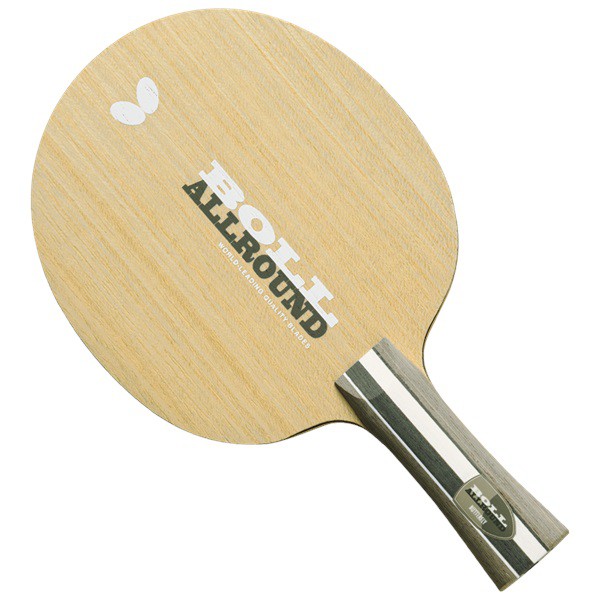
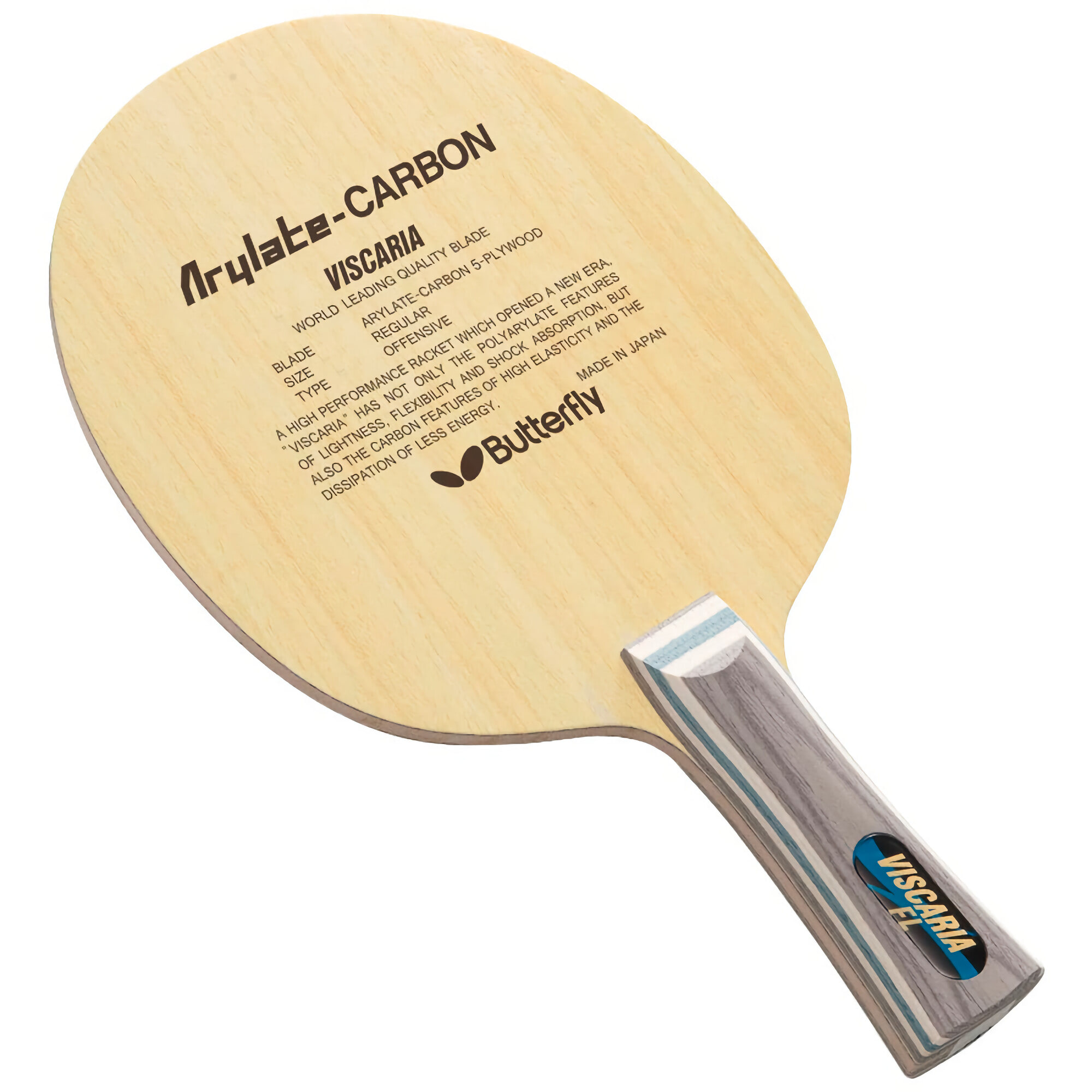
We may earn a commission from links on this page. Learn more.
Butterfly Timo Boll Allround and Butterfly Viscaria share a manufacturer and a target sport, but the axis data describes two blades built for opposite ends of a player’s development — and one of them is no longer in production.
The biggest gap in this dataset
Consistency is where these two blades separate hardest: Allround scores 5.0, Viscaria scores 9.2, a 4.2 point gap — the largest single-axis difference in this entire comparison set. Some of that is worth reading alongside Allround’s own cons list, which flags that it is “now discontinued, requiring sourcing from secondary market.” A blade you can only buy secondhand is naturally going to show more unit-to-unit variance in aggregated user reviews than a blade still in current production and quality control. Whatever the exact cause, a 4.2 point consistency gap is not something to shrug off — it is the difference between a blade Revspin and Megaspin reviewers can vouch for reliably and one where your specific unit is more of an unknown.
Speed is the second real gap: 7.5 for Allround versus 9.0 for Viscaria, a 1.5 point delta. This lines up exactly with Allround’s own cons list, which states plainly that it has a “speed ceiling too low for players ready to move into offensive play.” Viscaria’s pros list, by contrast, credits its 5-ply wood plus 2-ply arylate-carbon build with “deep power and a quick, crisp release” and even notes the same ALC-family construction “carried Fan Zhendong to a treble early in his career.”
What’s surprisingly close
Control is nearly tied — 8.7 for Allround versus 8.8 for Viscaria, a 0.1 point gap — and stiffness and hardness are both close too (0.2 and 0.5 points respectively). This is a genuinely useful thing to know: despite the huge speed and consistency gaps, Allround’s placement precision is not meaningfully worse than Viscaria’s. If pure ball placement at the table is what you value, Allround was never the weak link — speed and, per the numbers, consistency are.
Fit: two different stages of the same player
Allround’s bestFor is explicit about who it targets: “beginners transitioning from pre-made paddles and lower-intermediate players who want to focus on technique, consistency, and control before stepping up to a faster blade.” Viscaria’s bestFor picks up exactly where that leaves off: “attacking shakehand players with a complete loop-driving stroke who want a high-ceiling, forgiving arylate-carbon main blade.” Butterfly effectively designed these as sequential steps in the same development path, not as two competing options for the same buyer.
The discontinued problem
Because Allround is out of production, anyone comparing these two blades today is almost certainly asking one specific question: is it worth hunting down a secondhand Allround, or should I just buy the current Viscaria. Given the cons list explicitly calls out sourcing difficulty, and the consistency data shows a real gap, the practical answer leans toward Viscaria for most buyers — unless you specifically want the lighter, more control-first all-wood feel of the Allround for technique work and are comfortable buying secondhand.
Switching from Allround to Viscaria
This is less a lateral upgrade and more a graduation. Viscaria’s own cons list is honest about the tradeoff: it “demands an active stroke” and “passive or borrowed-pace players won’t unlock its deep power.” If you are still building your stroke on an Allround, jumping to Viscaria before your technique catches up means paying a premium price for power you cannot yet access. But if you’re already finding Allround’s speed ceiling limiting — the exact scenario its own cons list describes — Viscaria is the blade Butterfly built specifically to be the next step, not a sideways gamble.
Cost is also part of the honest picture here: Viscaria’s own cons note it is “expensive… well over a thousand RMB at home,” a real premium over what an all-wood control blade like Allround would have cost new.
Bottom line
These two blades aren’t really rivals — they’re stages. Allround’s near-tied control score shows it never lacked precision; its gaps are speed and, per the aggregated data, consistency, both of which line up with its own listed cons about being underpowered and hard to source. Viscaria is the blade to move to once those limits are actually the thing holding your game back, not before.
Frequently asked questions
Why does Butterfly Timo Boll Allround have such a low consistency score?
The data shows a 4.2 point gap versus Viscaria (5.0 vs 9.2), the largest in this comparison set. Allround's own cons list notes it is now discontinued and must be sourced secondhand, which is worth weighing alongside that number.
Is Viscaria too fast for an Allround player to switch to?
Only if your stroke isn't ready — Viscaria's own cons list says it "demands an active stroke" and won't reward passive or borrowed-pace play. If you're already hitting Allround's speed ceiling, it's built to be the next step.
Is control actually worse on Allround than Viscaria?
No — control is nearly tied (8.7 vs 8.8, a 0.1 point gap). Allround's real weaknesses are speed and consistency, not placement precision.
Can I still buy Butterfly Timo Boll Allround new?
No, per its own cons list it is discontinued and now requires sourcing from the secondary market.