Butterfly Tenergy 05 vs Nittaku Fastarc G-1: Which Should You Buy?
| Butterfly Tenergy 05 | Nittaku Fastarc G-1 | |
|---|---|---|
| Our rating | 9.0/10 | 8.8/10 |
| Best side | Both wings | Both wings |
| Control | medium-high | medium-high |
| Speed | 13.0/14 | 15.0 (Nittaku) |
| Spin | 11.5/12 | 12.5 (Nittaku) |
| Sponge hardness (different scales) | 36° (Butterfly scale) | 47.5° |
| Type | tensor inverted | tensor inverted |
| Uncut weight | 68 g | 69 g |
A row marked “different scales” puts two rating systems in one line. Those cells are not a single score you can subtract.

We may earn a commission from links on this page. Learn more.
The pitch: Tenergy-class performance, lower cost
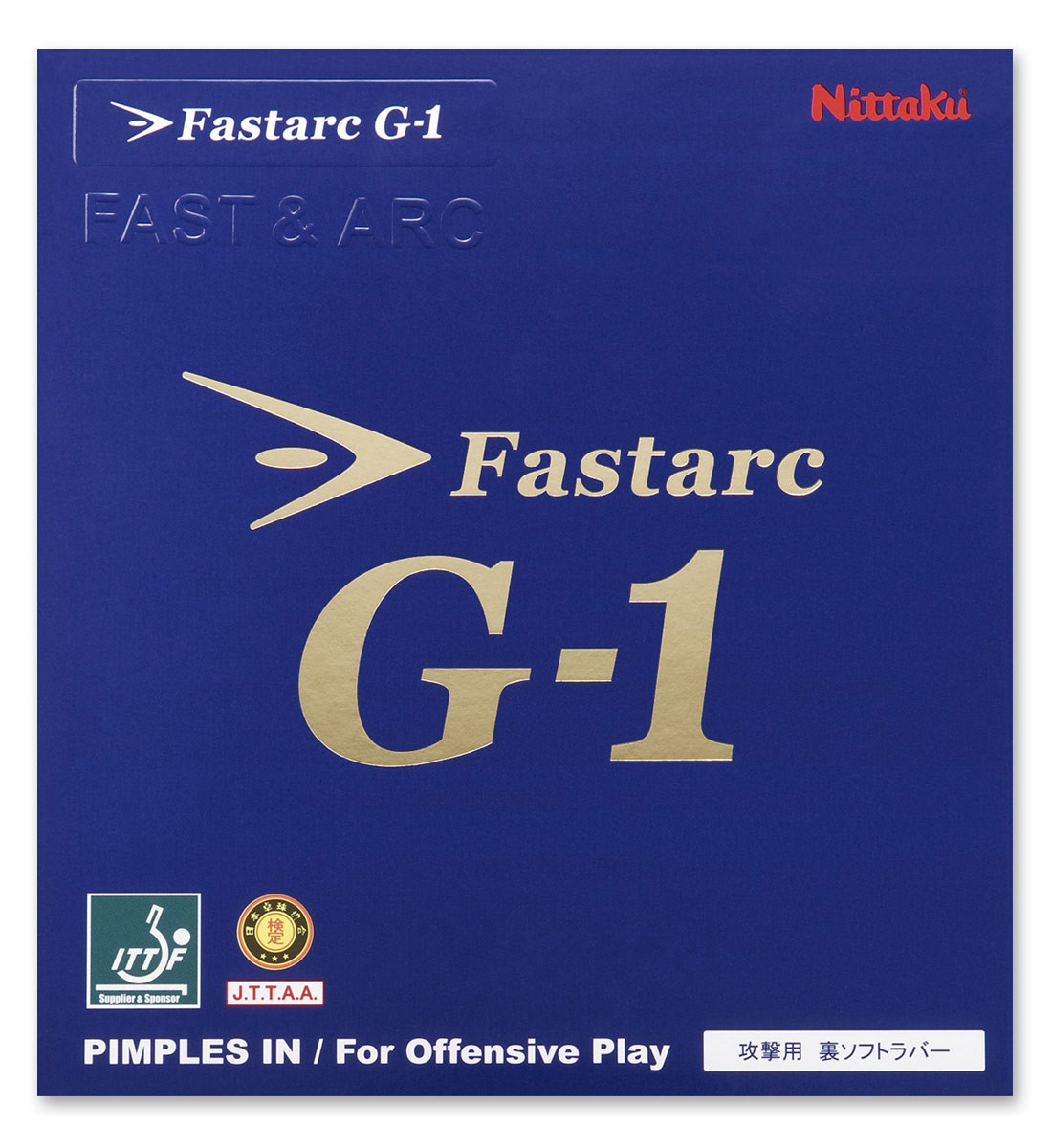
Nittaku markets Fastarc G-1 almost directly against Tenergy 05, and the aggregated data mostly supports the pitch. Overall ratings sit close, 9.0 versus 8.8, and four of six tracked axes are within a point of each other. This is one of the tighter matchups in the rubber category, which makes the axes that do separate them worth reading carefully rather than skimming past.
Throw: the one place G-1 actually wins
The most useful number in this comparison runs against Tenergy 05: throw angle favors Fastarc G-1, 8.5 versus 7.6, a 0.9-point gap. That lines up with G-1’s own pros, which single out “a high, safe throw that makes opening loops against backspin consistent and forgiving.” A higher throw angle means more margin over the net when the ball is launching from a lower or more backspin-heavy contact, which is precisely the shot Nittaku calls out. If your game leans on opening loops against chop or heavy backspin serves, this is a real, measurable edge for G-1, not marketing copy.
Speed and spin still favor Tenergy 05, modestly
Tenergy 05 keeps its lead on the two headline numbers: speed 9.3 versus 8.1 (a 1.2-point gap) and spin 9.4 versus 8.9 (0.5). Both gaps are real but neither is enormous — Nittaku’s own description of G-1 as “fast with an arc” is a fair characterization of a rubber that is genuinely close to Tenergy 05’s ceiling rather than a clear step down. Control runs a hair in Tenergy 05’s favor too, 8.3 versus 8.0, a 0.3-point gap that is small enough to be within normal review-to-review noise.
Durability: close, and the marketing claim mostly holds
G-1’s pros claim “Tenergy-like durability: performance drops off very slowly over months of use.” The numbers back this up reasonably well: Tenergy 05 scores 7.7, G-1 scores 7.0 — a 0.7-point gap in Tenergy’s favor, present but modest. Calling G-1’s durability “Tenergy-like” is a defensible claim rather than an exaggeration; it is not identical, but it is in the same tier, well above budget rubbers that fall off a durability cliff within months.
Tackiness is a non-factor
The tackiness gap is 0.2 points (2.3 versus 2.5), essentially a wash. Neither rubber is meaningfully tacky, and this axis should not influence your decision between them.
On specs: hardness and weight
Sponge hardness numbers use different manufacturer scales — Tenergy 05 at 36 degrees on Butterfly’s own scale, Fastarc G-1 at 47.5 degrees — and are not directly comparable digit-for-digit across brands, but the qualitative gap is real: G-1’s own cons describe “a firm 47.5-degree sponge that rewards a committed, technically sound stroke,” which is a noticeably firmer, less forgiving feel than Tenergy 05’s softer build. Weight is nearly identical uncut, 68g versus 69g, so this is not a factor in racket balance either way.
Who should switch, and who shouldn’t
If you are currently on Tenergy 05 mainly because you need a big, safe throw angle for opening backspin — G-1’s own stated strength — it is worth trying, since the throw gap in its favor (0.9) is larger than any gap Tenergy 05 holds over it except speed. If your game depends on Tenergy 05’s slightly higher speed and spin ceiling for finishing loops and countering at the top level, the modest 1.2 and 0.5-point gaps mean you would be giving up real ceiling for a lower price and slightly better opening-loop safety. For intermediate-to-advanced attackers who are budget-conscious and value a forgiving, high-arc rubber on either wing, per Tabletennis11, Megaspin, and Racket Insight reviews, Fastarc G-1 is a legitimately close alternative rather than a downgrade dressed up in marketing language, which is more than can be said for most rubbers that claim to rival Tenergy 05.
Frequently asked questions
Does Nittaku Fastarc G-1 really match Tenergy 05's durability?
Close, not identical. Tenergy 05 scores 7.7 on durability versus G-1's 7.0, a modest 0.7-point gap that supports the Tenergy-like durability claim without it being a perfect match.
Which rubber has the safer throw for opening backspin?
Fastarc G-1, by 0.9 points (8.5 versus 7.6). Its higher, safer arc is the one axis where it clearly beats Tenergy 05.
Is Fastarc G-1 slower than Tenergy 05?
Yes, by 1.2 points on the speed axis (8.1 versus 9.3), plus a smaller 0.5-point gap on spin. Both gaps are real but not enormous.
Is tackiness a reason to pick one over the other?
No, the gap is only 0.2 points and both rubbers sit at the low end of the tackiness scale.