Butterfly Maze Advance vs Stiga Offensive Classic: Which Should You Buy?
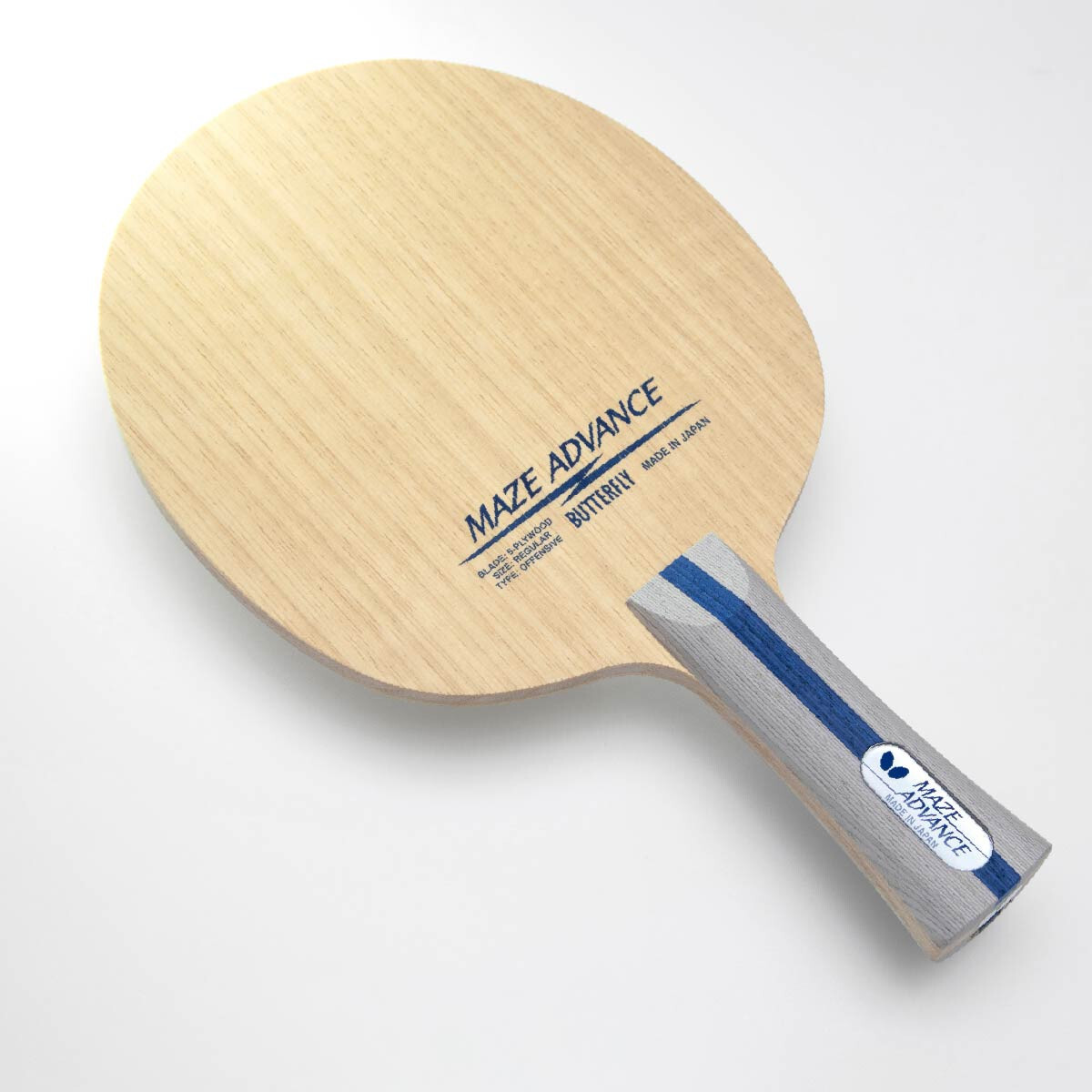
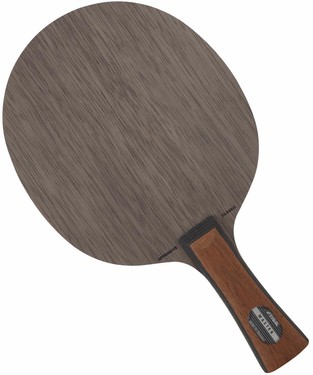
| Butterfly Maze Advance | Stiga Offensive Classic | |
|---|---|---|
| Our rating | 8.2/10 | 8.4/10 |
| Feel | soft, controlled, slightly stiff for an all-wood blade | thin, flexible, soft-medium springy all-wood with strong vibration and feedback |
| Handle | FL | FL/ST/AN (WRB hollow-handle version also sold) |
| Plies | 5W (all wood) | 5W (all wood) — outer veneers commonly described as koto or limba over spruce and ayous |
| Speed | ALL+ | OFF- (offensive minus; community-rated, occasionally felt as ALL+ to OFF) |
| Sponge thickness | 6.7 mm | 5.4 mm |
| Weight | 85 g | 83 g |
We may earn a commission from links on this page. Learn more.
Stiffness Is the Real Story Here
Of all the axis gaps in this comparison set, this pair has the largest stiffness delta: 2.2 points, with Maze Advance at 6.0 and Offensive Classic down at just 3.8. That is not a marginal difference — Stiga’s own pros describe the Offensive Classic as thin and flexible with a high throw, and the cons list confirms the flip side: it flexes a lot on power loops, so hard hits can sail long. The Maze Advance’s comparatively stiffer, thicker 6.7mm build, versus the Offensive Classic’s 5.4mm, gives more direct, predictable feedback on firm hits, while the Offensive Classic behaves more like a springboard that needs technique to control.
Consistency follows a similar pattern — Maze Advance’s 10 versus Offensive Classic’s 7.9 is a 2.1-point gap, and control adds another 1.5 points in Maze Advance’s favor (9.8 vs 8.3). Put together, these three numbers describe the same underlying trade: Maze Advance behaves the same way every time you swing it, while the Offensive Classic’s flex means outcomes vary more with how well you time the shot, which tracks with Revspin and TableTennisDaily reviews both flagging its small sweet spot as something you have to find consistently.
Speed splits by 1.8 points (7.6 vs 5.8) in the Offensive Classic’s favor on paper, but its own pros describe linear, predictable speed that scales with how hard you swing — meaning you supply much of the power yourself rather than the blade doing it for you, per its cons list. So the speed advantage is conditional on stroke quality in a way the Maze Advance’s more moderate, built-in pace is not.
What the Community Actually Says
The Offensive Classic has one of the longer reputations in this dataset — Revspin and Megaspin reviews both describe it as a two-decade classic, and TableTennisDaily’s equipment reviews consistently praise its price-to-performance ratio. But several Reddit r/tabletennis threads flag the same maintenance issue as the Clipper Wood: the thin top veneer can splinter at the edges and often needs sealing before serious use, a step the Maze Advance’s build does not require.
Should You Switch?
If you already own a Maze Advance and your looping game has outgrown its ALL+ speed ceiling, the Offensive Classic is a logical next step specifically because its long dwell time and flex are built for topspin — its own bestFor description calls out players wanting to build their looping and spin game. But be honest about your blocking and short game: the 2.1-point consistency drop and 1.5-point control drop mean you will mis-hit more often while you adjust to the added flex, and the smaller sweet spot, a named con, will punish off-center contact more than the Maze Advance ever did.
Going the other way, if you own an Offensive Classic and find its flex unpredictable — balls sailing long on hard hits, as its own cons admit — the Maze Advance offers a firmer, more locked-in alternative, at the cost of some of that free topspin dwell time.
The Axes That Barely Move
Weight and hardness are the two smallest gaps in this comparison, at 0.7 and 0.8 points respectively, and neither should factor much into your decision. Maze Advance sits at 85g against the Offensive Classic’s 83g, close enough that most players will not notice the difference in swing weight over a match. Hardness runs 6.2 versus 5.4, a modest gap compared to the 2.2-point stiffness swing — a reminder that stiffness and hardness measure different things: one is about how much the blade flexes under load, the other about how firm the surface feels on contact. Here, the Offensive Classic is both markedly more flexible and only slightly softer to the touch, which is exactly why reviewers describe its feedback as springy rather than mushy.
Handle and Setup Notes
Offensive Classic offers a WRB hollow-handle variant alongside standard FL/ST/AN, which Maze Advance, FL only, does not match. Its stock flared handle is reportedly thin and small for some hands — worth trying before buying if handle feel matters to you.
Bottom Line
Pick the Maze Advance for stiffer, more locked-in, more consistent all-around play. Pick the Offensive Classic if you are actively building a topspin game and want a low-cost, high-dwell, flexible blade, and are willing to seal the veneer and adapt to its smaller, more demanding sweet spot.
Frequently asked questions
What is the single biggest difference between these two blades?
Stiffness -- a 2.2-point gap (6.0 vs 3.8), the largest axis difference in this comparison, driven by the Offensive Classic's thin, flexible build.
Does the Offensive Classic's flex cause control problems?
It can. Its own cons admit hard hits can sail long due to the flex, and its consistency score (7.9) trails the Maze Advance's 10 by 2.1 points.
Which blade is better for building a topspin game?
The Offensive Classic, whose long dwell and flexible build are specifically suited to looping and spin development, per its own bestFor description.
Does the Offensive Classic need sealing?
Many owners report sealing it, since reviews flag the thin top veneer as prone to splintering at the edges.