Butterfly Maze Advance vs Stiga Clipper Wood: Which Should You Buy?
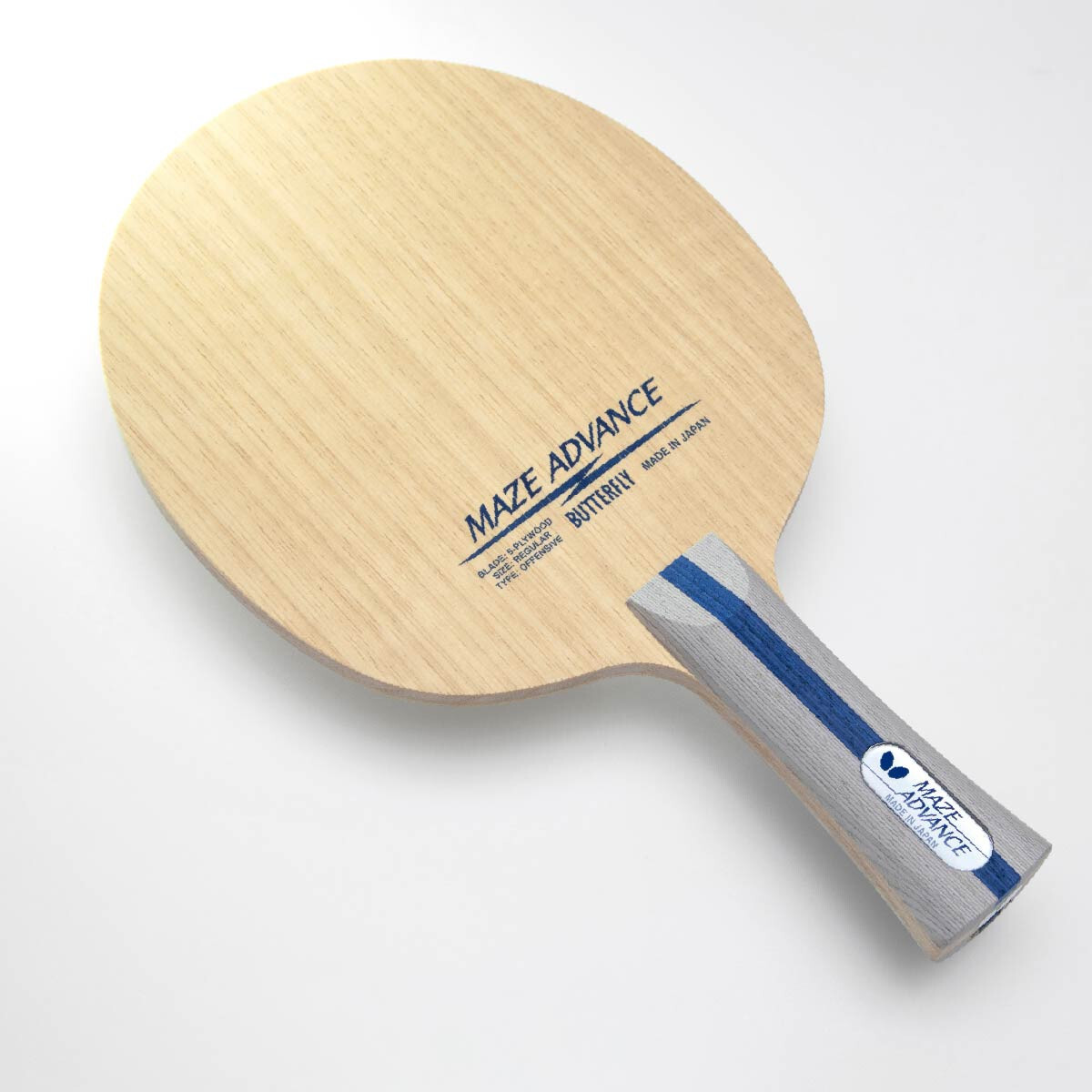
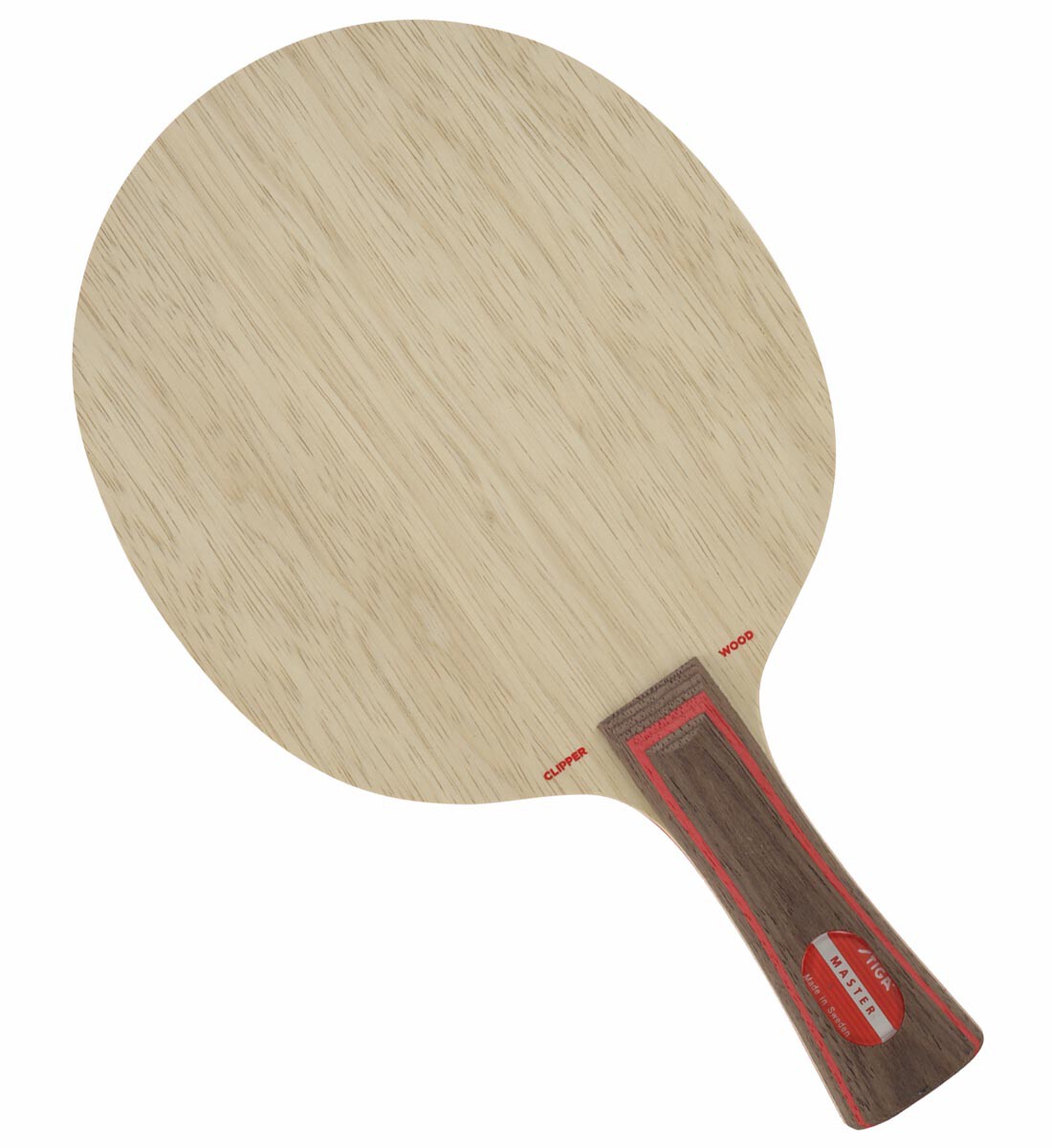
| Butterfly Maze Advance | Stiga Clipper Wood | |
|---|---|---|
| Our rating | 8.2/10 | 8.4/10 |
| Feel | soft, controlled, slightly stiff for an all-wood blade | solid, medium-stiff, hard fast all-wood with a big sweetspot |
| Handle | FL | FL/ST/AN/PEN |
| Plies | 5W (all wood) | 7W (all wood) - limba outer plies over an ayous core, no carbon or synthetic layers |
| Speed | ALL+ | OFF |
| Sponge thickness | 6.7 mm | 6.3 mm |
| Weight | 85 g | 90 g |
We may earn a commission from links on this page. Learn more.
The Core Trade-Off
These two blades sit on opposite ends of a genuine trade-off, and the axis data makes it concrete rather than vague. The Maze Advance posts a 9.8 control score against the Clipper Wood’s 8.5 — a 1.3-point gap that matters at the table: it is the difference between a blade that forgives a slightly late block and one that punishes it. But the bigger number is consistency, where Maze Advance scores a near-perfect 10 versus Clipper Wood’s 7.4, a 2.6-point spread. In practice that means the Maze Advance behaves the same way shot after shot, while the Clipper Wood’s reputation, per Revspin and the Tabletennis11 blog, leans more on feel that rewards technique rather than raw repeatability.
Speed runs the other way and by a wider margin: Clipper Wood at 8.6 versus Maze Advance’s 5.8, a 2.8-point gap — the single largest delta between the two blades. This is not a subtle difference. The Clipper Wood is genuinely built to hit harder and drive through the ball on flat drives and counters, while the Maze Advance’s ALL+ rating caps how much free power it hands back. Weight follows the same direction: Clipper Wood’s 90g against Maze Advance’s 85g, a gap that shows up as a 1.8-point difference on the weight axis, so the extra pace comes with extra mass to swing.
Two axes barely move at all, and that is useful information in its own right. Stiffness differs by just 0.1 (6.0 vs 5.9) and hardness by 0.5 (6.2 vs 5.7) — neither is a real reason to pick one blade over the other. Anyone choosing based on stiffer-wood marketing language between these two is chasing a difference that does not show up in the actual ratings.
What Reviewers Say
Community sources back up the numbers. Revspin’s aggregated user ratings are the backbone for both blades’ consistency and control scores, and Reddit’s r/tabletennis threads on the Clipper repeatedly describe it as feeling like an OFF blade rather than the OFF+ label it sometimes gets marketed as — which lines up with the Tabletennis11 blog’s framing of it as control-first among Stiga’s classic wood blades. On the Maze Advance side, TableTennisDaily forum threads recommend it specifically as a step-up blade from a pre-made paddle, and Megaspin’s listing echoes the coach-recommended angle for developing players.
Should You Switch?
If you already own a Maze Advance and are wondering whether the Clipper Wood is worth the move, the honest answer depends on what is limiting your game. If you are missing shots on power — getting outmuscled on drives, unable to hurt opponents from mid-distance — the 2.8-point speed gap is real, and the Clipper Wood will feel like a genuine upgrade, especially once paired with a faster European or Japanese rubber as its own pros note. But if your issue is inconsistency — mis-hits, balls flying long, blocks that sail — moving to the Clipper Wood works against you, since you would be trading 2.6 points of consistency for speed you may not yet be able to control. In that case, the better fix is rubber or technique, not a blade change.
Going the other direction, from Clipper Wood to Maze Advance, makes sense mainly for players who find the Clipper’s OFF-level pace hard to tame in the short game — the Maze Advance’s low vibration and clean touch on blocks and pushes, plus its lighter 85g build, suit close-to-the-table play better.
Handle and Build Notes
One practical difference the specs surface: Maze Advance ships only in FL (flared shakehand), while the Clipper Wood is available in FL, ST, AN, and even penhold — so penhold players do not have a Maze Advance option here at all. The Clipper’s known splintering tendency, with several owners reporting they sealed the blade, is a real maintenance cost that the Maze Advance’s cleaner 5-ply build does not carry. If you want a blade you can use straight out of the wrapper without extra prep, that tips slightly toward the Maze Advance.
Bottom Line
Pick the Maze Advance if you’re newer to blades and want predictable, controllable all-wood play with a reliable short game. Pick the Clipper Wood if you already generate your own power and want a bigger, more confidence-inspiring sweet spot with real speed headroom, and do not mind sealing the blade or pairing it with a livelier rubber to unlock its top end.
Frequently asked questions
Is the Stiga Clipper Wood actually faster than the Butterfly Maze Advance?
Yes -- the axis data shows a 2.8-point speed gap (8.6 vs 5.8), the widest difference between these two blades, and it lines up with independent Revspin ratings for both.
Which blade is more consistent?
The Maze Advance, by a clear margin -- its 10 out of 10 consistency score versus 7.4 for the Clipper Wood is one of the largest gaps in this comparison.
Does the Clipper Wood come in a penhold handle?
Yes. The Clipper Wood ships in FL, ST, AN, and penhold, while the Maze Advance is only available in FL (shakehand flared).
Is it worth upgrading from Maze Advance to Clipper Wood?
Only if lack of power, not lack of control, is holding your game back -- the Clipper Wood trades consistency for speed, so if mishits are already a problem, the upgrade will make that worse, not better.