Butterfly Innerforce Layer ZLC vs Nittaku Acoustic Carbon: Which Should You Buy?
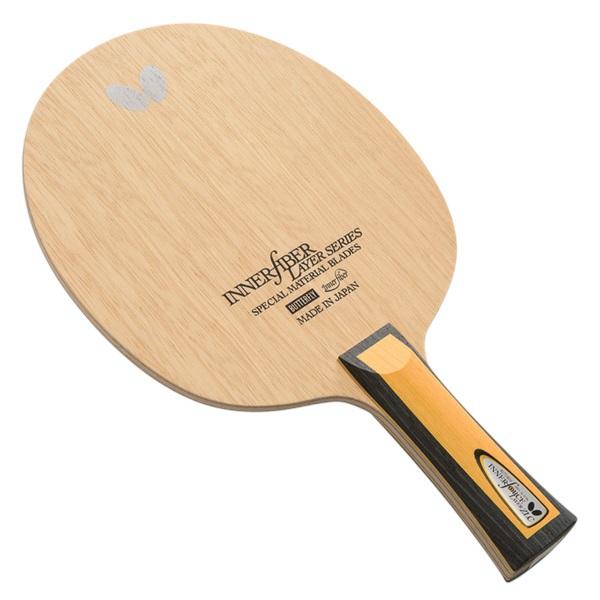
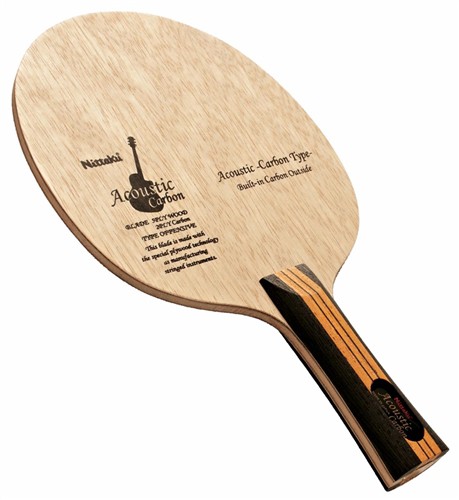
| Butterfly Innerforce Layer ZLC | Nittaku Acoustic Carbon | |
|---|---|---|
| Our rating | 8.7/10 | 8.8/10 |
| feel | Soft ZLC feel, woody touch, excellent dwell time | Medium-hard outer carbon with surprising wood-like dwell and ball retention; crisp sound on contact |
| handle | FL / ST / AN / CS | FL, ST (also Large Handle and Chinese Penhold variants available) |
| plies | 7-ply, 5 wood + 2 ZL carbon (inner) | 7 plies — 5 wood + 2 FE carbon (Limba - FE Carbon - Limba - Tung - Limba - FE Carbon - Limba) |
| speed | OFF+ | OFF |
| thickness_mm | 5.7 | 5.5mm |
| weight_g | 85-94 | approx 90g |
We may earn a commission from links on this page. Learn more.
Both blend speed with unusual wood-like feel, but Acoustic Carbon (8.8) edges the ZLC in overall rating and offers a different value proposition. At approximately 90g, the Acoustic Carbon is heavy and demands careful rubber selection, but it retains authentic wood-like dwell despite outer carbon construction—a rarity that appeals to players wanting carbon speed without losing touch. The ZLC’s softer feel and consistent control come at OFF+ speed with a smaller sweet spot.
Acoustic Carbon excels at short-game precision and blocking stability, with compatibility for sticky and tacky rubbers. The learning curve is steeper; the bounce feels unruly until technique adapts. The ZLC is easier to access with consistent performance across strokes. For intermediate-to-advanced players living close to mid-table, willing to adapt technique, and unwilling to sacrifice wood-like feedback, Acoustic Carbon is purpose-built. For precision-focused attackers seeking softer carbon feel with proven control, the ZLC delivers with less adjustment required.
FAQ
Which is faster?
Acoustic Carbon (both high speed blades, comparable OFF/OFF+), though ZLC feels faster due to softer feel.
Which feels more like all-wood?
Acoustic Carbon. It retains unmistakable wood-like dwell despite outer carbon construction.
Which is easier to learn on?
ZLC. It’s more consistent and forgiving. Acoustic Carbon has a steep learning curve due to its bounce and head-heavy balance.
Which is heavier?
Acoustic Carbon (approx 90g vs 85-94g range for ZLC). Heavy units demand careful rubber selection.