Butterfly Glayzer vs Palio CJ8000 2-Side Loop: Which Should You Buy?
| Butterfly Glayzer | Palio CJ8000 2-Side Loop | |
|---|---|---|
| Our rating | 8.2/10 | 7.8/10 |
| best_side | Forehand or Backhand (all-round offensive) | forehand or backhand |
| control | High | 8.5 |
| speed | 81 (manufacturer) | 7 |
| spin | 73 (manufacturer) | 8.5 |
| sponge_hardness | 38 degrees (JPN) | 36-38 deg |
| type | Inverted / High Tension (Spring Sponge X) | inverted |
| weight_uncut_g | around 48g uncut | 57 |

We may earn a commission from links on this page. Learn more.
Butterfly Glayzer and Palio CJ8000 2-Side Loop serve different price points and player development levels. Glayzer is an intermediate-focused rubber with Dignics topsheet at mid-range pricing, delivering consistency session-to-session and reliable performance across blade pairings. Its forgiving 38-degree sponge and medium-high throw angle support developing players while remaining useful for advanced players seeking control and feel.
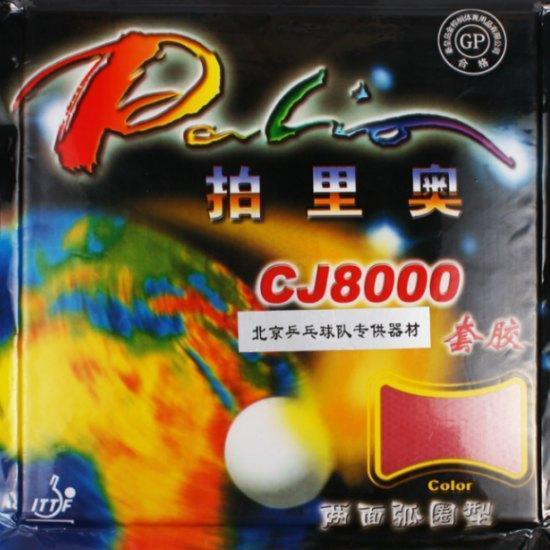
CJ8000 is a true budget rubber optimized for beginners developing topspin looping technique. Its soft topsheet makes opening backspin loops accessible and forgiving, rewarding correct form without requiring premium equipment. However, durability is limited—the red sheet degrades within four months—and speed without boosting is insufficient for mid-distance attacking. Glayzer is a genuine intermediate upgrade; CJ8000 is a beginner stepping stone. Choose Glayzer for serious development and durability; choose CJ8000 only if budget-constrained.
FAQ
Which should a beginner choose?
CJ8000 if budget-constrained and willing to upgrade within six months. Glayzer if planning long-term use.
How much does Glayzer cost more?
Glayzer typically costs 50-100 percent more than CJ8000, but offers dramatically better durability and consistency.
Can CJ8000 reach mid-distance attacking?
Not without paraffin oil boosting. Glayzer handles mid-distance attacking naturally.
Which works better with varied blade speeds?
Glayzer is blade-independent. CJ8000 is sensitive to blade thickness and sponge hardness changes.