Butterfly Glayzer vs Nittaku Fastarc G-1: Which Should You Buy?
| Butterfly Glayzer | Nittaku Fastarc G-1 | |
|---|---|---|
| Our rating | 8.2/10 | 8.8/10 |
| best_side | Forehand or Backhand (all-round offensive) | both |
| control | High | medium-high |
| speed | 81 (manufacturer) | 15.0 (Nittaku) |
| spin | 73 (manufacturer) | 12.5 (Nittaku) |
| sponge_hardness | 38 degrees (JPN) | 47.5° |
| type | Inverted / High Tension (Spring Sponge X) | tensor inverted |
| weight_uncut_g | around 48g uncut | 69 |

We may earn a commission from links on this page. Learn more.
A rating gap that the axis data does not fully explain - until you look at throw
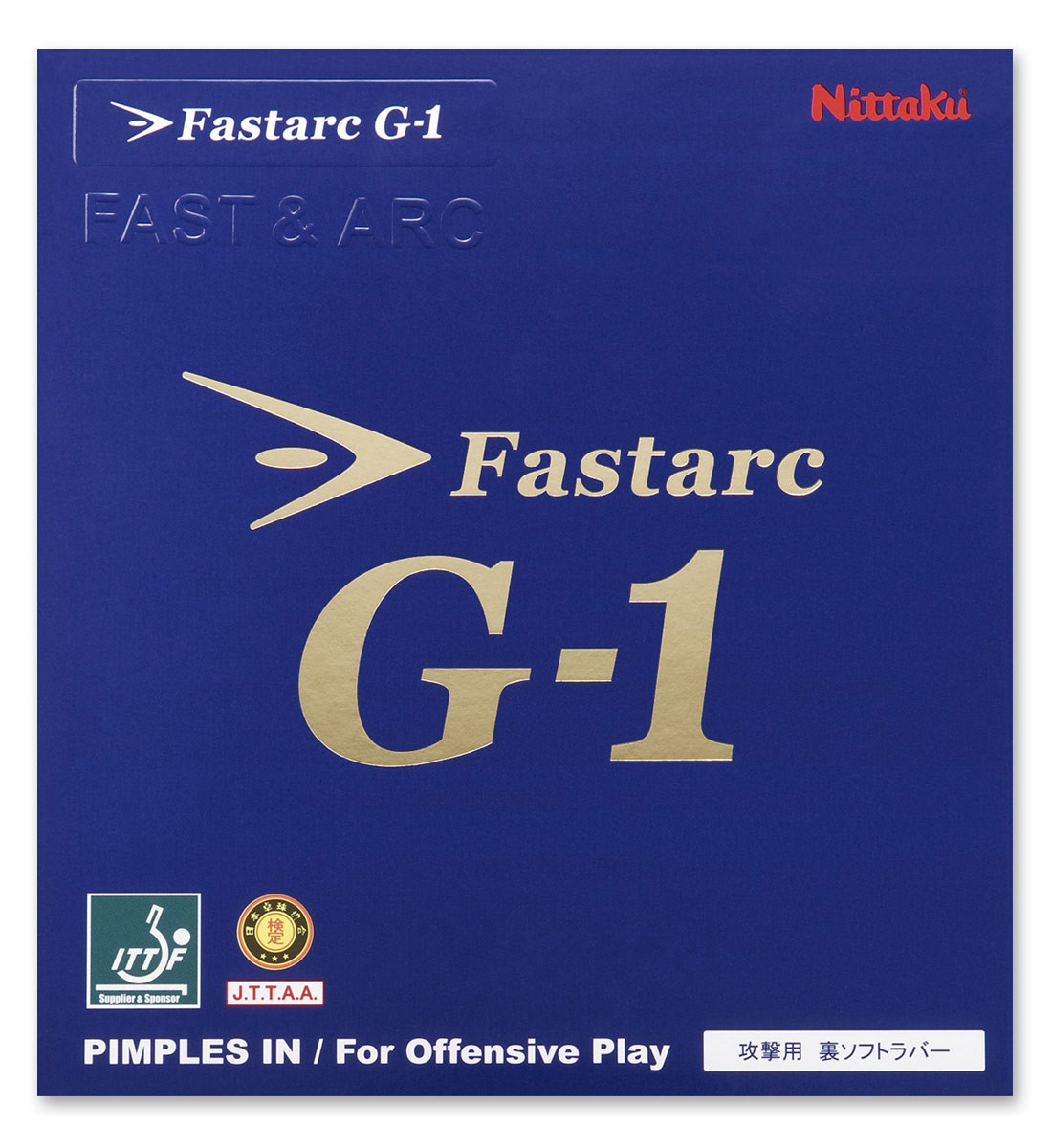
Fastarc G-1 posts a notably higher overall rating than Glayzer - 8.8 versus 8.2, a 0.6-point gap, the largest overall-rating gap in this batch. That is worth pausing on, because the individual axis scores do not obviously point that direction: Glayzer actually beats Fastarc G-1 on control by 1.1 points (9.1 vs 8.0) and edges it on speed by 0.5 (8.6 vs 8.1). If you only looked at those two axes, you would expect Glayzer to be the higher-rated rubber. It is not, and the reason is throw.
Throw is the single biggest gap in this entire comparison set
Fastarc G-1 scores 8.5 on throw against Glayzer’s 6.5 - a 2.0-point gap, the largest axis delta anywhere across this whole batch of seven pairs. Fastarc G-1’s own pros describe exactly why that matters so much: “a high, safe throw that makes opening loops against backspin consistent and forgiving,” with Nittaku’s own language, quoted in the pros, calling it “fast with an arc.” That combination - real pace plus a very high, safety-margin arc - is likely what drives its stronger overall reputation among reviewers at Tabletennis11, Megaspin and Racket Insight, even though it trails Glayzer on the narrower control and speed axes.
Durability adds a smaller but real edge to Glayzer this time (7.5 vs 7.0) - a rare axis where Glayzer leads outright alongside control and speed. Tackiness is a minor 0.5-point gap (2.0 vs 2.5) favoring Glayzer as the lower-tack option - both are low-tack sheets, so this is not a meaningful decision factor either way. Spin is essentially tied (8.8 vs 8.9, 0.1 points) - do not expect a real spin difference between these two in practice.
Why “more control” does not mean “safer to use”
This is the nuance worth sitting with: Glayzer’s higher raw control score (9.1) reflects precision and predictability once the ball is on your racket, consistent with reviewer notes about its “exceptional consistency and low error rate in blocking and short game.” Fastarc G-1’s much higher throw score reflects something different: forgiveness on the specific, high-stakes shot of opening a loop against backspin, where a flatter trajectory risks going into the net. A rubber can have slightly less overall touch-control and still feel dramatically safer on that one shot if its arc is high enough - which is exactly what Fastarc G-1’s pros and the 2.0-point throw gap describe.
The physical differences behind the numbers
Fastarc G-1 runs a firm 47.5-degree sponge against Glayzer’s soft 38-degree sponge - a large gap that its own cons acknowledge directly: it is “a firm 47.5-degree sponge that rewards a committed, technically sound stroke,” meaning it does not give you much for free on a lazy swing. It is also considerably heavier uncut - approximately 69 grams against Glayzer’s roughly 48 grams - which will shift the balance of whatever blade you mount it on, worth factoring in if your blade is already head-heavy.
Should you switch?
If you play Glayzer and specifically struggle with backspin returns going into the net, or you want more raw speed and spin ceiling on opening loops, Fastarc G-1’s 2.0-point throw advantage is the relevant fix - but be ready for a firmer sponge that will not reward a half-committed stroke, and a real weight increase on your blade. If you play Fastarc G-1 and want tighter touch, better blocking consistency, and a softer, easier-to-control feel for short exchanges, Glayzer’s control and durability edges are the reason to consider switching, and its lower price point relative to Dignics 05, per its own pros, makes that switch cheaper than moving to a true flagship rubber.
Given that Fastarc G-1 carries the notably higher overall community rating in this pair, players who are undecided and want the single more broadly praised option should lean toward it - but should not expect it to also be the more controllable rubber, since the data says otherwise.
Who each one actually suits
Glayzer suits intermediate offensive players roughly in the 1200-1800 USATT range who want Butterfly quality, strong control and low error rate at a manageable price. Fastarc G-1 suits intermediate-to-advanced offensive players on either wing who want heavy spin, real speed and a forgiving high arc specifically on opening loops, with Tenergy-class durability at a lower cost.
Frequently asked questions
If Glayzer has better control, why does Fastarc G-1 rate higher overall?
Because Fastarc G-1's throw score is 2.0 points higher (8.5 vs 6.5), the largest single-axis gap in this entire comparison set. That much extra arc makes opening loops against backspin dramatically more forgiving, which appears to outweigh Glayzer's control and speed edges in the overall rating.
Which rubber is easier to use with a less committed stroke?
Glayzer. Its softer 38-degree sponge is more forgiving on a lazy swing, while Fastarc G-1's firm 47.5-degree sponge specifically rewards a committed, technically sound stroke and gives less back if you don't provide the power.
Will Fastarc G-1 unbalance my blade if I switch from Glayzer?
Possibly. Fastarc G-1 is considerably heavier uncut at roughly 69 grams versus Glayzer's roughly 48 grams, which can shift the balance of a blade that is already head-heavy. Worth testing before committing both wings to it.
Is Fastarc G-1 more durable than Glayzer?
No, slightly the opposite on the tracked axis - Glayzer scores 7.5 versus Fastarc G-1's 7.0 on durability. Fastarc G-1's broader reputation for Tenergy-class durability is a real property of the rubber, but on this specific axis comparison it does not outlast Glayzer.