Butterfly Freitas ALC vs Nittaku Acoustic Carbon: Which Should You Buy?
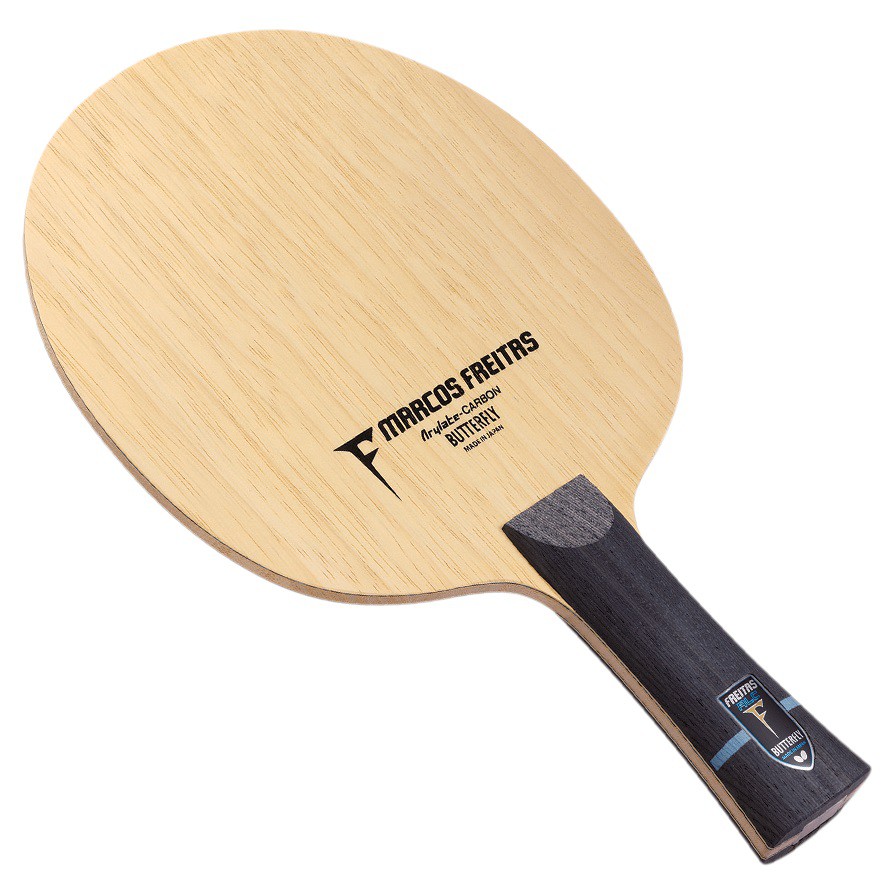
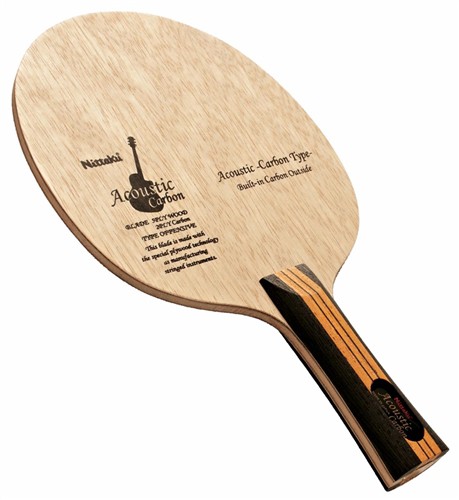
| Butterfly Freitas ALC | Nittaku Acoustic Carbon | |
|---|---|---|
| Our rating | 8.5/10 | 8.8/10 |
| feel | Medium-soft | Medium-hard outer carbon with surprising wood-like dwell and ball retention; crisp sound on contact |
| handle | Flared/Straight/Anatomic | FL, ST (also Large Handle and Chinese Penhold variants available) |
| plies | 5+2 arylate carbon (ALC) outer — Limba-ALC-Limba-Ayous-Limba-ALC-Limba | 7 plies — 5 wood + 2 FE carbon (Limba - FE Carbon - Limba - Tung - Limba - FE Carbon - Limba) |
| speed | OFF | OFF |
| thickness_mm | 5.7 | 5.5mm |
| weight_g | 88 | approx 90g |
We may earn a commission from links on this page. Learn more.
The Butterfly Freitas ALC and Nittaku Acoustic Carbon both deliver outer-carbon construction but with markedly different priorities. Freitas offers medium-soft feel with outstanding dwell time and excellent OFF-rated speed, delivering consistent control and looping potential at a manageable 88g weight. Its proven compatibility with diverse rubber selections makes it accessible to intermediate and advanced players alike.
Nittaku Acoustic Carbon is heavier at approximately 90g but compensates with remarkable wood-like dwell and ball retention uncommon in carbon blades, earning trust from professional players including Ayane Morita. It excels at both speed and control, with exceptional short-game precision and blocking stability. The large sweet spot remains consistent even on off-center contact. Both rate as OFF speed, but Acoustic Carbon’s wood-like feedback and professional pedigree contrast sharply with Freitas’s more traditional carbon feel and lighter weight.
FAQ
Which blade has more wood-like feel?
Nittaku Acoustic Carbon unmistakably retains wood-like dwell and feel despite outer carbon construction. Freitas ALC offers medium-soft feel for carbon but lacks the distinctive wooden ball sensation.
Which blade is heavier?
Acoustic Carbon weighs approximately 90g versus Freitas’s 88g. The weight difference is minimal, but Acoustic’s head-heavy balance may feel noticeably different in play.
Which blade is better for professional competition?
Acoustic Carbon carries professional endorsement including use by top players. Freitas is tournament-proven but less commonly seen at elite levels compared to Acoustic Carbon.
Which blade requires more careful technique?
Acoustic Carbon has a steeper learning curve. Its stiff feel and medium throw angle require adjustment from all-wood players. Freitas is more forgiving for players transitioning from other carbon setups.
Which blade offers better looping at distance?
Freitas edges ahead for far-table looping with its softer feel. Acoustic Carbon loses consistency looping far from the table where its stiffer feel limits dwell.