Butterfly Fan Zhendong ALC vs Butterfly Timo Boll ALC: Which Should You Buy?
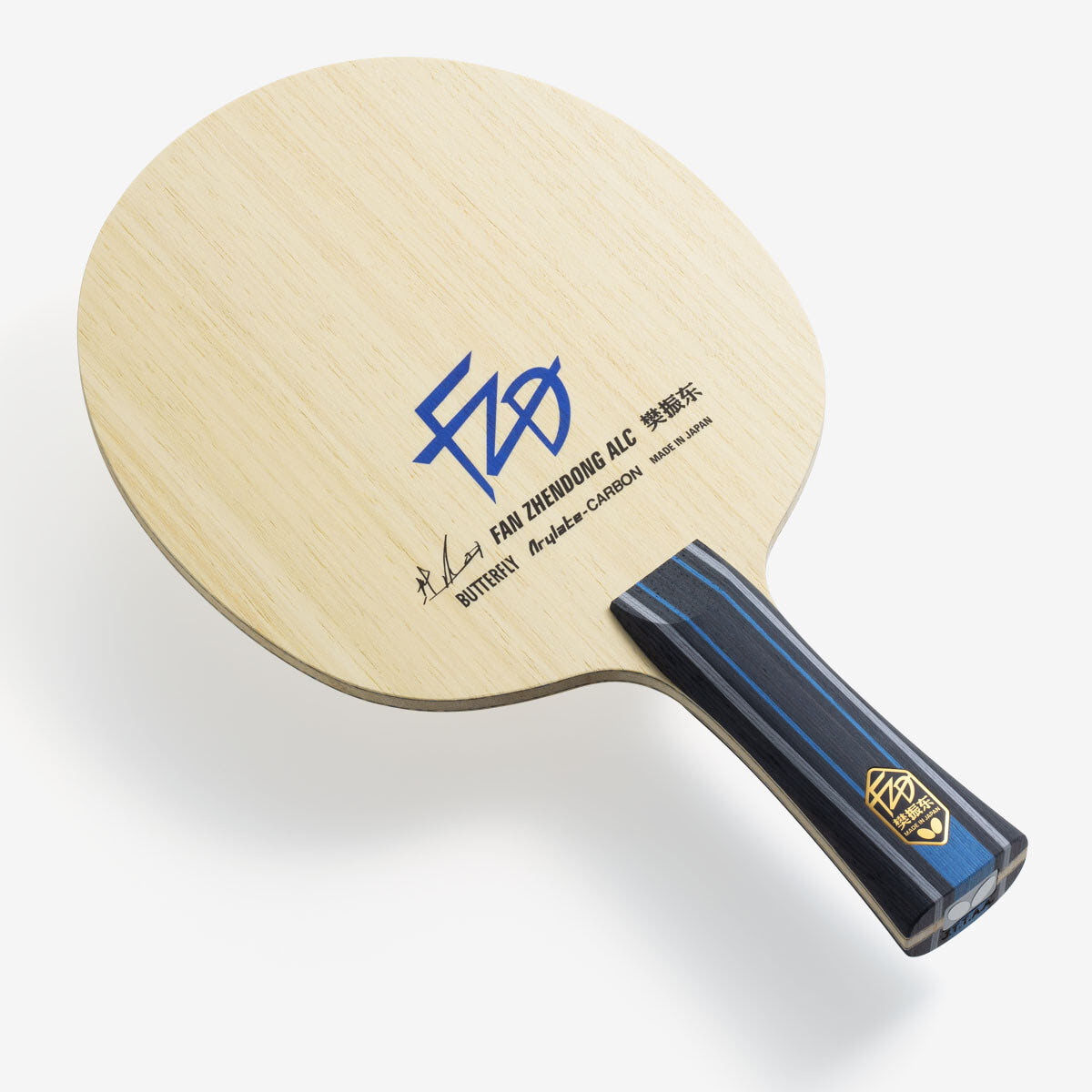
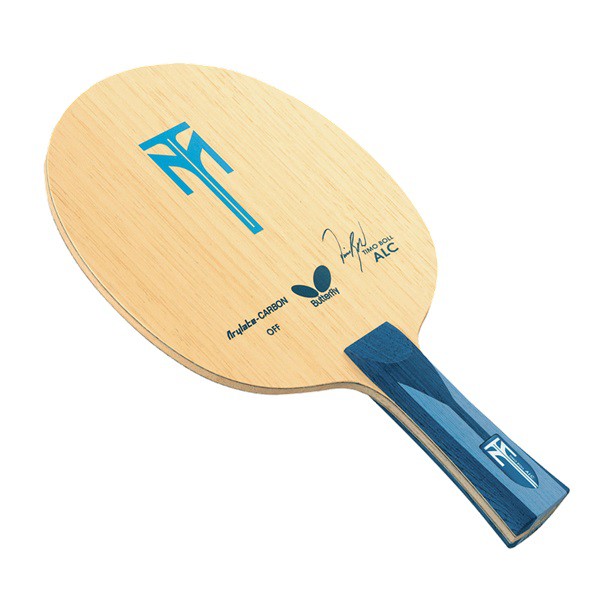
| Butterfly Fan Zhendong ALC | Butterfly Timo Boll ALC | |
|---|---|---|
| Our rating | 8.8/10 | 9.0/10 |
| feel | Crisp and direct with noticeable dwell on contact; slightly softer arc than Viscaria Super ALC | medium |
| handle | Flared (FL), Straight (ST), Anatomic (AN) — notably thicker grip than Viscaria | FL/ST/AN |
| plies | 5 wood plus 2 arylate-carbon (ALC) — Koto / ALC / Limba / Kiri / Limba / ALC / Koto | 5W+2 Arylate-Carbon |
| speed | OFF | OFF |
| thickness_mm | approx 5.7mm | 5.8 |
| weight_g | 87-92g typical | 86 |
We may earn a commission from links on this page. Learn more.
Quick verdict
Of every pairing in this batch, Butterfly Fan Zhendong ALC (rating 8.8) and Butterfly Timo Boll ALC (rating 9.0) are the closest. Every single axis delta between them is under 0.6 points: speed -0.2, control +0.3, stiffness -0.6, hardness -0.1, consistency -0.3. There is no single number here that settles the comparison the way a 3.0-point throw gap or a 2.6-point hardness gap does elsewhere in this dataset. Both are premium outer-ALC Butterfly blades associated with elite players, and the honest answer is that the difference comes down to small, specific preferences rather than a clear winner.
The largest gap is still small
Stiffness is the biggest single difference at 0.6 points, with Timo Boll ALC rating stiffer (5.8 versus 5.2). Consistency favors Timo Boll ALC by 0.3 (9.3 versus 9.0), and its own pros describe the blade playing “like one big sweet spot” without the hollow vibration common to many blades — a claim that lines up with the higher consistency score. Control favors Fan Zhendong ALC by 0.3 (9.0 versus 8.7), a small but genuine edge for players who prioritize placement and touch over outright ceiling.
What actually distinguishes them
Timo Boll ALC’s own pros lean into balance: “exceptional balance of spin, speed and control,” calling it a “near-ideal ratio for an ALC blade,” with class-leading spin on both wings helped by a large sweet spot and long dwell. It is also specifically praised as excellent from mid-distance to away from the table, and famously well-matched with Tenergy 05. Its cons are equally specific: it “gives little vibration feedback, so it’s less suited to intermediate players still developing technique,” and it is genuinely fast and OFF-rated, rewarding an active, technically sound stroke rather than forgiving a passive one.
Fan Zhendong ALC’s own pros emphasize dwell and forgiveness at full power: it “revives” Viscaria-class performance with a layup that “grabs the ball and releases power for heavy spin,” and is explicitly “forgiving at 100 percent power,” keeping the ball on the table even under heavy topspin. It also comes with a specifically thicker stock handle than the Viscaria it is descended from, a detail Timo Boll ALC’s own data does not claim in the same way — worth knowing if hand size, not performance, was ever your issue with a Viscaria-family blade.
Rubber and setup fit
Both blades share the same core construction: five wood plies plus two arylate-carbon layers, both rated OFF, both around 5.7 to 5.8mm thick, both in a similar weight band (87 to 92 grams for Fan Zhendong ALC, 86 grams for Timo Boll ALC). Neither the specs nor the axis data give a reason to expect meaningfully different rubber compatibility between them — this is not a case like some other pairings in this dataset where one blade is picky about rubber type and the other is not.
Switching from one to the other
Given how tight every axis gap is here, switching between these two blades for performance reasons alone is unlikely to be worth the cost and adjustment period for most players. The decision is better made on the qualitative claims than the numbers: if you want a small edge in control and a thicker, more Viscaria-alternative handle, Fan Zhendong ALC is the marginally better fit. If you want a small edge in consistency and stiffness, play from mid-distance as often as close to the table, and already have a developed, active stroke that does not need vibration feedback to self-correct, Timo Boll ALC’s own pros describe exactly that player.
Who each is actually for
Fan Zhendong ALC suits intermediate-to-advanced shakehand players with an aggressive, topspin-heavy loop game who want a controllable, forgiving-at-power outer-ALC blade, especially those with larger hands. Timo Boll ALC suits attacking shakehand players with an already-developed stroke who want a balanced, high-spin arylate-carbon blade with a large sweet spot and do not mind paying a premium price for it. If you cannot tell these two apart from the numbers alone, that is because the numbers genuinely do not tell them apart — the fit comes from the qualitative detail, not the rating gap.
Frequently asked questions
What's actually different between two Butterfly flagship ALC blades this close in rating?
Every axis gap between them is under 0.6 points, so there is no dominant number. The real differences are qualitative: Timo Boll ALC edges consistency and stiffness and is praised for mid-distance play, while Fan Zhendong ALC edges control and offers a thicker stock handle.
Which is more forgiving for a developing player?
Fan Zhendong ALC, based on its own pros and cons. It is described as forgiving at full power, while Timo Boll ALC's own cons state it gives little vibration feedback and is less suited to intermediate players still developing technique.
Which one has a thicker handle?
Fan Zhendong ALC is specifically noted as having a notably thicker grip than the Viscaria it descends from. Timo Boll ALC's own data lists standard Flared, Straight and Anatomic handle options without that same thicker-than-Viscaria claim.
Which pairs better with Tenergy 05?
Timo Boll ALC's own pros specifically cite it as a famously good match with Tenergy 05. Fan Zhendong ALC's compatibility claims are broader (tacky Chinese to high-tension European rubbers) rather than centered on one specific rubber pairing.