Butterfly Dignics 80 vs Tibhar Quantum X Pro: Which Should You Buy?
| Butterfly Dignics 80 | Tibhar Quantum X Pro | |
|---|---|---|
| Our rating | 9.0/10 | 8.5/10 |
| best_side | FH and BH (both sides) | both |
| control | medium | medium |
| speed | very high | very high |
| spin | very high | very high |
| sponge_hardness | approximately 40 degrees | 47.5 degrees |
| type | Inverted (tensor, Spring Sponge X) | tensor |
| weight_uncut_g | approximately 70 | 70 |

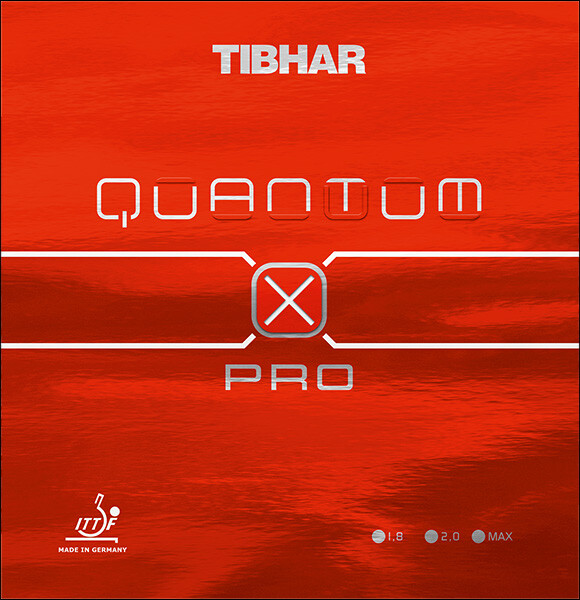
We may earn a commission from links on this page. Learn more.
Quick verdict
Butterfly Dignics 80 (rating 9.0) and Tibhar Quantum X Pro (rating 8.5) are not really competing for the same job. The axis data backs that up: Quantum X Pro trails on durability by 2.3 points, the largest gap in this comparison, and on spin by a full point, but it is noticeably tackier and purpose-built for near-table blocking and countering on the backhand rather than all-court looping. This is less “which rubber is better” and more “which rubber is built for what you actually do with your backhand.”
The durability gap is the headline number
Dignics 80 rates 8.7 on durability against Quantum X Pro’s 6.4 — a 2.3-point spread, the biggest of any axis across this whole pairing. That tracks with Quantum X Pro’s own pros, which describe it as having “good durability compared to many high-energy European tensors,” a relative claim among a category of rubbers known for wearing fast, not an absolute one. If service life per dollar is your top priority, this is the number that should weigh most heavily.
Where Dignics 80 leads clearly
Spin favors Dignics 80 by a full point (9.1 versus 8.1) — large enough to notice directly in loop rotation, not a marginal edge. Speed favors Dignics 80 by 0.5 and throw by 0.7, both moderate but real. Quantum X Pro’s own cons are candid about this trade-off: it “falls short of the absolute speed ceiling set by rubbers like JOOLA Dynaryz AGR,” and forehand performance “does not fully justify the price when compared to rivals at the same tier.” Quantum X Pro is not pitching itself as an all-around speed-and-spin maximizer.
Where Quantum X Pro answers back
Tackiness runs 1.3 points higher on Quantum X Pro (3.0 versus 1.7) — a real, feelable difference in how the topsheet grips the ball independent of sponge dynamics. Control is close, favoring Dignics 80 by only 0.4. More importantly, Quantum X Pro’s own pros describe “exceptional backhand performance on carbon and composite blades” and “low sensitivity to incoming spin,” which “makes blocking and countering highly reliable” — a specific, credible claim about a specific shot, not a vague quality statement. It is also described as “very forgiving for a hard-sponge tensor,” with a “good safety margin on loops against backspin” despite the harder sponge implied by its 47.5-degree spec.
A concrete reference point
Quantum X Pro is used by professional player Bernadette Szocs, cited as proof it holds up at elite competition level. That does not make it the right rubber for every player, but it does mean the backhand-blocking, near-table profile it is built around is tournament-tested, not just marketing language.
Switching from one to the other
If your game is built around near-table blocking, countering, and reliable backhand play against spin, Quantum X Pro’s own strengths line up directly with that need, even at a real cost in durability and outright spin ceiling versus Dignics 80. If instead you rely on your backhand to attack and generate spin rather than just neutralize incoming shots, or you play from mid-distance and further back, Quantum X Pro’s own cons are explicit that it “struggles from mid-distance and far-from-table play” and is “built for near-table aggression” — Dignics 80’s higher spin and more balanced profile will serve that game better.
Who each is actually for
Dignics 80 suits intermediate-to-advanced offensive players who loop and flick with fast arm speed and want one high-spin, durable rubber for either wing. Quantum X Pro suits intermediate-to-advanced players who prioritize control and consistency on the backhand, especially on carbon or composite blades, and who want a reliable near-table counter-topspin game without losing touch on short balls — at the cost of a shorter service life and a lower spin ceiling.
Frequently asked questions
Which is better on the backhand for blocking?
Tibhar Quantum X Pro. Its own listed pros specifically cite exceptional backhand performance on carbon and composite blades and low sensitivity to incoming spin, which makes blocking and countering highly reliable — a specific strength Dignics 80 does not claim in the same way.
Why is the durability gap so large?
It's the biggest axis difference in this comparison at 2.3 points (8.7 versus 6.4). Quantum X Pro's own pros describe its durability as good only relative to other high-energy European tensors, a category known for wearing out quickly.
Does a professional player actually use Quantum X Pro?
Yes — it is used by professional player Bernadette Szocs, cited as evidence it performs at elite competition level, particularly in the near-table blocking and countering role it is built around.
Which rubber is spinnier?
Dignics 80, by a full point (9.1 versus 8.1) — the largest spin gap in this comparison and one you would notice directly in loop rotation.
Is Quantum X Pro good for looping away from the table?
Not really, by its own admission. Its cons state it struggles from mid-distance and far-from-table play and is built specifically for near-table aggression, so players who rally from further back should lean toward Dignics 80 instead.