Butterfly Dignics 80 vs Nittaku Fastarc G-1: Which Should You Buy?
| Butterfly Dignics 80 | Nittaku Fastarc G-1 | |
|---|---|---|
| Our rating | 9.0/10 | 8.8/10 |
| Best side | FH and BH (both sides) | Both wings |
| Control | medium | medium-high |
| Speed (different scales) | very high | 15.0 (Nittaku) |
| Spin (different scales) | very high | 12.5 (Nittaku) |
| Sponge hardness | approximately 40 degrees | 47.5° |
| Type | Inverted (tensor, Spring Sponge X) | tensor inverted |
| Uncut weight | approximately 70 g | 69 g |
A row marked “different scales” puts two rating systems in one line. Those cells are not a single score you can subtract.

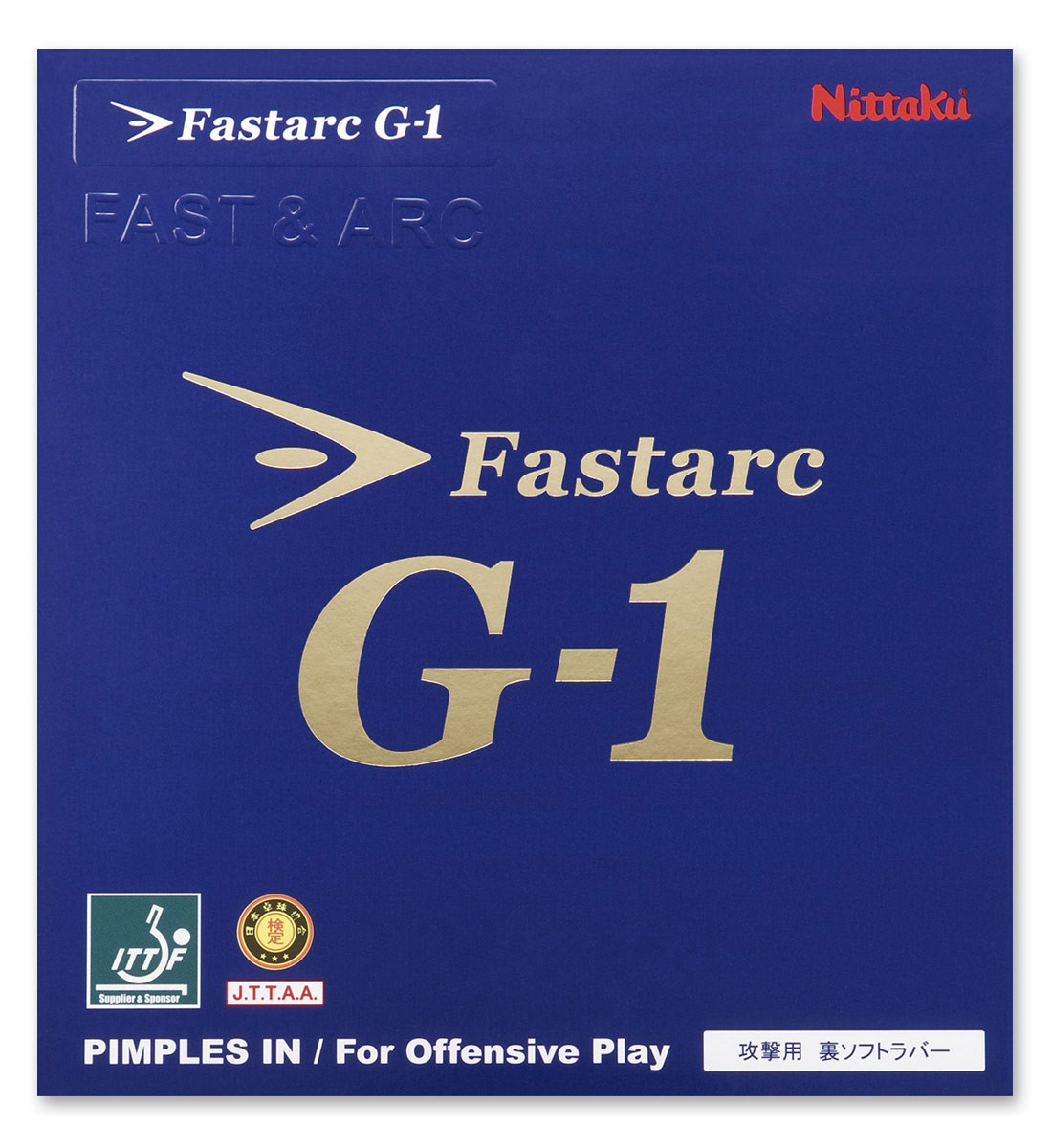
We may earn a commission from links on this page. Learn more.
Quick verdict
This pairing has the single largest axis gap in this entire comparison set, and it is not speed or spin — it is throw. Nittaku Fastarc G-1 rates 8.5 on throw against Dignics 80’s 5.5, a 3.0-point difference on a roughly 10-point scale. If you take away one number from this page, take that one. Everything else — spin, control, tackiness — is secondary to how differently these two rubbers launch the ball.
The throw gap is the whole story
Fastarc G-1’s own pros describe “a high, safe throw that makes opening loops against backspin consistent and forgiving,” and Nittaku’s own marketing line for it is “fast with an arc.” Dignics 80 sits at the opposite end: a medium, lower throw that keeps the ball dropping deep on the table rather than arcing high over it. Neither is objectively better — a high throw is forgiving on opening loops against heavy backspin because it builds in margin over the net, while a lower throw suits players who prefer a flatter, more direct trajectory and are comfortable generating their own arc through technique. A 3.0-point gap on this axis is large enough that the two rubbers will feel like genuinely different tools on the same shot, not variations of the same tool.
Where Dignics 80 pulls ahead
Speed favors Dignics 80 by 1.3 points (9.4 versus 8.1) — a gap large enough to notice in flat rallying pace, not just a rounding difference. Control also favors Dignics 80 by 0.9 (8.9 versus 8.0), consistent with Dignics 80’s reputation as the more technically demanding, higher-ceiling rubber of the two. Durability tilts to Dignics 80 as well, by 1.7 points (8.7 versus 7.0), though it is worth noting Fastarc G-1’s own pros claim “Tenergy-like durability” with performance that “drops off very slowly over months of use” — so this is a case of two genuinely durable rubbers where Dignics 80’s aggregated score is simply higher, not one being fragile.
Where the gap barely registers
Spin is close: 9.1 for Dignics 80 versus 8.9 for Fastarc G-1, a 0.2-point difference that will not decide a purchase on its own. Tackiness moves the other way by 0.8 (Fastarc G-1 grippier at 2.5 versus 1.7), a modest but real difference in how much a rubber grabs the ball independent of sponge dynamics.
Switching from one to the other
If your practical problem is opening loops against heavy backspin serves — balls sailing off the end, or feeling like you have no margin over the net — Fastarc G-1’s throw axis is built to solve exactly that, and its own pros back this up directly. Switching from Dignics 80 to Fastarc G-1 for this reason is a reasonable, targeted fix rather than a sideways move.
If instead your game is built around flat, fast rallying and you already generate your own arc through technique, the case for switching away from Dignics 80 is weak: you would be trading 1.3 points of speed and 0.9 points of control for a higher, more forgiving arc you may not need. Fastarc G-1’s own cons are honest that its firm 47.5-degree sponge “rewards a committed, technically sound stroke” and is “best suited to intermediate-to-advanced attackers rather than beginners” — this is not an easy-mode rubber layered on top of a high throw, it still demands real technique.
Who each is actually for
Dignics 80 suits intermediate-to-advanced offensive players who loop and flick with fast arm speed and want one balanced, durable rubber for either wing. Fastarc G-1 suits intermediate-to-advanced offensive players who specifically want heavy spin and real speed paired with a forgiving high arc on opening loops, on either wing, at a lower cost than Tenergy-class alternatives while matching their durability. If you are choosing based on a specific technical problem with opening against backspin rather than general reputation, the throw axis — not the overall rating — is the number to look at.
Frequently asked questions
What's the single biggest difference between these two rubbers?
Throw arc, by a wide margin. Fastarc G-1 rates 8.5 on throw versus Dignics 80's 5.5 — a 3.0-point gap, the largest of any axis in this comparison. G-1 pops the ball much higher and safer when opening against backspin.
Is Dignics 80 actually faster?
Yes, by 1.3 points (9.4 versus 8.1) — a gap meaningful enough to notice in flat rallying speed, not a marginal difference.
Which one has better durability?
Dignics 80 rates 1.7 points higher (8.7 versus 7.0), though Fastarc G-1's own reviewers also describe Tenergy-like durability that drops off slowly — both are genuinely long-lasting rubbers.
I loop mostly against heavy backspin serves — which fits better?
Fastarc G-1's high throw axis is built for exactly that: a forgiving arc that makes opening loops against backspin more consistent. Dignics 80 rewards clean technique more than it forgives mishits on that specific shot.