Butterfly Dignics 80 vs Gewo Nexxus EL Pro 48: Which Should You Buy?
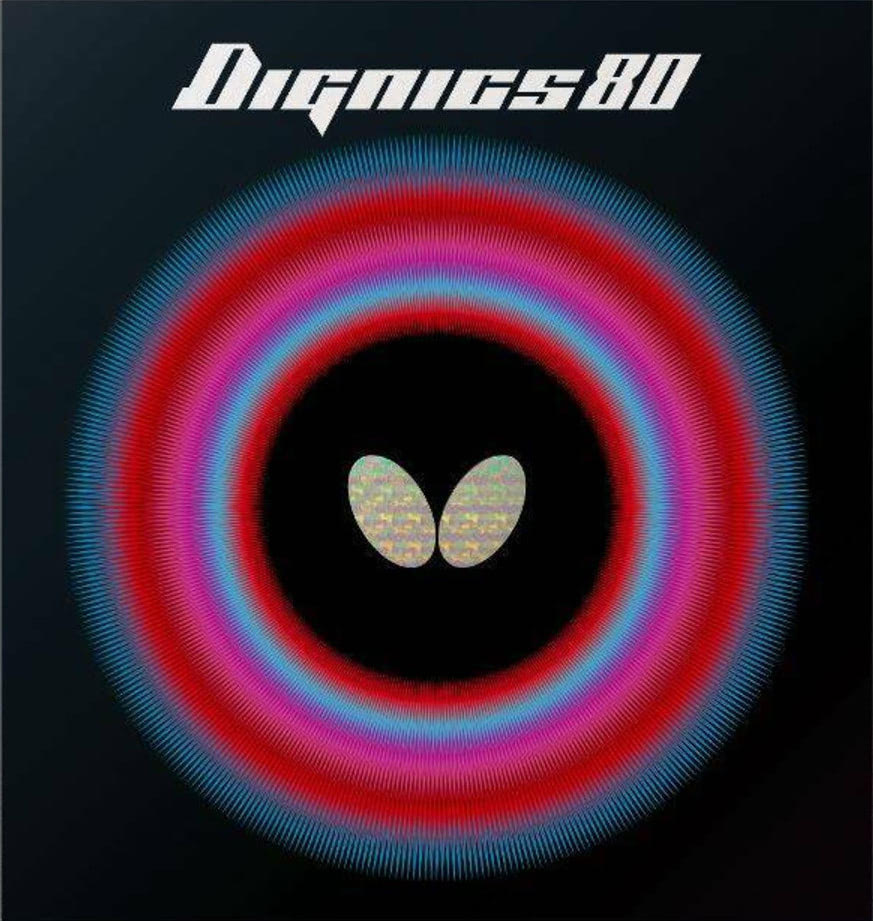
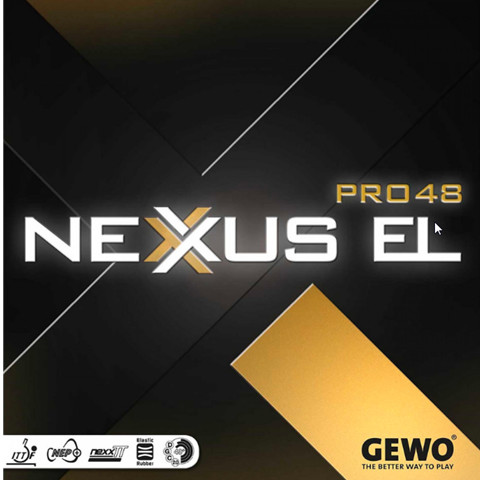
| Butterfly Dignics 80 | Gewo Nexxus EL Pro 48 | |
|---|---|---|
| Our rating | 9.0/10 | 8.7/10 |
| best_side | FH and BH (both sides) | Forehand or backhand |
| control | medium | 96 |
| speed | very high | 118 |
| spin | very high | 128 |
| sponge_hardness | approximately 40 degrees | 48 degrees (medium-hard) |
| type | Inverted (tensor, Spring Sponge X) | Inverted tensor |
| weight_uncut_g | approximately 70 | approx. 68-72 g |
We may earn a commission from links on this page. Learn more.
Quick verdict
Butterfly Dignics 80 (rating 9.0) and Gewo Nexxus EL Pro 48 (rating 8.7) post almost identical numbers on the axes that get talked about most. Aggregated ratings put Dignics 80 at 9.4 speed, 9.1 spin, 8.9 control, against 9.2 speed, 9.0 spin, 8.8 control for Nexxus EL Pro 48. Those are gaps of 0.2, 0.1 and 0.1 on a roughly 10-point scale — differences you would struggle to feel across a training session, let alone a single match. If you were expecting Dignics 80 to be a dramatically spinnier or faster rubber, the axis data says otherwise. The real separation between these two is not raw performance ceiling. It sits in throw, durability, and price.
Where the numbers actually separate them
Two axes move by more than rounding error. Throw sits at 5.5 for Dignics 80 versus 5.0 for Nexxus EL Pro 48, a 0.5-point gap, and Gewo’s own pros and cons confirm it from the other direction: testers flag a “high throw angle and fast pace” that “require an adjustment period,” while Dignics 80’s medium-low throw is praised for keeping the ball dropping deep on the table. That is a real, feelable difference for anyone whose game depends on a flatter trajectory near the table.
The bigger gap is durability: 8.7 for Dignics 80 versus 7.2 for Nexxus EL Pro 48, a 1.5-point spread — the largest of any axis in this pairing. Dignics 80’s own pros note it lasts around twice as long as the Tenergy series, while Nexxus EL Pro 48’s con list is blunt that the topsheet “firms up and loses grip if neglected” and needs regular cleaning to hold its edge. That durability gap is where the sticker-price argument for Gewo gets complicated: Nexxus EL Pro 48 is pitched as Tenergy-class performance at a significantly lower price point, but if you are re-sponging it more often, some of that saving gets clawed back over a season.
Where the difference is noise
Speed (0.2), spin (0.1), control (0.1) and tackiness (0.2) are all inside the margin you would expect from two separate reviewer pools scoring two separate rubbers, not a meaningful edge for either side. Anyone telling you Dignics 80 spins noticeably more than Nexxus EL Pro 48, or that Nexxus EL Pro 48 is meaningfully more controllable, is reading more into these numbers than they support. Both sit in the same tensor-flagship tier on raw ratings; the sponge hardness spec — roughly 40 degrees for Dignics 80 versus 48 degrees for Nexxus EL Pro 48 — is a better predictor of how each will actually feel off the blade than the rating gaps are.
Switching from one to the other
If you already play Dignics 80 and are happy with it, the axis data gives you no performance reason to switch to Nexxus EL Pro 48 — the gaps that exist, throw and durability, run in Dignics 80’s favor, not against it. The only real argument for switching is budget: Gewo’s own positioning as a lower-cost, Tenergy-class alternative is honest, and reviewers back up the spin and dwell claims. Just budget for shorter service life and a firmer, higher-throw feel that needs a short recalibration period, especially in the short game.
Going the other way, from Nexxus EL Pro 48 to Dignics 80, makes more sense if your complaint about the Gewo is specifically the topsheet degrading with use, or you want a slightly lower, flatter trajectory for blocking and counter-looping near the table. You are paying a premium price for roughly twice the service life and Butterfly’s fit with inner-carbon blades like the Timo Boll ALC, not for a jump in raw spin or speed.
Who each is actually for
Dignics 80 is built for intermediate-to-advanced offensive players who loop and flick with fast arm speed and want one balanced rubber for either wing, ideally on an inner-carbon blade. Nexxus EL Pro 48 is aimed at intermediate-to-advanced attackers who loop hard and lean on spin-heavy serves, want a sub-premium tensor with high dwell and a forgiving arc, and are willing to keep the topsheet clean — Gewo itself flags it as strongest on the backhand at 2.1mm, though it holds up fine on the forehand too. Neither is a beginner’s rubber: Gewo’s own materials warn the 48-degree sponge may be too demanding for players below intermediate level, and Dignics 80 demands clean technique and fast arm speed to unlock its potential.
Frequently asked questions
Is the Gewo Nexxus EL Pro 48 basically a cheaper version of Dignics 80?
On raw axis ratings, yes — speed, spin and control sit within 0.1 to 0.2 points of each other. The real differences are throw (Dignics 80 sits lower and flatter) and durability (8.7 versus 7.2), which is why Gewo positions Nexxus EL Pro 48 as Tenergy-class performance at a lower price rather than a straight clone.
Which one is better for backhand?
Both are strong there. Dignics 80 is specifically praised for out-of-this-world grip on backhand strokes, while Gewo itself recommends Nexxus EL Pro 48 at 2.1mm as its strongest cut, also on the backhand. It is less a performance gap and more a matter of throw and hardness preference.
I already own Dignics 80 — is it worth switching to save money?
Based on the axis data, probably not for performance reasons — the gaps that exist favor Dignics 80's lower throw and better durability. Switch only if budget is the deciding factor, and expect to clean the topsheet regularly to avoid losing grip early.
Is the 48-degree sponge too hard for intermediate players?
It can be. Gewo's own documented cons flag that the 48-degree sponge may be too demanding for players below intermediate level, and separately note the high throw and fast pace require an adjustment period even for players who are ready for it.