Butterfly Dignics 05 vs Nittaku Fastarc G-1: Which Should You Buy?
| Butterfly Dignics 05 | Nittaku Fastarc G-1 | |
|---|---|---|
| Our rating | 9.0/10 | 8.8/10 |
| Best side | Both wings | Both wings |
| Control | medium-high | medium-high |
| Speed | high (Butterfly rating 86) | 15.0 (Nittaku) |
| Spin | very high (Butterfly rating 85) | 12.5 (Nittaku) |
| Sponge hardness (different scales) | 40 degrees (Butterfly scale) | 47.5° |
| Type | tensor inverted (Spring Sponge X) | tensor inverted |
| Uncut weight | 70 g | 69 g |
A row marked “different scales” puts two rating systems in one line. Those cells are not a single score you can subtract.

We may earn a commission from links on this page. Learn more.
The 2.2-Point Gap That Decides Everything
Six axes separate these two rubbers, and one dwarfs the rest. Throw: Dignics 05 rates 6.3, Fastarc G-1 rates 8.5 — a 2.2-point gap, by far the largest delta in this comparison and one of the largest you will find in any rubber matchup on this site. That number is the whole story. Fastarc G-1’s high, safe throw is exactly why Nittaku markets it as forgiving for opening loops against backspin — reviewers on Tabletennis11 and Megaspin describe it as giving a consistent, high arc that clears the net with margin to spare. Dignics 05’s low throw is the flip side of its class-leading grip: Revspin and RacketInsight reviewers agree it produces a violently dipping topspin, but only when the swing is fast and committed enough to generate that arc yourself, since the rubber will not do it for you.
Durability runs the other direction and by a wide margin: 8.5 versus 7.0, a 1.5-point edge for Dignics 05 — consistent with its own listed pro of running “roughly twice” the durability of Tenergy-class rubbers, against Fastarc G-1’s “Tenergy-like” but still shorter-lived sponge. Speed adds another 1.0-point gap (9.1 vs 8.1), control 0.8 (8.8 vs 8.0), and spin a smaller but real 0.5 (9.4 vs 8.9). Tackiness is the one axis where the gap is small enough to ignore: 1.8 versus 2.5, a 0.7-point spread that matters less in practice than the throw and speed numbers.
What the Reviews Say
Dignics 05’s reputation, built from Revspin, RacketInsight, Megaspin and Reddit r/tabletennis, is unambiguous about who it is for: advanced and high-level attackers with well-developed, fast strokes. Its own cons list is direct — premium price, demands high swing speed and clean technique, too fast and reactive on the backhand and passive strokes for many players, and weaker short pushing and flat smashing per several reviewers.
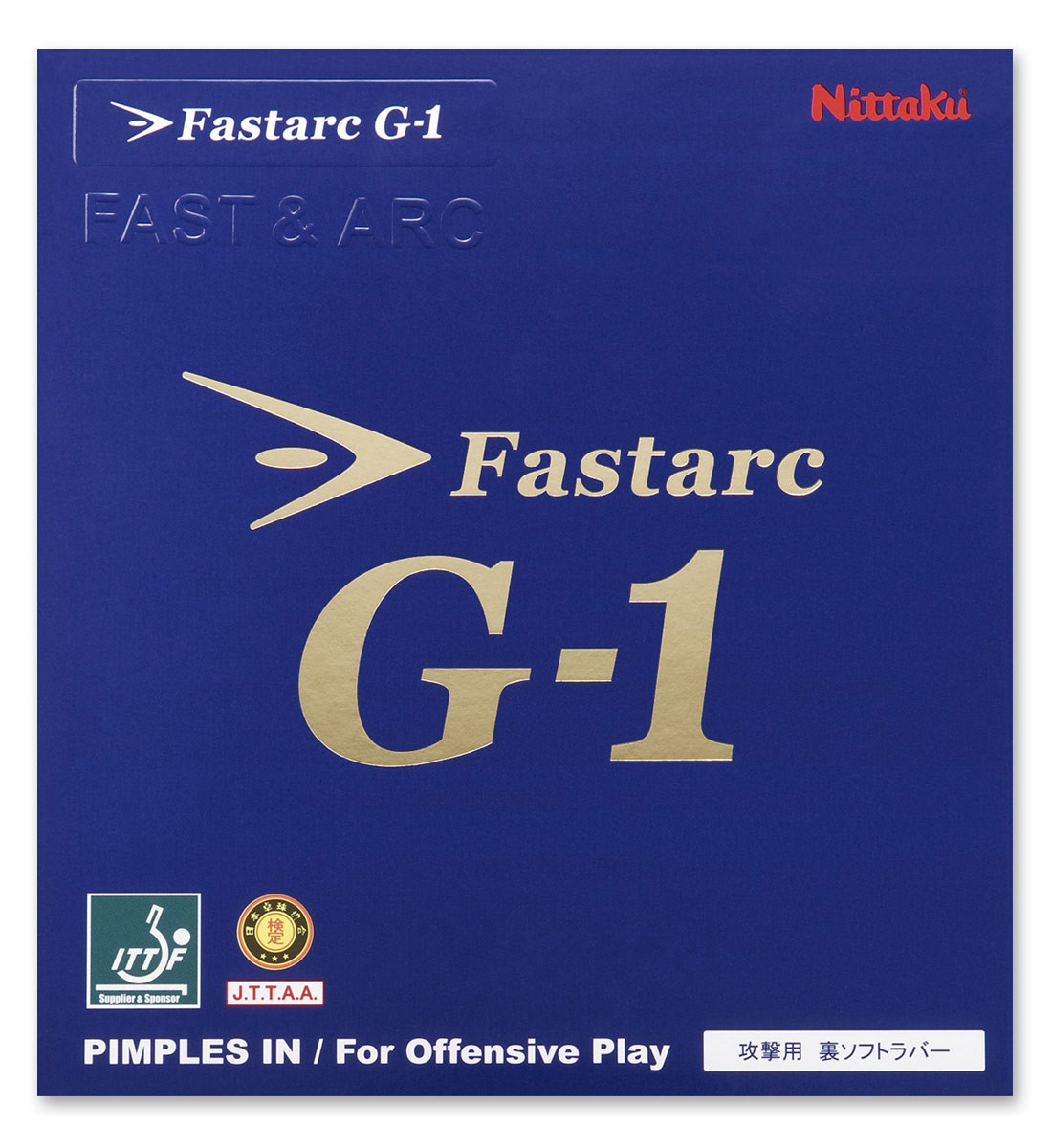
Fastarc G-1’s reviews, aggregated from Tabletennis11, Megaspin and Racket Insight, describe a rubber built around forgiveness at speed: heavy spin and real pace together, Tenergy-class durability, and Tenergy-class performance at a noticeably lower cost. Its cons are proportionate to its ambitions, not disqualifying: a firm 47.5-degree sponge that still rewards committed strokes, a bit heavier than some alternatives, and a rubber Nittaku itself positions for intermediate-to-advanced players rather than true beginners.
Should You Switch?
If you are currently on Fastarc G-1 and looking at Dignics 05 because of its reputation, be honest about your swing speed first. The 2.2-point throw gap means you will lose a significant safety margin on backspin loops — shots that currently clear the net with room to spare on G-1 may need real technique adjustment to land safely on Dignics 05. The payoff is real (1.0 point more speed, 0.8 more control, 1.5 more durability), but it only shows up if your stroke is fast and clean enough to generate arc without the rubber’s help.
Going the other way, from Dignics 05 down to Fastarc G-1, makes sense for players who feel outmatched by Dignics 05’s low throw or who want Tenergy-class performance without the premium price tag — you give up some peak speed and control, but you gain a rubber that is dramatically more forgiving on backspin.
Fit and Setup
Both rubbers play well on either wing per their bestFor descriptions, and both come in near-identical uncut weight (70g vs 69g), so blade balance is not a deciding factor here. The real decision is stroke-dependent: fast, committed attackers should lean toward Dignics 05’s grip and durability; players still building consistent loop mechanics, or those who value a wider safety margin against backspin, get more practical value from Fastarc G-1’s higher throw.
Frequently asked questions
Why does the throw angle matter so much between these two rubbers?
A 2.2-point gap (6.3 vs 8.5) is the largest delta in this comparison — it directly affects how much margin you have clearing the net on backspin loops, which is the shot most players hit most often.
Is Butterfly Dignics 05 worth the price premium over Fastarc G-1?
Only if your swing speed and technique are advanced enough to generate arc yourself — Dignics 05's own reviewers describe it as demanding a fast, committed stroke; without that, Fastarc G-1's forgiving high throw delivers more usable performance per dollar.
Which rubber lasts longer?
Dignics 05, by 1.5 points on the durability scale (8.5 vs 7.0) — it is rated at roughly twice the durability of Tenergy-class rubbers, while Fastarc G-1 is described as merely Tenergy-like.
Can beginners use either of these rubbers?
Neither is aimed at beginners. Dignics 05 explicitly targets advanced attackers with years of experience; Fastarc G-1 is pitched at intermediate-to-advanced players, one tier more accessible but still not a first rubber.