Andro Treiber Z vs Butterfly Viscaria: Which Should You Buy?
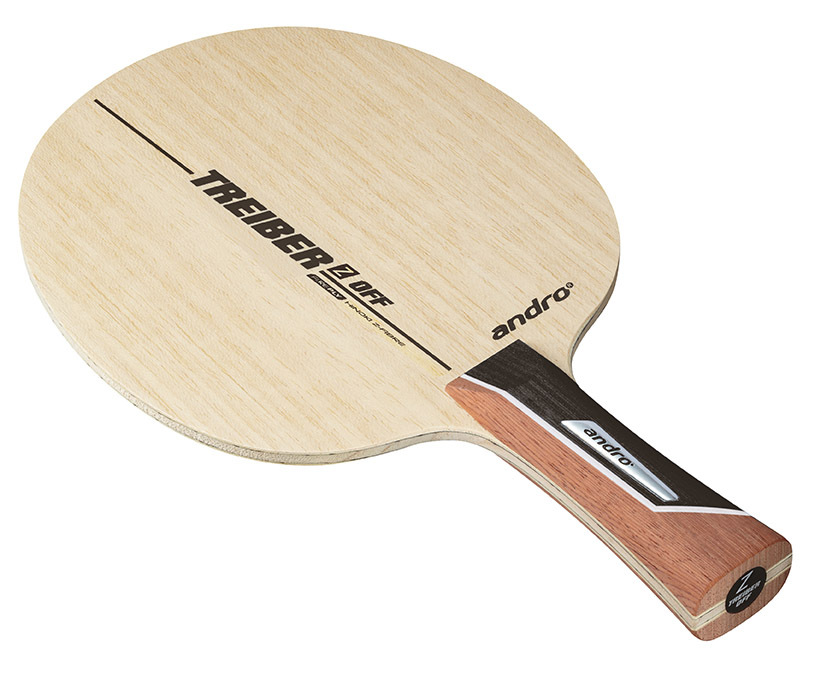
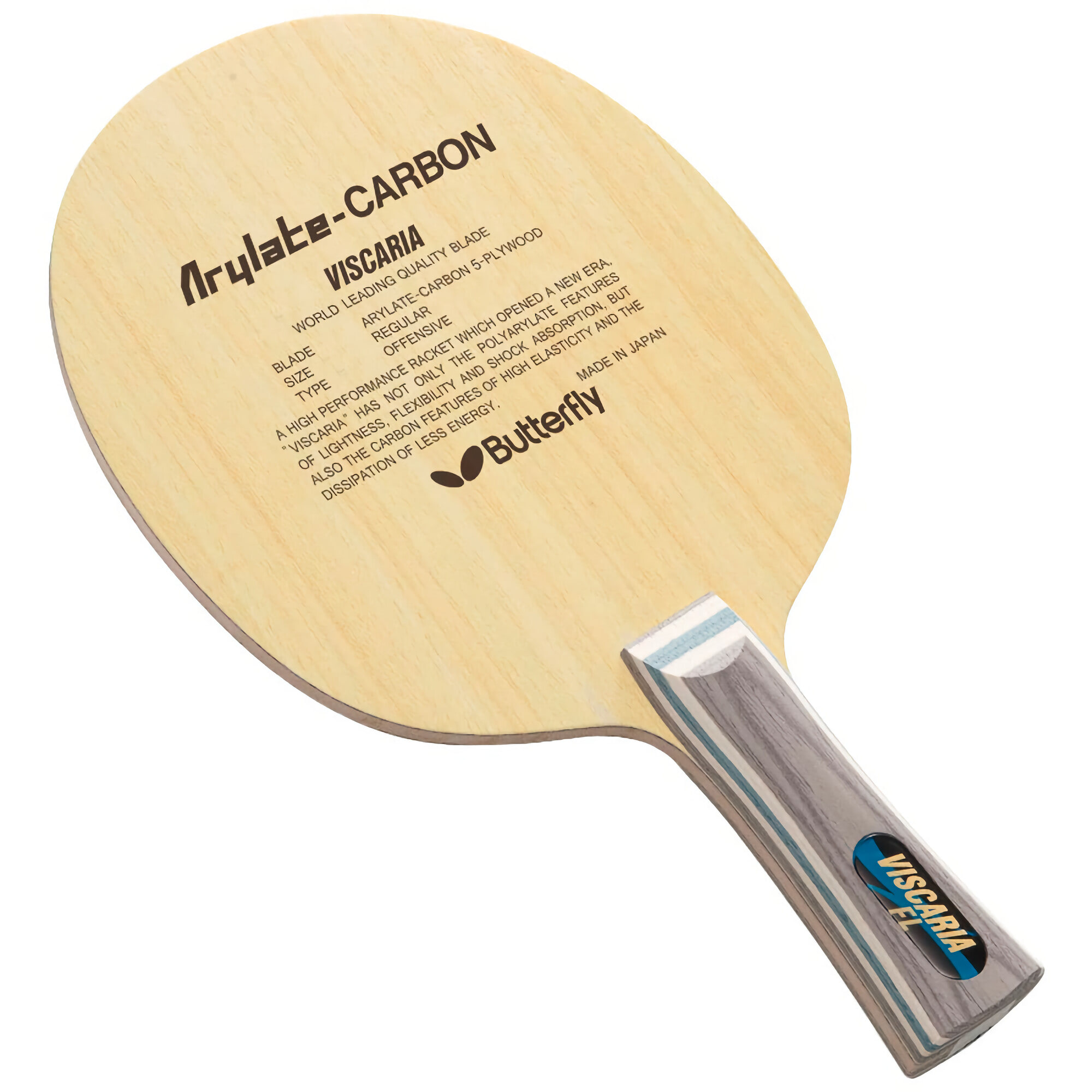
| Andro Treiber Z | Butterfly Viscaria | |
|---|---|---|
| Our rating | 8.7/10 | 9.0/10 |
| feel | mild, crispy, low vibration, large sweet spot | medium-hard |
| handle | FL, ST, AN, Chinese pen | FL/ST/AN |
| plies | 7-ply: kiso hinoki outer + ZLC (Z-fiber composite) inner layers + wood core | 5W+2 Arylate-Carbon |
| speed | OFF | OFF |
| thickness_mm | 6.6-6.8 | 5.8 |
| weight_g | 87-90 | 87 |
We may earn a commission from links on this page. Learn more.
The Numbers That Actually Matter
Revspin’s aggregated user ratings put Treiber Z at 9.4 speed and 9.2 control, against Viscaria’s 9.0 speed and 8.8 control. That is a 0.4-point edge for Treiber Z on both axes — real, but not the story here. The story is stiffness: Treiber Z scores 5.9, Viscaria 5.2, a 0.7-point gap that is the largest of any axis in this comparison. Hardness runs the same direction, 6.2 versus 5.7, a further 0.5-point spread. Put those two together and you get two blades with similar top-line speed and control numbers but a genuinely different feel at contact — Treiber Z’s kiso hinoki outer plies and ZLC (Z-fiber composite) core play noticeably crisper and firmer than Viscaria’s 5-ply wood plus 2-ply arylate-carbon layup with its koto outer veneer.
Consistency is the one axis where Viscaria pulls ahead, 9.2 to 9.0 — a 0.2-point gap that is small enough to call a wash rather than a real advantage. Don’t read anything into it.
What the Reviews Actually Say
Treiber Z’s community feedback, aggregated across Revspin, TableTennis Reference, BladeRubber.net and the TableTennisDaily forum, converges on a blade with a rare speed-to-control ratio for an OFF-class composite — reviewers specifically flag counter-looping and a large sweet spot that keeps off-center blocks stable. The catch nobody disputes: it is discontinued. Every unit on the market today is secondhand, and its throw angle runs low, so it needs medium-to-high-throw rubbers to clear the net without extra risk.
Viscaria’s reputation, drawn from Mogu Liao Pingpang, Heima Liao Pingpang, and Megaspin reviews, leans on pedigree and forgiveness rather than raw numbers — this is the ALC blade that carried Fan Zhendong to a treble early in his career, and owners consistently describe a smooth block-to-loop transition with a large sweet spot. The dissent that does exist is worth repeating honestly: a minority of users find it only medium-fast and harder to generate arc with, and batch-to-batch weight varies more than buyers expect from a premium blade at this price.
Should You Switch?
If you already own a Treiber Z and it still plays the way you remember, the radar data does not give you a reason to move to Viscaria. You are giving up 0.4 points of speed, 0.4 of control, and a firmer, crisper feel that Treiber Z owners specifically praise for short-game precision — pushes, serves, blocks and flicks. The only honest reasons to switch are non-performance ones: Treiber Z is gone from retail shelves, so if yours wears out or you never owned one, Viscaria is the blade you can actually buy new, and it comes backed by a proven track record at the highest level of the sport that a discontinued blade cannot offer going forward.
Going the other direction — Viscaria to Treiber Z — makes sense only if you specifically want the firmer, lower-vibration feel and don’t mind hunting the secondhand market. The 0.7-point stiffness gap is large enough to feel immediately off the blade, not just on paper.
Fit and Setup
Both are OFF-class blades built for players with a complete, committed loop, not beginners — both blades’ own pros and cons lists say so explicitly. Treiber Z’s low throw angle is the one setup detail to plan around: pair it with medium-to-high-throw rubbers rather than tacky, low-arc ones, or your loops will sail long or get netted. Viscaria’s thinner build (5.8mm and 87g versus Treiber Z’s 6.6-6.8mm and 87-90g) means it is worth weighing your specific paddle before committing rubbers, especially if you are chasing a precise total racket weight, and batch-to-batch weight variance is a documented quirk of Viscaria specifically, not something reviewers raise about Treiber Z.
Frequently asked questions
Is Butterfly Viscaria actually faster than Andro Treiber Z?
No — Revspin's user ratings put Treiber Z 0.4 points ahead on both speed (9.4 vs 9.0) and control (9.2 vs 8.8). Viscaria's reputation comes from pedigree and consistency, not raw speed.
Can I still buy Andro Treiber Z new?
No, it is discontinued and only available secondhand, which is the main practical reason to look at Viscaria instead.
Which blade is more forgiving for a developing loop game?
Neither is aimed at beginners — both are described as demanding a consistent, committed stroke. Viscaria edges out Treiber Z slightly on consistency (9.2 vs 9.0), though the gap is small.
Does the stiffness difference actually matter on the table?
Yes, more than any other axis here — a 0.7-point gap is the largest delta in this comparison, and reviewers describe Treiber Z as noticeably crisper and firmer at contact than Viscaria.