Andro Rasanter R50 vs Nittaku Hammond Z2: Which Should You Buy?
| Andro Rasanter R50 | Nittaku Hammond Z2 | |
|---|---|---|
| Our rating | 8.8/10 | 8.8/10 |
| Best side | Forehand | Forehand |
| Control | 7.5 | 7.5 |
| Speed | 9.4 | 9.0 |
| Spin | 9.4 | 9.5 |
| Sponge hardness | 50° | 52° |
| Type | tensor/non-tacky | inverted |
| Uncut weight | 70 g | 70 g |
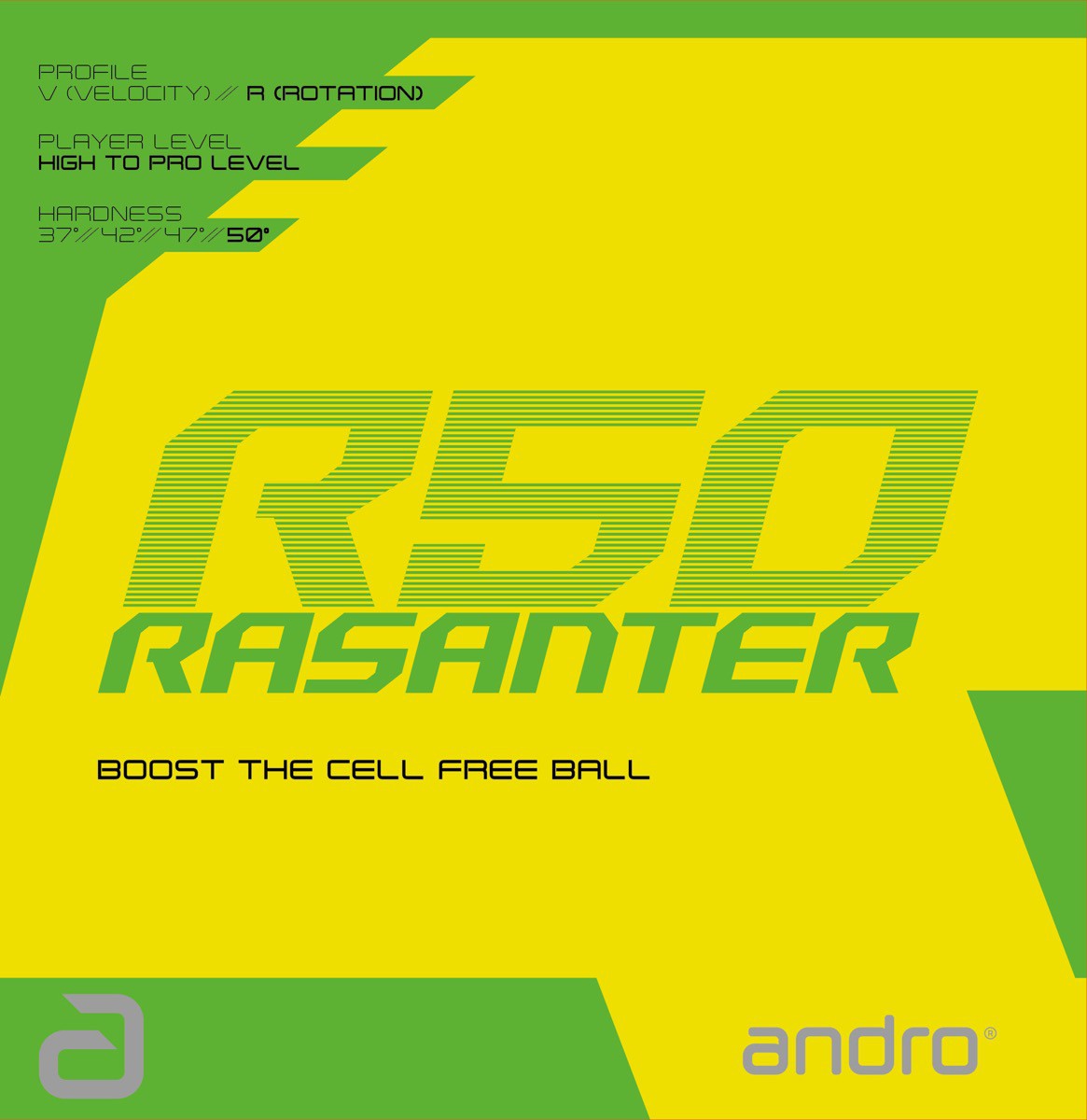
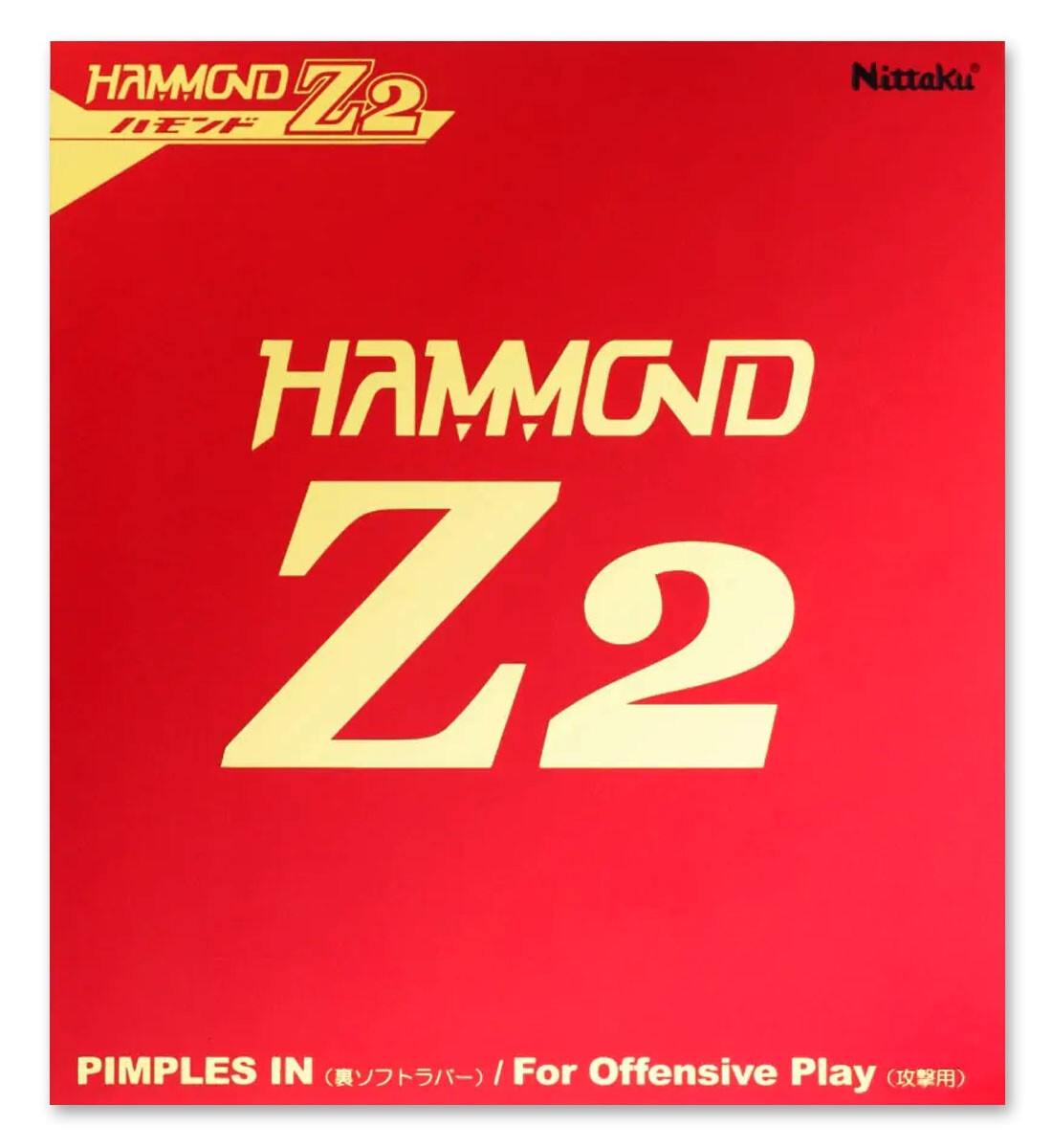
We may earn a commission from links on this page. Learn more.
Two forehand specialists that are closer than their brands suggest
Both spec rows agree on something rare in this comparison set: Andro Rasanter R50 and Nittaku Hammond Z2 are each rated for the forehand, both carry an identical 70g uncut weight, and both post the same 7.5 control-spec number. Add in matching 8.8 community ratings and you have two rubbers built for the same job — forehand power-looping — rather than two rubbers competing for different roles on the blade.
Where they actually diverge
Control: 8.7 vs 9.1 (delta -0.4). Hammond Z2 is the more forgiving of the two for shot placement, a half-point edge that is real, if not dramatic.
Throw: 5.9 vs 6.5 (delta -0.6). Z2 arcs the ball a bit higher and safer over the net. Combined with its control edge, Z2 reads as the slightly more accommodating rubber for players still building consistency on their loop.
Tackiness: 1.8 vs 2.1 (delta -0.3), a small edge to Z2 for short-game grip — not decisive on its own.
Speed (9.4 vs 9.3, delta 0.1), spin (9.4 vs 9.3, delta 0.1), and durability (8.3 vs 8.1, delta 0.2) are all within a tenth or two of a point. Treat all three as ties. Any player claiming they can feel a 0.1-point speed difference between these two rubbers in a real rally is guessing.
The sponge-hardness number that’s easy to miss
R50 sits at 50 degrees, Z2 at 52 — Z2 is the firmer of the two. Combined with Z2’s own cons line — demands active, well-timed strokes, very unforgiving of passive contact — this points to Z2 rewarding an even more committed, well-timed stroke than R50 already does, despite Z2 also posting the better control number. That’s not a contradiction: a firm, high-throw rubber can be more forgiving of imperfect angle while still punishing a passive, uncommitted stroke.
What the sources say
Z2’s pros list leans hard into its identity as made in Japan for a distinctive non-ESN character and feel, and Racket Insight’s dedicated review corroborates the exceptional looping and counterlooping power claim. Revspin’s community database is cited directly in Z2’s own pros as home to one of the highest Revspin ratings in its category — a specific, checkable claim rather than vague marketing. Reddit’s r/tabletennis threads on Z2 tend to describe it as a rubber that splits opinion early on for players coming from softer sheets, which lines up with its own cons noting polarizing early impressions for players transitioning from softer rubbers.
Blade compatibility is the other differentiator
Z2’s cons flag that it is better suited to OFF-minus or flexible blades than stiff carbon setups — a specific pairing note that R50’s own spec sheet doesn’t carry. If you’re running a stiff outer-carbon blade, Z2’s own data suggests it may not be the ideal match; R50 doesn’t come with that same blade-stiffness caveat in the source material.
Should you switch?
With speed, spin, and durability essentially tied, this comes down to two smaller questions. First: do you want the extra half-point of control and throw that Z2 offers, in exchange for a firmer sponge that punishes passive strokes even more than R50 does? Second: what blade are you playing on — Z2’s own cons steer away from stiff carbon, while R50 carries no such restriction. Neither rubber is a clear upgrade over the other; they are close enough in the core numbers that blade fit and stroke style should decide it, not the radar chart.
Who should buy each
R50: forehand loopers on any blade stiffness who want proven Tenergy-adjacent power at a slightly softer sponge.
Hammond Z2: forehand loopers on OFF-minus or flexible blades who want a bit more control and throw, and who already commit fully to every stroke.
Frequently asked questions
Are Andro Rasanter R50 and Nittaku Hammond Z2 built for the same job?
Yes -- both are rated for the forehand, both weigh about 70g uncut, and both post the same 7.5 control spec number, making them direct rivals for the same forehand-power role rather than complementary rubbers for different wings.
Which rubber has the higher throw?
Hammond Z2, by 0.6 points (6.5 vs 5.9) -- a moderate edge that gives a slightly higher, safer arc.
Does Hammond Z2 work on a stiff carbon blade?
Its own cons list says it is better suited to OFF-minus or flexible blades than stiff carbon setups, so check your blade before assuming it will feel the same as on a softer wood blade.
Is there a real speed difference between these two rubbers?
No -- speed (9.4 vs 9.3) and spin (9.4 vs 9.3) are both within 0.1 points, close enough to call a tie in practice.