Andro Rasanter R50 vs Nittaku Fastarc G-1: Which Should You Buy?
| Andro Rasanter R50 | Nittaku Fastarc G-1 | |
|---|---|---|
| Our rating | 8.8/10 | 8.8/10 |
| Best side | Forehand | Both wings |
| Control (different scales) | 7.5 | medium-high |
| Speed (different scales) | 9.4 | 15.0 (Nittaku) |
| Spin (different scales) | 9.4 | 12.5 (Nittaku) |
| Sponge hardness | 50° | 47.5° |
| Type | tensor/non-tacky | tensor inverted |
| Uncut weight | 70 g | 69 g |
A row marked “different scales” puts two rating systems in one line. Those cells are not a single score you can subtract.
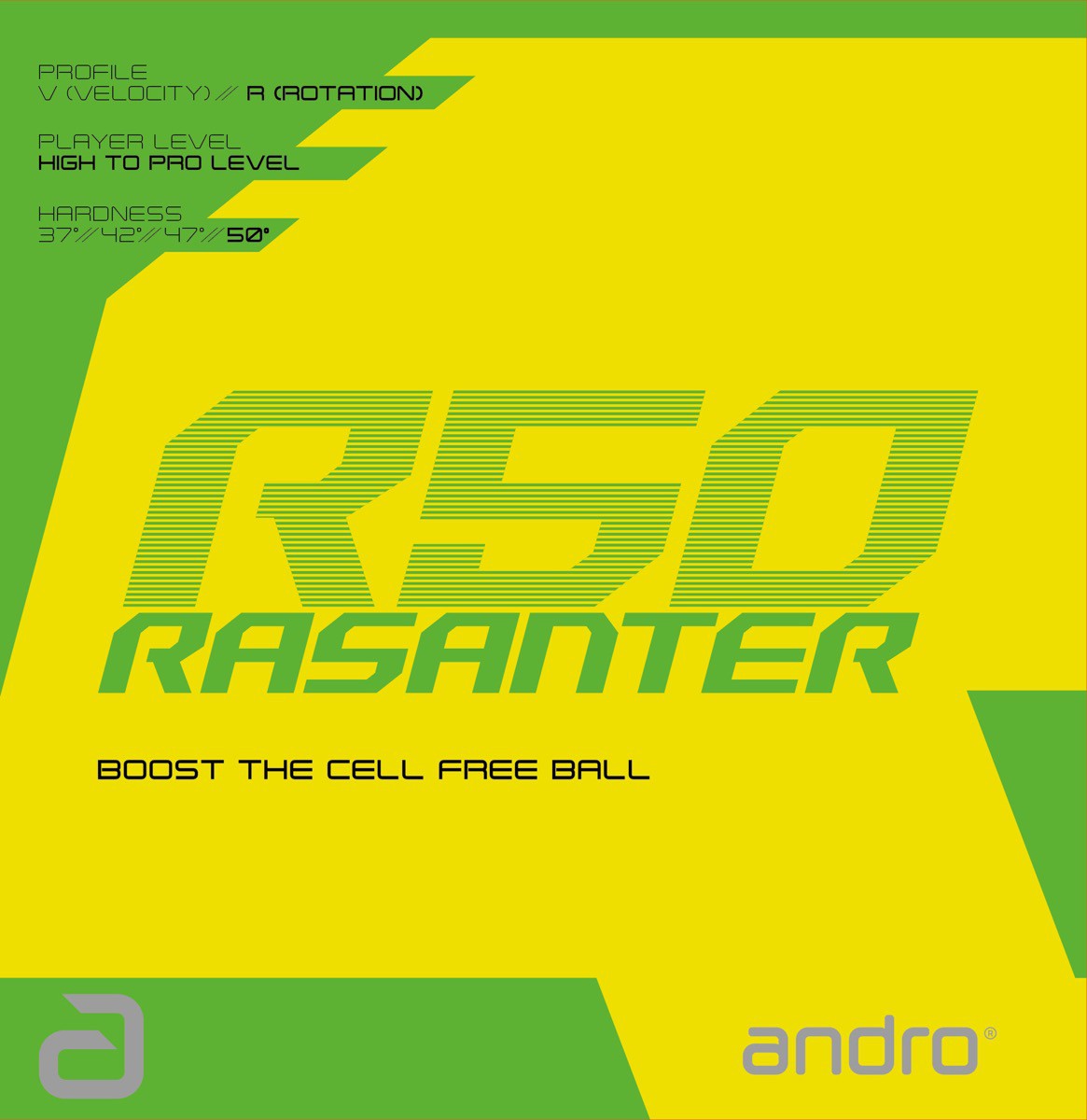
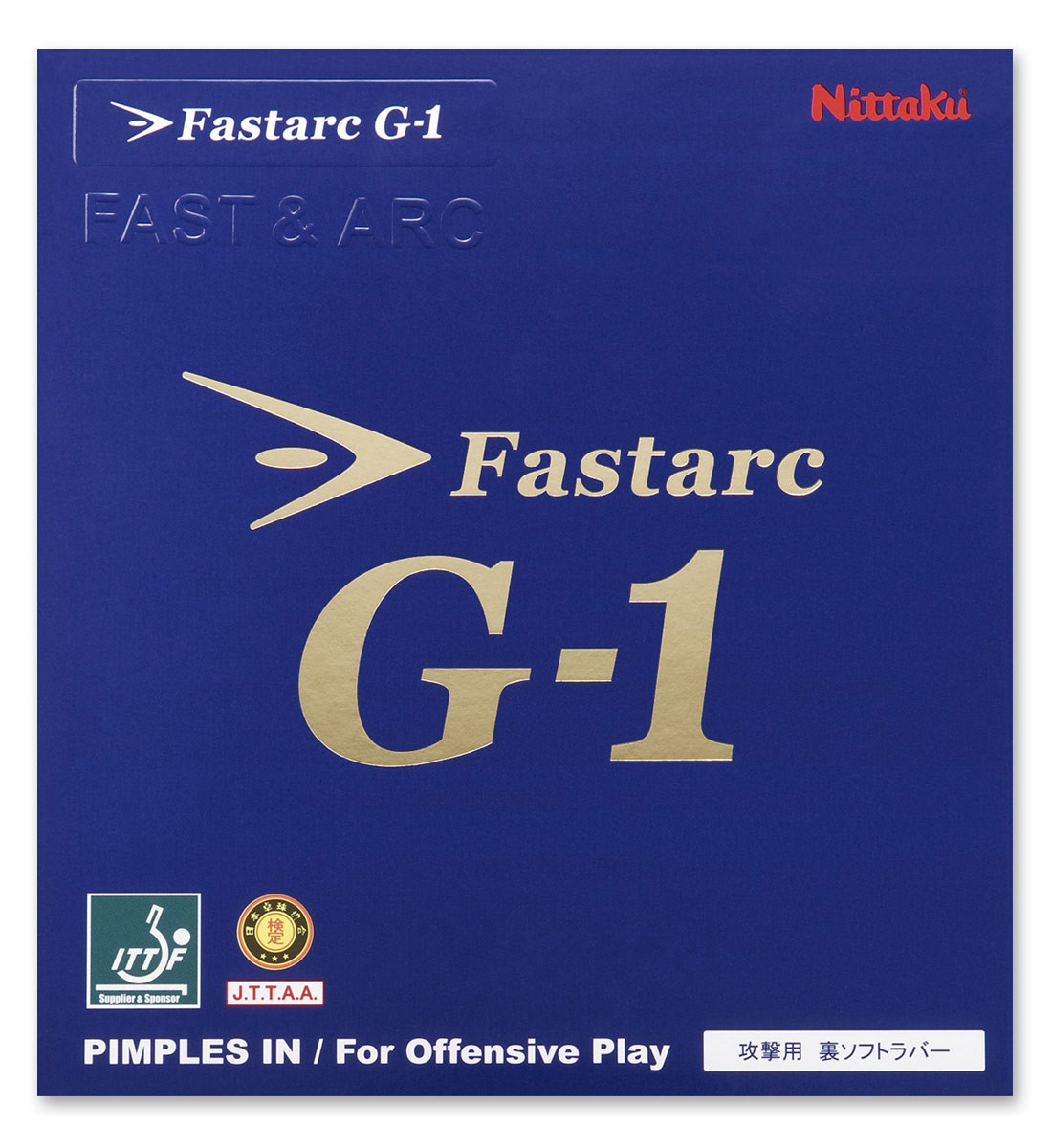
We may earn a commission from links on this page. Learn more.
The biggest single gap in this entire comparison set: throw
Across the Rasanter R50 matchups in this dataset, no axis delta is larger than what shows up here: throw, R50 at 5.9 versus Nittaku Fastarc G-1 at 8.5, a 2.6-point gap. That is not a marginal stylistic difference — it is two rubbers built for opposite jobs. R50 plays low and flat and demands a full, committed swing. Fastarc G-1’s own pros describe a high, safe throw that makes opening loops against backspin consistent and forgiving. If you have ever struggled to lift heavy backspin serves off the table, that gap is exactly the kind of number that predicts which rubber will bail you out and which one will punish a half-hearted stroke.
The other three real gaps
Speed: 9.4 vs 8.1 (delta 1.3). R50 is meaningfully faster in this radar data — more than a full point, which is a large gap on this scale.
Control: 8.7 vs 8.0 (delta 0.7). R50 also rates ahead on control here, somewhat surprising for the rubber usually pitched as the power option, but the numbers are the numbers.
Durability: 8.3 vs 7.0 (delta 1.3). This is worth pausing on because it cuts against Fastarc G-1’s own marketing. Its pros list claims Tenergy-like durability, with performance dropping off very slowly over months of use — and that may well be true relative to Tenergy or other ESN tensors. But measured against R50 specifically, the aggregated radar data shows R50 ahead by a full 1.3 points, the largest durability gap anywhere in this comparison set. Don’t read Tenergy-like as matches R50 — in this data it doesn’t.
Spin: 9.4 vs 8.9 (delta 0.5) and tackiness 1.8 vs 2.5 (delta -0.7) both favor Fastarc G-1 modestly on the grip side, consistent with its higher-throw, higher-arc design.
Two rubbers, two very different skill floors
R50’s own bestFor line is blunt: not suitable for beginners, defensive players, or anyone relying on touch-based short game techniques. Fastarc G-1’s bestFor reads almost like the opposite pitch — a forgiving high arc on opening loops for intermediate-to-advanced offensive players, explicitly built around consistency rather than raw ceiling. If you are still developing a reliable loop against backspin, the throw and control deltas both point toward Fastarc G-1 being the more patient teacher. If you already have a committed, full-swing loop and want to convert that technique into maximum pace, R50’s speed and durability edges are the more useful numbers.
What the sources say
Tabletennis11’s blog review of the whole Fastarc family (P1, G-1, C1, S1) frames G-1 as the flagship all-court attacking option in that lineup, and Racket Insight’s standalone G-1 review echoes the fast-with-an-arc framing straight from Nittaku’s own copy. Megaspin’s product reviews back up the value angle in G-1’s bestFor line — Tenergy-class performance at a lower cost — which puts G-1 in a similar budget-alternative role to how R50 positions itself against Tenergy 05.
Should you switch?
If your loop technique is already fast and you rely on power and durability, R50’s numbers make a stronger case: faster, more durable, similar spin. If you find yourself fighting to clear backspin serves or want a rubber that is more forgiving of imperfect timing, the 2.6-point throw gap and 0.7-point control gap both say Fastarc G-1 is the safer, more consistent tool — at the cost of some top-end speed.
Who should buy each
R50: players with an established full-swing loop who want maximum speed, spin, and durability and don’t need extra forgiveness on backspin.
Fastarc G-1: intermediate-to-advanced attackers who want a safe, high-arc rubber that stays consistent against backspin and lasts a long time, at a lower price than Tenergy.
Frequently asked questions
What's the single biggest difference between Rasanter R50 and Nittaku Fastarc G-1?
Throw. At 5.9 vs 8.5, the 2.6-point gap is the largest of any axis anywhere in this comparison set -- G-1 gives a much higher, safer arc for lifting backspin, while R50 plays low and flat.
Is Fastarc G-1 really as durable as Tenergy, like its own pros claim?
That claim is about Tenergy-class durability generally. Measured directly against R50 in this data, R50 actually rates 1.3 points higher on durability, so don't read Tenergy-like as matching R50.
Which rubber is more forgiving on backspin?
Fastarc G-1, based on its much higher throw (8.5 vs 5.9), which makes opening loops against backspin more consistent even with a less-than-full swing; R50 demands full commitment to clear the same ball.
Does R50 have better control than Fastarc G-1?
The radar data shows R50 slightly ahead, 8.7 vs 8.0, a 0.7-point gap. Combined with a 1.3-point speed edge, R50 rates as the faster, more controllable rubber overall -- G-1's specific strength is the forgiving throw for backspin, not general control.