Sun Yingsha Survives a Scare, Qiu Dang Crumbles — Two Words Tell the Story
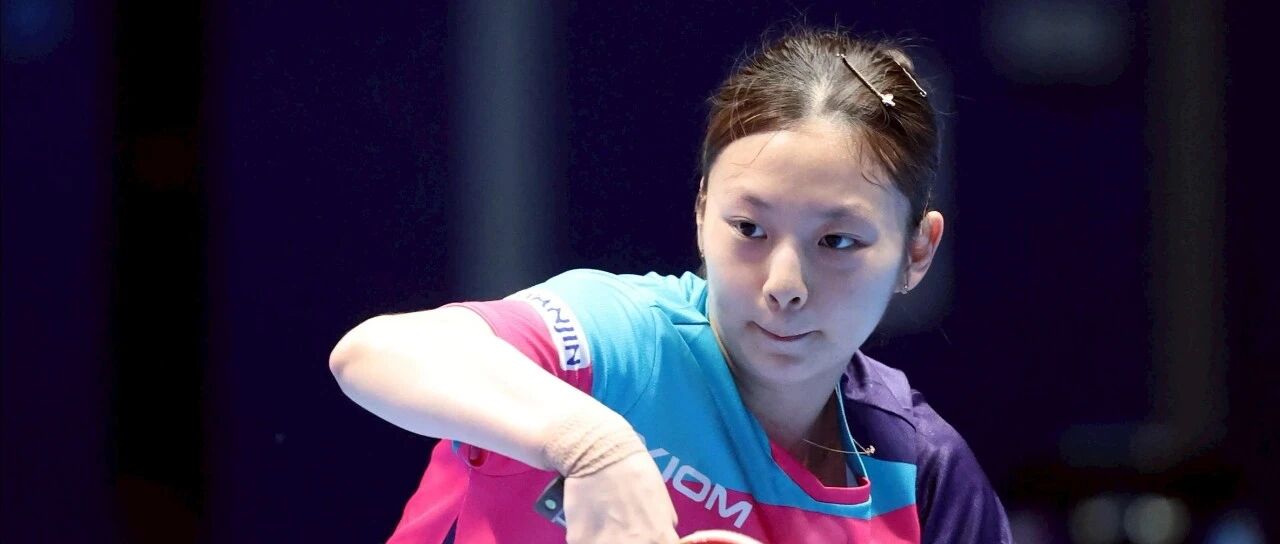
Sun Yingsha’s Narrow Escape
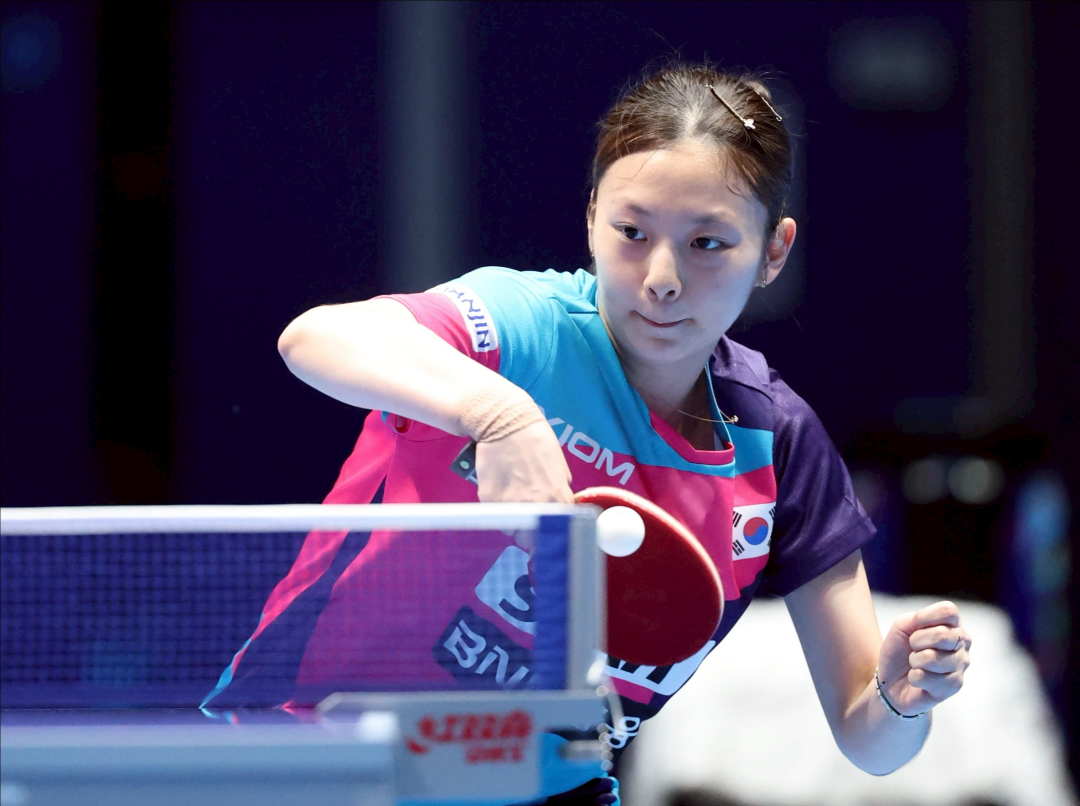
At the World Team Table Tennis Championships women’s quarterfinals, China defeated South Korea 3-0 to advance to the semis. On paper it looks like a comfortable win, but top seed Sun Yingsha had quite a scare.
Sun Yingsha def. Kim Na-young 3-2. Game scores: 11-7, 7-11, 7-11, 11-4, 11-9.
Both players use Hurricane on both wings. Worth noting: Kim Na-young plays Hurricane 8-20 (Hurricane 8 topsheet, 20# sponge).
On the blade side, judging by the handle, Sun uses S968 while Kim uses W968. The fundamentals may be similar, but the feel differs.
Sun Yingsha is undeniably the world’s number one, but that doesn’t mean every individual skill of hers is tops. In a pure backhand-versus-backhand battle, at least in the early games, Sun was on the back foot. Kim Na-young’s backhand topspin loop is cleaner, more fluid, faster, and her change of direction is excellent.
Down one game to two, and then trailing 0-3 in the fourth game, Sun called a timeout. At that point you cannot keep playing the same way — staying passive is like waiting to die. Switching tactics can mean “dying a different death,” but it can also open a new door.
After the timeout, Sun moved over to serve from the forehand position. The earlier deficit came partly from being hurt by Kim’s hook serve, and partly from feeding Kim too many balls to her backhand. Now the plan was to give her more to the forehand — Kim’s forehand is not as fast or fluid — and then switch back to her backhand to scatter her focus. Sure enough, young players are easy to “fool around” that way.
That said, Kim Na-young’s backhand really is impressive. Even trailing badly in the deciding game, she came back to 8-9. During that comeback run, Sun went back to targeting Kim’s backhand too often and stopped pressing her forward. Fortunately, on match point Kim served and Sun immediately attacked the return aggressively to win the point. That nerve of hers never goes away.
Generally speaking, non-Chinese players rarely beat Sun Yingsha even when they get chances — they almost never have before, so the experience isn’t there, and to win a crucial moment you need both grit and composure, which is genuinely hard. Players from the same national association at least know from daily practice that beating you is possible.
Sun Yingsha is still remarkably well-rounded and willing to adapt.
Side note: South Korea’s third singles player Park Ga-hyun uses Zhang Jike ALC with D09c on both sides.
Qiu Dang’s Collapse
On the men’s side, Qiu Dang — who swept past Tomokazu Harimoto and Shunsuke Tomishima 3-0 each in the group stage — seemed like a different person in the knockouts. He lost 1-3 to Tomishima and 0-3 to Harimoto, leaving Germany eliminated by Japan 1-3 and out of the top four.
Qiu Dang uses a Viscaria Special Edition with D09c on both sides.
So what happened? In short: not enough guts. At critical moments he played too conservatively and couldn’t let himself go. Once he pulled back, his defensive game wasn’t solid enough to compensate.
Throughout the match you could see him evolving. Beyond the faster transition speed mentioned before, he was also trying to calibrate the line between control and attack. I believe that with Fan Zhendong becoming his club teammate, his rhythm management and ball control will improve further.
But right now, too much control simply means being too passive.
Against Tomishima, you could see Qiu trying to use short-game control to slow things down and play more precisely. But Tomishima doesn’t play that game — he stays with long balls and gets into high-speed rallies right away. Also, on mid-table balls toward the forehand, Qiu pushed short too often instead of driving them long.
Against Harimoto, he tried to vary the spin and rhythm, but made some inexplicable forehand errors, especially during forehand-backhand transitions. Harimoto meanwhile just kept targeting Qiu’s middle.
How do you explain so many basic errors at his level? I see two reasons. One is that his defense is actually not great — he doesn’t have the natural backhand defense that shakehand players typically have. The other is that when he’s decisive, his attacking transitions are razor-sharp, but the slightest hesitation causes forehand-backhand transition errors.
And the 0-3 scoreline against Harimoto? Every game was actually decided by two points. That perfectly illustrates the point: too conservative at key moments, not aggressive enough, not enough courage to pull the trigger. When the level is nearly equal, those two words — guts and courage — decide everything.