At the Chongqing Champions Series, Equipment Is Shaping Technique
1
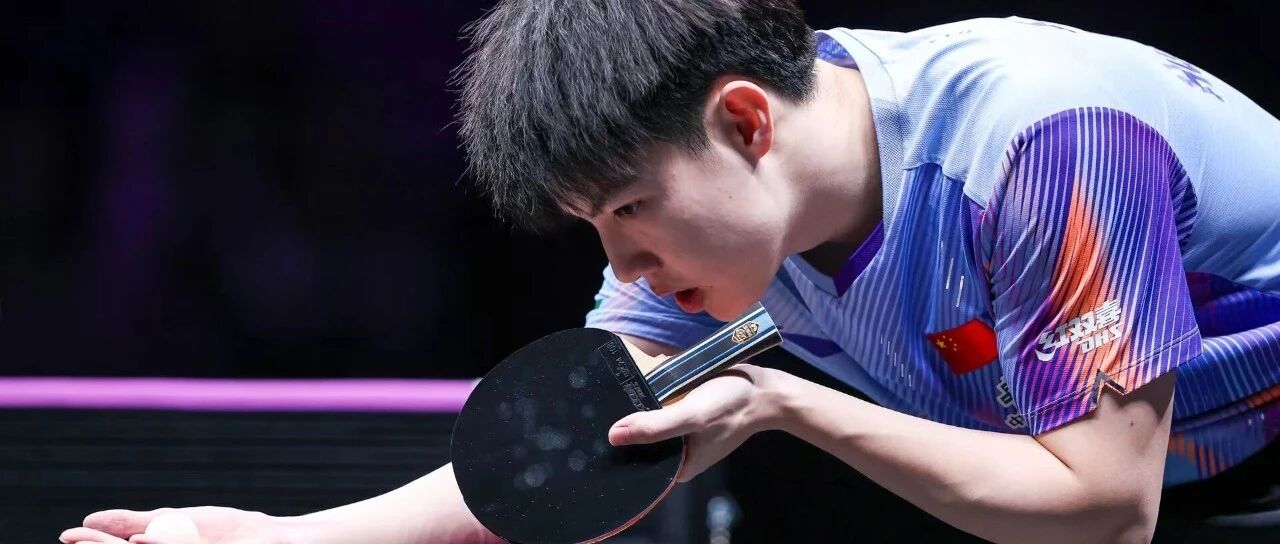
Zhou Qihao 3–1 Huang Youzhen.
Zhou Qihao: Double Fish Project Z, NEO Blue National Hurricane, D09c Huang Youzhen: Fan Zhendong SALC, NEO Blue National Hurricane, NEO Orange National Hurricane
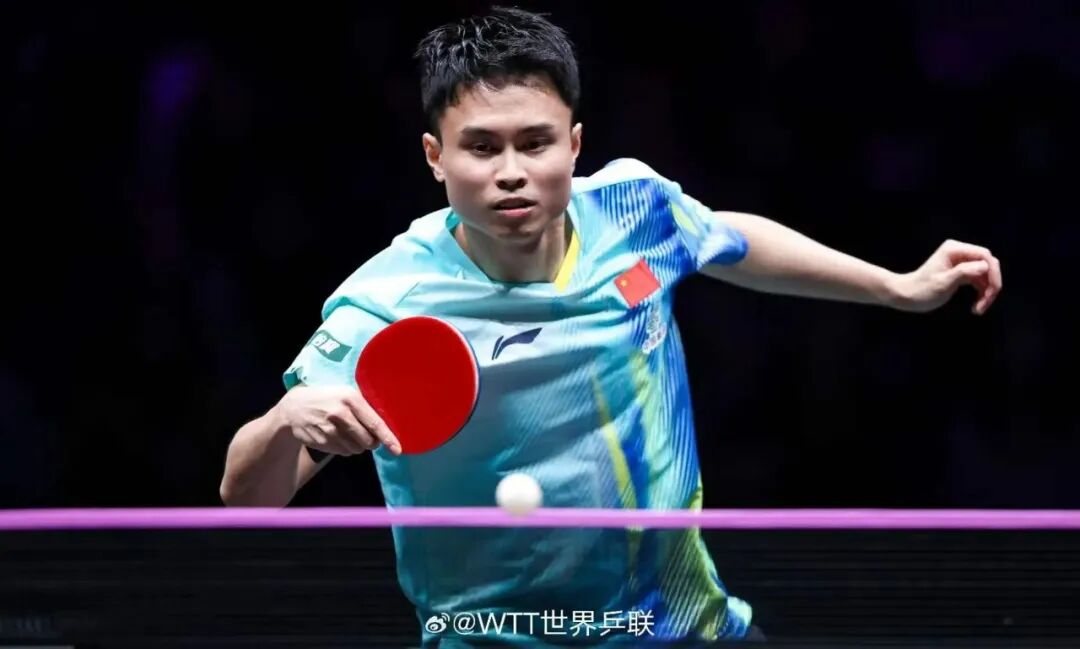
At some point, Zhou Qihao’s backhand switched from D05 to D09c. There’s a trend worth noting: among our national team players, the backhand side has now basically shifted entirely to high-tack Hurricane variants or semi-tacky outer rubbers — tacky rubbers are being abandoned, including the top-tier D05.
Obviously Huang Youzhen stuck with the W968 for a while, but the blade-swapper simply had to swap. This time he’s on Fan Zhendong SALC. Watching the match, the ball quality is genuinely heavier than when he was on Fan Zhendong ALC, but the error count went up too. Theoretically, a young player who tends to be a bit rash might be better served by a more stable blade. The SALC can be stable — but you need patience to adapt to it and learn all its contact timings and contact points.
Shi Xunyao also switched to Fan Zhendong SALC at the start of this lunar-year season (the Singapore Grand Smash). Before that, her play seemed more aggressive, but the ball quality always felt a half-notch below Sun Yingsha and Chen Meng. Since the switch, she’s been hitting noticeably harder. Yesterday she beat Yuan Jianan 3–0.
2
Lin Yunru 3–1 Karlsson.
Lin Yunru: Super Viscaria, ZYRE-03, D05 Karlsson: Koble SK7, D09c, ZYRE-03
At the Singapore Grand Smash, Lin Yunru swept Karlsson 3–0. After the second game, Karlsson looked at his racket with a kind of dazed expression.
You should’ve switched blades a long time ago — not rubbers. That’s what I’d say…
The earliest I can find on this: around last November, Karlsson switched his backhand from T05 Hard to ZYRE-03. It seems like the spin and drive he was generating before were actually stronger than now. Of course the rubber isn’t the main issue.
If you made a quick-cut highlight reel of yesterday’s match where Karlsson lost to Lin Yunru again, you’d notice a pattern: on many rally exchanges, Karlsson would be attacking or defending, and then just randomly go into the net without explanation. Why? The blade doesn’t have enough support. Either it’s been beaten soft and needs replacing; or it’s a pure-wood problem — under strong power exchanges, the support and fast rebound aren’t good enough. Time to switch to a carbon composite.
I remember a couple of years ago sparring with a retired provincial-team veteran. Under normal play it was fine, but several times I was grinding through rallies and then just dropped the ball into the net — his power had always been that big. Eventually I figured out the blade had been beaten soft — though I strongly suspected he was the one who pounded it soft over time, not me.
3
Hugo Calderano 3–2 Chen Yuanyu.
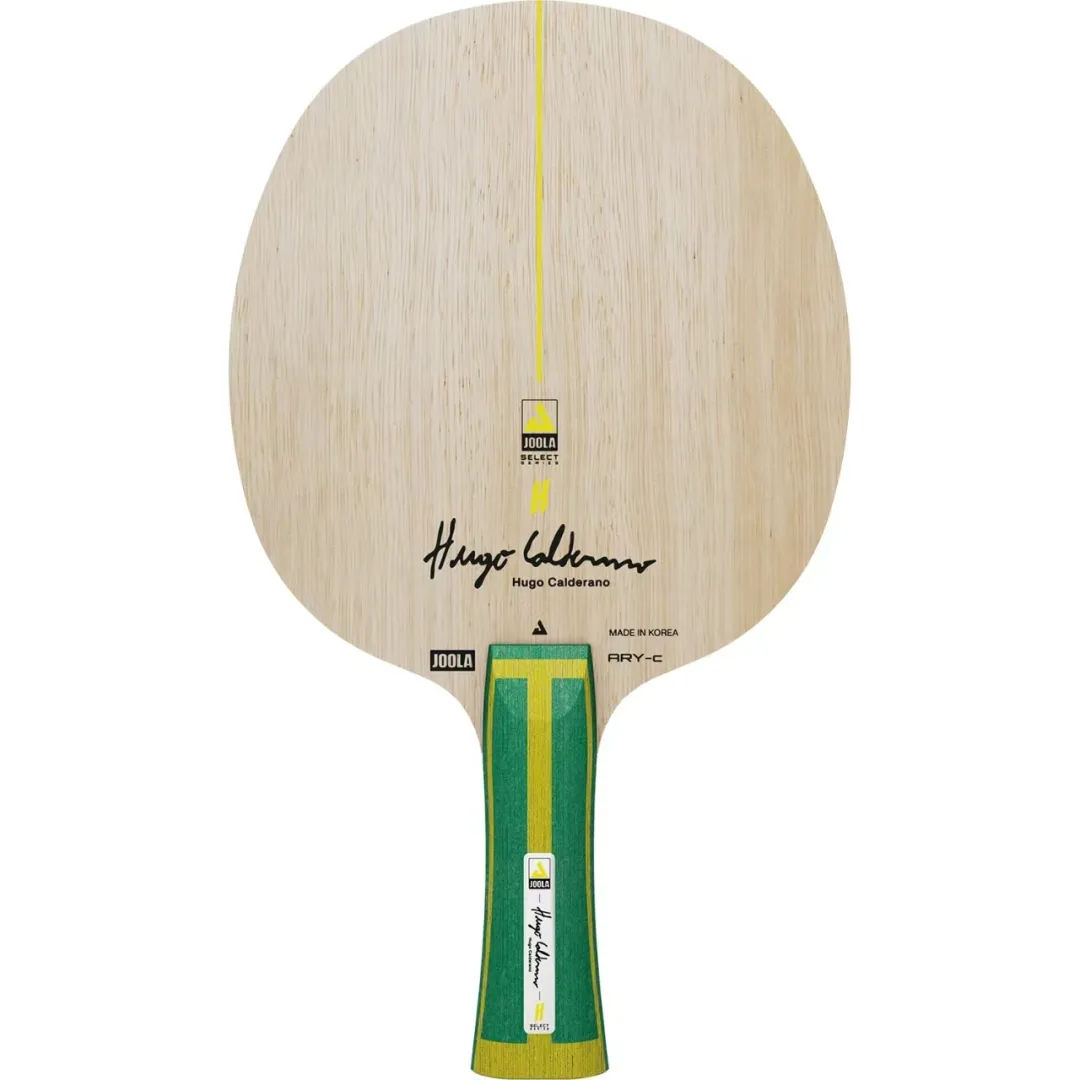
Hugo: Joola Hugo ARY-C, two-sided Trinity Charged Chen Yuanyu: Golden-label Viscaria, NEO Blue National Hurricane, K3 Pro
Continuing to use this inner aramid carbon blade suggests Hugo’s genuine confidence in it. Even though just the previous event he had lost 1–3 to Chen Yuanyu.
Chen Yuanyu has an advantage in picking off half-long balls with flicks and aggressive loops. But having learned from last time, Hugo made some adjustments this match:
First, serve more “half-length” balls. As long as Chen Yuanyu doesn’t aggressively attack on the receive or doesn’t read it cleanly, it’s very hard to push short well — and Hugo can more easily get into the attack.
Second, tighten the short-ball game and increase the proportion of deep pushes. As I wrote last time, in close-table short exchanges Hugo was at a disadvantage. On half-long balls Chen Yuanyu would rush the attack first, very efficiently. What Hugo needed to do was use more deep pushes to neutralize. And now that Hugo knows Chen Yuanyu’s patterns, Chen’s short pushes no longer have the same effect they once did.
Beyond that, Hugo’s receive was bolder and more varied — power flicks, hesitation flicks, spin-redirected pushes — richer than their last meeting.
In the deciding game Chen Yuanyu still had chances. But he seemed a bit indecisive. Some details weren’t clean enough either. For example, front-to-back footwork was affecting his short-ball game, letting Hugo dictate the rhythm. These are things that need time to train and grow.